










By Abiodun Lawal
The Minister of Budget and Economic Planning, Atiku Bagudu, has reiterated the Federal Government’s commitment to harnessing Nigeria’s vast cassava potential to drive industrial growth and economic stability.
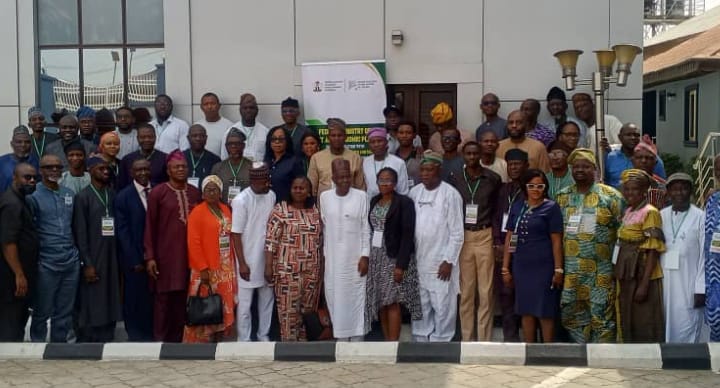
Bagudu said this on Wednesday in Abeokuta at a capacity building workshop for stakeholders on the Cassava Bioethanol Value Chain Development project in the South-West geo-political zone.
The minister said that the workshop was aimed at advancing a core pillar of President Bola Tinubu’s Renewed Hope Agenda by leveraging the cassava bioethanol value chain to transform Nigeria’s agricultural potential into industrial growth.
He said that the workshop, organised in collaboration with Brand Coolstem Values Ltd., is a strategic engagement involving the government, the academia, research institutions and the private sector under a Triple-Helix framework.
Bagudu, represented by the Director of Economic Growth, Auwal Mohammed, said the project was designed to reposition Nigeria from merely producing cassava for consumption to producing cassava for energy and industrial use.
He said that although Nigeria remains the world’s largest producer of cassava, the country had yet to fully maximise the economic potential of the crop.
“As the world transitions towards a greener and more sustainable economy, bioethanol presents a significant opportunity for Nigeria,” he said.
The minister explained that blending bioethanol with Premium Motor Spirit (PMS) would reduce dependence on imported fuel and save billions of naira in foreign exchange.
He added that the initiative would stimulate a bio-based economy, strengthen the Naira and create opportunities for millions of smallholder farmers by integrating them into an industrial value chain.
He said that the project aligned with the National Bio-Economy Policy, which promotes a circular economy by maximising the entire cassava value chain.
Bagudu added that beyond ethanol production, the initiative would explore high-quality starch, carbon dioxide captured during fermentation and animal feed from distillery grains.
He urged stakeholders to take advantage of the workshop to acquire technical skills in high-yield cassava production and efficient processing.
“As the ministry of budget and economic planning, we are committed to ensuring that every Naira invested in this project translates into jobs for our youth and enhanced food security for our families.
“We are not just building factories; we are building a future where Nigeria becomes a global hub for bio-resources,” he said.
In his presentation, Prof. Olumuyiwa Jayeoba, the President, Association of Deans of Agriculture in Nigeria Universities (ADAN), said that Nigeria’s economy was growing gradually.
Jayeoba spoke on the topic “Nigeria’s Bio-Economy Framework and Cassava Bio-Ethanol.”
He described bio-economy as the sustainable use of renewable biological resources, biological knowledge, science, technology and innovation to produce goods, services and energy across sectors of the economy.
“Bio-economy has the capacity to bring many people out of poverty, improve energy and food security,” he said. (NAN)(www.nannews.ng)
Edited by Chidi Opara