










By Folasade Akpan
The introduction of Multiple Micronutrient Supplements (MMS) has significantly reduced cases of anaemia among pregnant women receiving antenatal care in the Dutse-Alhaji Primary Healthcare Centre in the Federal Capital Territory (FCT).
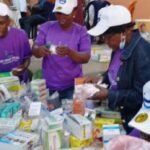
Dr Deborah Joshua, Officer-in-Charge of the facility, disclosed this on Wednesday during a media field visit organised by the Civil Society-Scaling Up Nutrition (CS-SUNN) to sensitise pregnant women to the benefits of MMS.
According to her, MMS has simplified supplementation because the nutrients pregnant women need are now contained in a single daily tablet.
She said the supplement had led to fewer women presenting with anaemia, while those who registered already anaemic were stabilised early before delivery.
“With the use of MMS, we have less incidents of women coming down with anaemia.
“Most of our women are doing well, and for the few ones that were anaemic before starting antenatal, we restore them before labour.’’
Joshua confirmed that each pregnant woman receives a free bottle containing 180 tablets and is expected to take one daily from the day of registration.
She said antenatal attendance remained vital because MMS worked best when combined with routine checks, counselling and close monitoring of pregnancy.
Joshua, however, pointed to operational challenges such as inadequate human resources, saying more personnel would ensure women were attended to faster.
Mrs Chinyere Ekwueme, the FCT State Nutrition Officer, described MMS as a “game-changer’’ because it contained 15 micronutrients compared with two in the previous Iron and Folic Acid (IFA) tablets.
She said mothers also preferred MMS because it had a better smell and did not trigger nausea, leading to improved compliance during pregnancy.
Ekwueme said MMS improves birth outcomes but does not eliminate pregnancy complications, which was why antenatal attendance in certified facilities remains essential.
She said the supplements were free and urged communities to report any health worker found selling them, noting that such acts violated FCT Administration directives.
She urged the FCT Administration to key into the Child Nutrition Fund to ensure sustainable MMS supply after donor-supported stock depleted.
“For now, it is readily available, but we are hopeful that FCT will key into the CNF, which will make it sustainable because that’s the only sustainable plan for it.
“Presently, we have the ones we received from donors, but if we exhaust it, we will not have any other one.’’
On accountability, she warned against sharp practices in health facilities, saying anyone selling the supplements was doing so illegally.
Ekwueme said monitoring systems, including mystery shoppers, had been deployed to ensure compliance with free distribution guidelines.
“These things are meant to be free. If you start selling them, mothers will be discouraged from coming for antenatal, and we will begin to see higher maternal and infant mortality.’’
Mr Peter Olusola, Communications and Campaign Manager for CS-SUNN, said the CNF represented a critical opportunity for Nigeria to address malnutrition at scale.
Olusola described the CNF as a one-to-one matching fund managed by United Nations Children’s Fund that doubles government commitments for nutrition commodities.
“What they are saying is simple. Every government that pledges any amount for procurement of nutrition commodities, the fund matches it exactly.
“If the Federal Government pledges ₦10 billion, the fund releases ₦10 billion. It’s a matching fund.’’
He warned that the opportunity was time-bound and would terminate in 2030, after which unused funds would be rerouted.
“It is an opportunity Nigeria should cash in on. The solutions to anaemia and malnutrition are already on ground.
“There is no reason we should continue to record high burdens when there is a financing mechanism available.’’
Mrs Precious Innocent, a third-time mother using the facility, said her blood level improved after taking MMS, noting that she struggled with low blood levels in previous pregnancies.
Innocent, who is six months pregnant, said MMS helped her appetite and made her feel stronger, adding that the supplements were issued free after registration.
She said the current supplementation was different from what she received during earlier pregnancies.
“During my first child in 2015, they gave us only two drugs. It was not like this. Now, immediately you register, they give you everything. It has helped me.’’
Another pregnant woman, Mrs Amina Yakubu, said she felt healthier in her current pregnancy compared with previous ones when she did not use MMS.
She said the daily tablets were easy to take and did not cause discomfort, adding that she could now carry out her activities without stress. (NAN) (www.nannews.ng)
Edited by Dorcas Jonah/Abiemwense Moru