Nwoko: Redefining legislative representation in Delta-North
By Deborah Coker, News Agency of Nigeria(NAN)
In a representative democracy, the fundamental principle is that supreme power is entrusted in the citizenry, who exercise this power by electing representatives to legislate on their behalf.
Political pundits hold that, with the 2027 General Elections just around the corner, the electorate must recognise that power lies with them.
They argue that unless voters embrace critical thinking, they will remain trapped by poor decisions, undermining their own democratic power.
According to public opinion, the perception of Nigerian lawmakers is polarised.
While some believe they have done well in passing people-oriented bills, others assail them for their apparent lack of accountability and personal aggrandisement at the expense of their constituents.
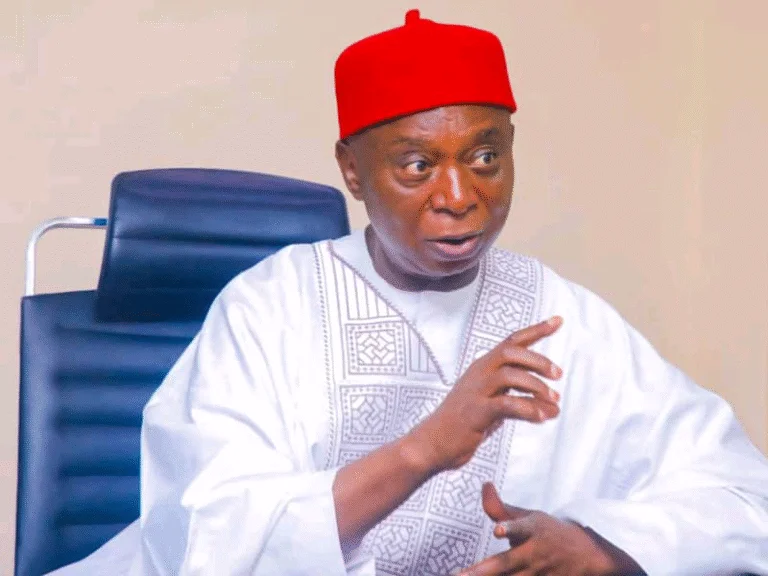
In spite of the perceived ineptitude of some lawmakers, observers note that few actors stand out. One such individual is Sen. Ned Nwoko, who represents the Delta-North Senatorial District on the platform of the All Progressives Congress (APC).”
According to constituents and political analysts, Nwoko’s leadership style is a breath of fresh air in the stifling atmosphere of Nigerian politics.
His approach is characterised by a deep understanding of the needs and aspirations of the people.
In just under three years, he has demystified the low expectations often associated with first-time lawmakers, delivering a master class in effective representation for Delta-North through legislation, grassroots empowerment and infrastructural projects.
His tenure has been marked by a flurry of legislative activity, transformative empowerment programmes, and visible infrastructure projects—outpacing the records of his predecessors and setting a new benchmark for constituency service.
He also ensured bipartisan collaboration by building alliances across party lines to advance bills, earning a reputation as a pragmatic legislator.
According to legislative watchers, Nwoko has sponsored 34 bills and motions in the 10th Senate that tackle national and local issues, in addition to co-sponsoring several others.
Some of his sponsored bills and motions include the Constitutional Alteration for the Creation of Anioma State, Nigerian Youth Entrepreneurship Grant Programme (Establishment) Bill, Waste Management and Malaria Eradication Agency (Establishment) Bill, and the one-Month Rent Limitation and Landlord Registry Act.
Others are Electoral Courts Establishment and Jurisdiction Act, Compulsory Professional Indemnity Act, Cashless Asset Acquisition Act, Self-Defence and Firearm Ownership Regulation Act, Coroners Systems (Re-Enactment) Act, 2023, ECOWAS Parliament Election Governance Act leadership, and Diaspora Voting Bill.
Also in the list are the Parliamentary Governance System Act, Nigerian Defence Academy (Amendment) Bill – Delta State Campus and Upgrade of Ogwashi-Uku Polytechnic to Federal University of Technology Bill.
Private Security Companies Regulation and Licensing Bill, Constitutional Alteration for Mandatory First Aid, CPR & AED Training, and Good Samaritan Laws are also parts of the bills.
He also sponsored the National Talent Rehabilitation and Integration Agency (Establishment) Bill, 2024, Public Service Rules (Alteration) Bill – Extension of Retirement Age, CBN Act Amendment to Prohibit Foreign-Currency Remuneration, National Social Security Agency (NSSA) Bill.
Nwoko also sponsored the National Centre for Substance Abuse Management (NCSAM) – Ndemili, Delta, and Federal Universities of Technology (Amendment) Bill – Upgrade of FCE (Technical) Asaba to FUT Asaba.
More so, the senator sponsored the Mandatory Military Service for Youths (Establishment) Bill, National Vigilante Group (Establishment) Bill, Orthopedic Hospital, Onicha-Ugbo (Establishment) Bill, Federal College of Education (Establishment) Bill – Akwukwu-Igbo, and the National Ranching Development and Management Bill.
Nwoko also sponsored the Immigration Act Amendment – Visa-Free Entry for AU Passport Holders, FRSC Act Amendment – Restriction of Daytime Movement of Heavy-Duty Vehicles, Federal College of Agriculture (Establishment) Bill – Idumuje-Ugboko, Nigerian Minerals and Mining Act (Amendment) Bill, Actors Guild of Nigeria (Establishment) Bill.
What’s more, he sponsored the Nigeria Data Protection Act (Amendment) Bill – Mandatory Physical Offices for Social Media Platforms, Institute for Leadership, Entrepreneurial and Corporate Governance (Establishment) Bill, 2025 (SB.921).
Appraising the bills, Nwoko said the 34 bills reflected his vision of a reformed, equitable, and globally competitive Nigeria — where governance worked for the people.
“A Nigeria where institutions serve with integrity, and every citizen, from Delta-North to every part of the federation, feels the impact of effective representation.
“As I continue to reflect on my almost three-year journey in the Senate, I take pride in highlighting one of the strongest pillars of my legislative record: the sponsorship of 34 transformative bills that speak directly to the needs of Nigerians and the future of our nation.
“Each of these bills represents my unwavering commitment to people-centered governance, economic reform, youth empowerment, institutional strengthening, and the equitable development of all regions particularly Delta-North, which I proudly represent,’’ he said.
For political analysts, Nwoko’s performance reflects a paradigm shift from the traditional “tokenism” of Nigerian legislators to accountable, development-focused representation.
They say his predecessors laid groundwork, but his strategic urgency and systemic solutions distinguish his tenure.
Some argue his predecessors faced tougher economic conditions or less cooperative federal governments, but Nwoko’s results underscore the power of preparation and political will.
Political analyst Dr Adeola Williams said Nwoko understood that representation was not about title, but tangible impact.
Williams said Nwoko’s model could redefine legislative standards in Nigeria.
For Rev. Joseph Ugochukwu, Nwoko’s vision for a prosperous Nigeria is rooted in the empowerment of local communities.
According to him, by supporting local initiatives and investing in the youths, Nwoko is unlocking the potential of the people of Anioma and driving growth from the grassroots level.
Similarly, Mr Ally Isah, a resident and political actor in Idumuje-Ugboko in Delta-North, applauded the lawmaker’s grassroots empowerment programme.
He said the programmes—which cut across economic empowerment, medical outreach, education, community development, agricultural empowerment, and sports facility intervention—have had a significant impact in Delta North.
According to Isah, more than 500 youths and women have benefited from Nwoko empowerment schemes, receiving grants of N100,000 each after completing a three-day capacity-building training.
‘’He recently carried out large-scale medical outreaches in Ibusa and Agbor, providing free medical consultations, health screenings, laboratory tests, and essential medications to hundreds of residents.
“He did not stop there; he also sponsored free Joint Admissions and Matriculation Board (JAMB) registration for 1,500 students from Delta- North, with the aim to remove financial barriers and enable talented students to pursue tertiary education.
“In the area of community development, Nwoko has delivered 51 transformative projects across all nince Local Government Areas in Delta-North, including solar streetlights, construction of ICT centers, access roads, renovation of classrooms and schools, and modern town halls.
“His agricultural interventions is top-notch with over N30 billion in federal projects, including water resources and agricultural irrigation, fish farms and fertiliser schemes, livestock training and support, and cassava farm initiatives for youth and women.
“His sports facility intervention project which is a mini stadium constructed in Issele-Uku, Aniocha North Local Government Area in the state; I believe is part of his commitment to grassroots sports development and youth empowerment.’’
He described the lawmaker as a transformative leader who had redefined the Nigerian political landscape.
“His leadership style is a master-class in people-oriented governance, characterised by firm commitment, unrelenting passion, and an unshakeable dedication to the welfare of the people,’’ he said.
Pundits view an outstanding senator as one who combines impactful lawmaking with tangible contributions to national development and constituent needs; they say Nwoko ticks all these boxes.(NANFeatures)