




By Deji Abdulwahab
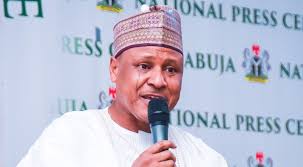
The Minister of Information and National Orientation, Alhaji Mohammed Idris, says Nigeria is not only committed to fighting corruption, but also making steady and measurable progress following the government’s anti-graft reforms.
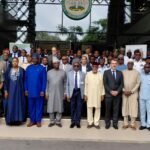
Idris said this in Abuja on Tuesday at the National Anti-Money Laundering and Counter-Financial Terrorism (AML/CFT) Media outreach activities, organised by the Intergovernmental Action Group against Money Laundering in West Africa (GIABA).
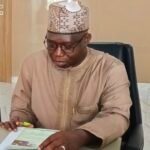
Idris, represented by the Executive Secretary, Nigerian Press Council, Dr Dili Ezughah, said that Nigeria had significantly strengthened its financial intelligence architecture through the works of the Nigerian Financial Intelligence Unit, (NFIU).
He said this had helped improved the monitoring of suspicious transactions and enhancing compliance with global AML/CFT standards.
According to him, we have deepened inter-agency collaboration, ensuring that relevant institutions work in a more coordinated and efficient manner to detect, investigate and prevent financial crimes.
“Reforms in the financial sector as proven by the Central Bank of Nigeria are also improving transparency, boosting confidence and tightening regulatory systems to curb illicit financial flows.
“At the regional level, Nigeria continues to work closely with partners like the Intergovernmental Action Group against Money Laundering in West Africa, thereby reinforcing our shared commitment to combating cross-border financial crimes.
“More broadly, the administration’s emphasis on transparency, digitalisation and accountability is steadily closing systemic gaps that previously enabled corruption to thrive.
“These are clear indications that Nigeria is not only committed to fighting corruption but also making steady and measurable progress.”
The minister also emphasised the importance of the media in the fight against corruption, acknowledging that they play central role in the anti-graft fight.
“The media is not just an observer in the society; it is a powerful force that shapes perception, drives accountability and influences national direction. In the fight against corruption, the media plays a central role.
“Through accurate reporting, investigative journalism and sustained public enlightenment, the media helps citizens understand the dangers of illicit financial flows as well as the importance of transparency and accountability.
“An informed society is an empowered society and without public awareness, the fight against corruption cannot be won,” he said.
According to him, while the media has its critical role, it also faces notable challenges.
“The complexity of the Anti-Money Laundering and Counter-Financial Terrorism (AML/CFT) requires specialised knowledge and continuous capacity building.
“The rise of misinformation poses risks to public trust and national cohesion. Resource constraints can limit the depth of investigative reporting and in some cases; journalists face safety and ethical concerns in the course of their work.”
Idris added that these challenges must be addressed collectively.
“Going forward, we must strengthen collaboration between government institutions and the media. We must invest in training and capacity building for journalists, particularly in specialised areas such as financial crime reporting.
“We must ensure timely access to accurate and credible information, as well as continue to promote ethical, facts-based journalism that serves the public interest.
“At the Federal Ministry of Information and National Orientation, we remain committed to deepening public enlightenment and supporting the media as a key partner in nation building,” he said.
The minister emphasised that the fight against corruption was a shared responsibility as the government could not do it alone.
”Together we can build a Nigeria where transparency is the norm, accountability is demanded, and corruption has no place to hide,” the minister also said.
In his remarks, the Director-General of GIABA, Edwin Harris Jr, recalled that since 2000, the organisation had engaged the media through sensitisation programmes to facilitate their understanding of AML’s safety issues.
Harris, represented by Mr Timothy Melaye, Acting Principal Officer, Communication and Advocacy, GIABA, said that a significant outcome of the programme was forming what the organisation refered to as the Regional Network of Journalists involved in reporting economic and financial crimes.
According to him, the network is a platform for informing all members of our jurisdiction to share information and ensure the dissemination of essential data that will help a robust implementation of the measures in all GIABA member states.
He added that the media must deepen its narratives in identifying and exposing money laundering.
“More importantly, the media must not allow itself to be used by suspects, state money launderers, looters of public treasury and those who truncate the course of justice.
“You must stand firm, hold your head high, reject brown envelopes where you need to, and speak the truth, and nothing but the truth. You are not antagonists and are not to bring people down.
“Your work, indeed, is to advance the truth. The media must deepen its narrative. It must enhance its knowledge of the AML’s safety,” he said. (NAN)(www.nannews.ng)
Edited by Deborah Coker