


By Emmanuel Afonne
The Executive Director, African Network for Environment and Economic Justice (ANEEJ), Mr David Ugolor, says Nigeria has made significant progress in the recovery of looted public assets.
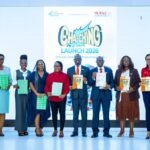
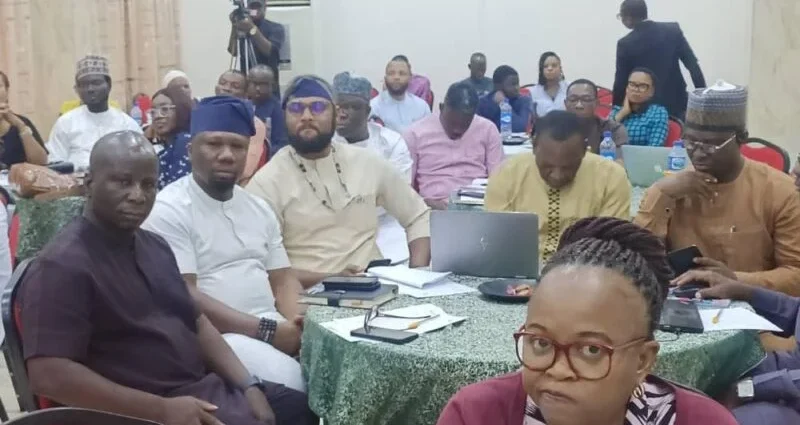
Ugolor said this on Thursday, in Abuja, at the opening of a two-day town hall meeting on the utilisation of recovered assets and presentation of accountability reports.
He commended the Federal Government and anti-corruption agencies for sustained efforts in recovering funds both locally and from international jurisdictions.
“To make greater impact, the government must prioritise transparency and accountability in the utilisation of the recovered looted funds,” he said.
According to him, Nigeria is doing very well and has continued to receive global recognition for its asset recovery processes.
“We must commend the Nigerian government, the Economic and Financial Crimes Commission (EFCC), the Independent Corrupt Practices and Other Related Offences Commission (ICPC), and the Federal Ministry of Justice.
“In global discussions on asset recovery, Nigeria is regarded as meeting good standards,” he said.
Ugolor, however, stressed that recovery alone was not enough, noting that citizens were more concerned about how such funds were utilised to improve their lives.
He said ANEEJ, in collaboration with civil society organisations, had been monitoring the utilisation of recovered assets, particularly those linked to Bayelsa State and the Galactica restitution.
The ANEEJ boss explained that the organisation conducted a baseline survey across the eight local government areas of Bayelsa to assess the condition of primary healthcare centres designated to benefit from recovered funds.
“We worked with Bayelsa civil society groups under BANGOF to examine the status of health facilities and identify gaps.
“The findings clearly show what needs to be done to bring those centres to acceptable standards,” Ugolor said.
On the Galactica asset linked to a former Minister of Petroleum Resources, Dieziani Alison-Madueke, Ugolor said about 50 million dollars earmarked for rural electrification projects had yet to be utilised.
“Our findings show that no significant amount has been deployed for the intended projects more than a year after the agreement was signed.
“This raises concerns and questions about the delay,” he said.
He, however, attributed part of the delay to procurement processes and institutional challenges, adding that efforts were ongoing to finalise implementation arrangements.
Ugolor said ANEEJ was working closely with the Rural Electrification Agency and the Ministry of Justice to ensure proper deployment of the funds.
He noted that civil society organisations were also being engaged to independently monitor the implementation process.
The executive director identified access to data and prolonged administrative procedures as major challenges in tracking recovered assets.
He said building trust and collaboration with government institutions remained critical to achieving results.
“It is not always about accusing government officials; sometimes they face genuine capacity and institutional challenges.
“As civil society, we support them with technical capacity to ensure these projects succeed,” he said.
Ugolor highlighted the organisation’s “MANTRA” model, which focused on citizen-led monitoring of recovered assets.
He said the model had helped to improve transparency and had been recognised internationally as a best practice.
“When citizens are actively involved, it becomes difficult for recovered funds to be mismanaged.
“This model has contributed to improvements in the utilisation of recovered assets over time,” he said.
Commenting on the recent recovery of $30 million by the EFCC, Ugolor described it as a significant achievement.
He urged the government to channel such funds into critical sectors such as healthcare, education and infrastructure for maximum impact.
“Thirty million dollars is a huge resource in today’s economy. It should be used in ways that directly benefit Nigerians and build public trust,” he said.
Ugolor also appreciated the support of development partners, particularly the United Kingdom Government, in promoting transparency and accountability in asset recovery.
He called on all stakeholders, including government agencies, civil society, the media and development partners, to sustain collaboration in ensuring that recovered assets translate into tangible benefits for citizens.
“Recovered assets must be used transparently to strengthen governance, build public confidence and demonstrate that corruption does not pay,” he said.
Dr Matthew Ayibakuro, Governance Adviser, Foreign, Commonwealth and Development Office (FCDO), said recovered assets represented justice returned to citizens and must be transparently managed.
Ayibakuro commended ANEEJ for convening bringing together stakeholders, government, civil society, academia, the media and development partners to deliberate on the way forward.
“Recovered assets are more than financial resources; they represent one of the few instances where the outcomes of justice are returned to citizens.
“When public funds are stolen, it is ordinary Nigerians who bear the cost, and when those funds are recovered, the public rightly expects that they will be managed openly and used effectively,” he said.
“Transparency and accountability in asset utilisation are essential to strengthening trust in public institutions and deepening Nigeria’s democratic culture.
“Effective asset recovery requires collective action involving law enforcement agencies, the judiciary, civil society, oversight bodies, the media and development partners.
“When these actors work together, we see stronger systems, better coordination and outcomes that are more citizen-centred,” Ayibakuro said.
He added that the United Kingdom remained committed to supporting Nigeria in strengthening systems for asset recovery and utilisation.
“By working with civil society, government counterparts and oversight bodies, we aim to ensure recovered assets translate into tangible improvements in people’s lives,” he added. (NAN)(www.nannew.ng)
Edited by Chinyere Joel-Nwokeoma