










By Folasade Akpan
The Coordinating Minister of Health and Social Welfare, Prof. Muhammad Pate, says pandemics now pose significant threats beyond public health, impacting economies and national security across countries worldwide.
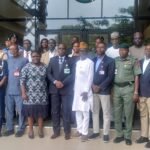
Pate spoke at a one-day high-level public health symposium themed “Lessons on Pandemic Preparedness and Response: Insights from China and Nigeria,” on Monday in Abuja with key stakeholders attending.
He warned that infectious disease outbreaks, if not contained early, could evolve into epidemics and pandemics, stressing that “it is not a matter of if, but when,” globally.
According to him, persistent threats of zoonotic spillovers highlight strong interconnections between environmental, animal and human health systems, which collectively shape disease emergence, transmission patterns, and global public health risks.
“Outbreaks start small, grow into epidemics, and ultimately, if uncontrolled, become pandemics that disrupt the course of human civilisation,” he said.
Referencing historical and recent global health crises, he said that infectious diseases had consistently shaped human history, influencing development trajectories, economic stability, and population outcomes across different regions over time.
Pate emphasised that pandemics’ impact extended far beyond health systems, citing COVID-19, which caused a 5.5 per cent contraction in global GDP and wiped off nearly 15 trillion dollars.
“Economies stopped. During Ebola in Nigeria in 2014, economic activities slowed significantly due to fear, affecting businesses and livelihoods across sectors,” he said.
He emphasised that public health security was directly linked to economic and national security, requiring coordinated multi-sectoral responses involving health, agriculture, environment, and security institutions at national and subnational levels.
The minister highlighted lessons from Nigeria’s response to past outbreaks, particularly the role of the Nigeria Centre for Disease Control and Prevention (NCDC) in coordinating national efforts during public health emergencies nationwide.
According to him, preparedness must be proactive and continuous, requiring sustained investment in resilient health systems, including primary healthcare, skilled human resources, diagnostics capacity, and local pharmaceutical manufacturing development initiatives.
“It is not when an outbreak occurs that we begin to invest; by then, it is already too late,” he cautioned, urging forward planning.
Pate also underscored the importance of strong public health institutions, noting ongoing efforts to strengthen research, surveillance, and response capacities across teaching hospitals and national health research institutes nationwide.
The minister further highlighted the importance of trust and community engagement, especially in an era of misinformation, where public confidence in science-driven responses remained critical during health emergencies globally.
“People must trust what scientists tell them; otherwise, misinformation and conspiracy theories can undermine response efforts,” he said, referencing recent engagements with traditional and religious leaders nationwide.
He identified frontline health workers as central to effective response, noting that nearly 79,000 personnel had been retrained over the past two and a half years.
“Without frontline workers, responding to pandemics is like going to war without an army,” Pate said, calling on states to prioritise their protection, training, and welfare adequately.
He also stressed the need for local production of vaccines, therapeutics, diagnostics, and medical supplies to reduce reliance on global supply chains often disrupted during crises such as COVID-19.
According to him, Nigeria is making progress through a presidential initiative aimed at unlocking the healthcare value chain, with several manufacturing projects underway and others currently in development.
Minister of Agriculture and Food Security, Sen. Abubakar Kyari, emphasised early preparation as critical, especially amid rising environmental, social, and economic pressures increasing vulnerability to disease outbreaks across countries.
Kyari said that poverty, urbanisation, food systems, and environmental changes contributed significantly to disease risks, requiring deeper analysis and proactive interventions across sectors before public health crises emerge globally.
He explained that the agriculture sector was strengthening structures, including plant health and pest control systems, to better understand and manage disease dynamics within food production systems nationwide.
“When there is no pandemic is the best time to prepare, because decisions can be made clearly without the pressure.”
Kyari reaffirmed the role of the One Health approach, integrating human, animal, and environmental health systems, as essential for effective pandemic preparedness and response strategies in Nigeria and beyond.
Also speaking, the Chinese Ambassador to Nigeria, Mr Yu Dunhai, said global infectious disease threats remained complex, with rising risks driven by mutations and increasing cross-border transmission worldwide.
He emphasised that developing countries faced increasing challenges in accessing vaccines, medicines, and critical health resources, amid shrinking global public health assistance and financing systems internationally.
Dunhai said that strengthening Nigeria-China cooperation in public health aligned with shared aspirations for improved health outcomes and long-term development goals for both countries in the future.
He recalled that both nations elevated their relations to a comprehensive strategic partnership in 2024, providing a foundation for expanded collaboration in health and scientific innovation efforts.
“China stands ready to work with Nigeria and other partners to explore health development pathways suited to developing countries,” he said, reaffirming commitment to South-South cooperation.
He added that China would continue supporting Nigeria through technical cooperation, scientific exchange, and partnerships with multilateral organisations such as the World Health Organisation (WHO) in addressing global health challenges.
The News Agency of Nigeria (NAN) reports that the symposium brought together policymakers, researchers, and development partners to share lessons from past pandemics and strengthen preparedness frameworks in an interconnected world.(NAN)(www.nannews.ng)
Edited by Abiemwense Moru