










By Daniel Oyeleke/Folasade Akpan
The Planned Parenthood Federation of Nigeria (PPFN) has unveiled a seven-year project aimed at expanding access to sexual and reproductive healthcare services for women, adolescents and marginalised groups.
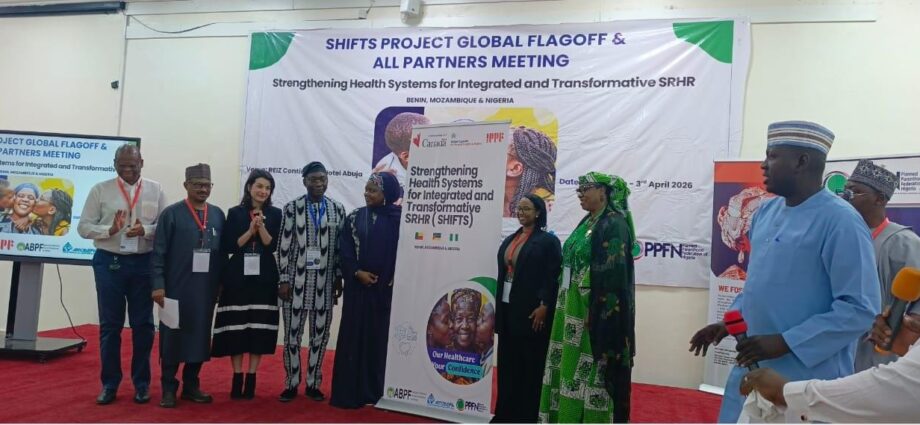
PPFN President, Mr Bitrus Laori, said this at the official unveiling of the Strengthening Health Systems for Integrated and Transformative SRHR (SHIFTS) Project in Abuja.
He described the project as a significant milestone in collective efforts to advance sexual and reproductive health and rights across participating countries.
Laori said that Nigeria still recorded one of the highest maternal mortality ratios globally, estimated at 512 deaths per 100,000 live births.
According to him, contraceptive prevalence remains low at about 15 per cent among married women, while unmet need for family planning continues to affect millions.
He added that adolescent fertility alsoremained high, with 19 per cent of girls aged 15 to 19 already mothers or pregnant.
“We envision a society where all individuals can exercise their rights and access quality sexual and reproductive health services without discrimination,” he said.
Also speaking, Technical Lead at PPFN, Mr Sunmonu Tiamiyu, said SHIFTS would further strengthen efforts through strategic partnerships and innovative service delivery approaches.
He noted that the project would be implemented across six states, Adamawa, Edo, Enugu, Kaduna, Niger and Oyo, covering all geopolitical zones.
According to him, the initiative will support 90 health facilities using a cluster model to improve efficiency, referrals and quality of care.
He explained that the model involved linking smaller facilities to comprehensive centres to ensure access to a wider range of services.
Tiamiyu said the project would prioritise people-centred care by expanding choice, widening access and improving digital service delivery systems.
He added that special attention would be given to marginalised groups, including persons with disabilities and women with limited time to access facility-based services.
“Some women work long hours and cannot easily visit health facilities, so we take services closer to them to meet their needs,” he said.
According to him, SHIFTS will promote advocacy and community participation to shift harmful norms and improve health-seeking behaviour.
Tiamiyu said the project would also focus on adolescents and young people through peer education and digital platforms.
He explained that creating safe spaces for young people to access accurate information was critical to improving reproductive health outcomes.
Also speaking, SHIFTS Coordinator, Maryam Zudi, said the project aimed to improve service quality, strengthen advocacy and support policies that enhanced access to healthcare for targeted beneficiaries.
She added that the programme would be implemented across Nigeria, Benin and Mozambique.
While unveiling the project, the wife of Niger Governor, Hajiya Fatima Bago, commended partners for their commitment to improving access to reproductive health services.
Bago said the project came at a critical time when Nigeria must address maternal mortality, unmet family planning needs and inequities in healthcare access.
She said the initiative aligned with ongoing efforts in Niger to strengthen primary healthcare, including plans to establish 100 level-two facilities within two years.
According to her, 24 facilities had already been constructed and equipped, with ambulances and upgraded infrastructure to improve maternal and child health outcomes.
She stressed that empowering women and young people with information and access to services remained key to building healthier families and resilient communities.
Bago called on stakeholders to sustain partnerships, ensure accountability and support effective implementation of the project across beneficiary states.
The News Agency of Nigeria (NAN) reports that the SHIFTS Project is a seven-year, Global Affairs Canada-supported initiative.
It is designed to strengthen health systems and improve access to quality SRHR services for women, adolescents and marginalised populations across Nigeria, Benin and Mozambique.(NAN)(www.nannews.ng)
Edited by Abiemwense Moru