










By Mustapha Yauri
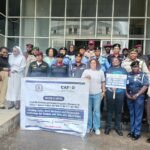
The Sasakawa Africa Association (SAA) has commenced training of agro-dealers to strengthen support for 100,000 smallholder maize and soybeans farmers.
The training targeted Kaduna and Niger states towards boosting productivity and enhancing food security.
Prof. Isaac Eni, Consultant to SAA, disclosed this during a two-day training for agro-dealers in Zaria on Wednesday.
The News Agency of Nigeria (NAN) reports that the training was organised by SAA in partnership with other stakeholders to improve farmers’ access to quality agricultural inputs and enhance productivity along the maize and soybean value chain.
The programme is titled: “Training of Agro-Dealers on Safe Handling and Sale of Agro-Chemicals, Improved Maize and Soybeans Seed Varieties and Fertilisers; Business Skills, Inventory Management and Record Keeping”.
The programme is being implemented under SAA’s project on enhancing the productivity and competitiveness of smallholder farmers in maize and soybean systems in Nigeria.
Eni said: “The initiative targets 100,000 smallholder farmers across 12 Local Government Areas in Kaduna State and eight LGAs in Niger”.
According to him, improving farmers’ access to accurate information on agricultural inputs is critical to addressing low yields and strengthening national food security.
He noted that agro-dealers play a strategic role in agricultural development because they were often the closest source of advisory support available to rural farmers.
“Farmers depend heavily on agro-dealers for seeds, fertilisers and agro-chemicals; By strengthening the dealers’ knowledge, we are indirectly improving farmers’ productivity and contributing to food security,” Eni said.
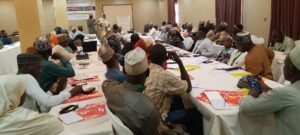
He added that the training equipped agro-dealers with skills in safe handling of agro-chemicals, improved agronomic practices and enterprise management to promote sustainable agricultural practices.
Eni described agro-dealers as potential “semi-agricultural extension agents,” particularly in view of the shortage of agricultural extension workers across the country.
“With limited extension personnel, empowering agro-dealers helps bridge the knowledge gap and ensures farmers receive timely guidance that can improve yields and reduce production risks,” he said.
Earlier, Mukhtar Ibrahim, AGRA Desk Officer for the Maize and Rice Consortium Project in Kaduna State, said the training was to strengthen collaboration across the agricultural value chain.
He said the initiative would enhance synergy among agro-dealers, farmers, and agro-service providers, ultimately improving food production outcomes.
The News Agency of Nigeria (NAN) reports that a cross section of articipants described the training as timely and impactful.
Mr. Dauda Yusuf, an agro-dealer from Ikara local government area, said the programme had improved his technical and business knowledge, enabling him to better serve farmers and expand his enterprise.
Similarly, Malam Umar Ishaq from Igabi LGA said the training highlighted critical safety precautions often overlooked in agro-chemical handling.
He added that sharing the knowledge with farmers at the grassroots would help prevent health hazards, reduce crop losses and increase yields.
NAN reports that the AGRA-funded project aims to improve the productivity and competitiveness of smallholder farmers by enhancing both the quantity and quality of domestically produced maize and soybeans.
The three-year value chain and market-oriented project, which commenced in Sept. 2025 and would end in March 2028, targets 100,000 beneficiaries, with 60,000 maize farmers and 40,000 soybeans farmers
It comprises 50 per cent women, 40 per cent youths, and the remaining 10 per cent for men and persons living with disabilities. (NAN)
Edited by Muhammad Lawal