


By Busayo Onijala, News Agency of Nigeria (NAN)
With over 1,400 laboratories across its campuses, Imperial College London is shaping solutions to some of the world’s most pressing challenges.
These solutions cover disease control, food security, environmental sustainability, engineering and more.
During a guided tour as part of a learning visit to London, Nigerian and Ghanaian journalists explored the cutting-edge laboratories where science, technology and collaboration are being harnessed to make global impacts.
One of such laboratories is the Digital Diagnostics for Africa Laboratory where solutions are being developed to address one of health sector’s biggest gaps, diagnostic tests.
Prof. Aubrey Cunnington, Head of Section and Professor in Paediatric Infectious Disease, Imperial College London, noted that diagnostic tests underpinned the delivery of a lot of healthcare.
He said that access to diagnostic testing remained a major challenge worldwide, particularly in underserved regions.
“Diagnostic tests are really important for healthcare, but a lot of people in the world don’t have adequate access.
“It is like wearing a blindfold when you are trying to provide medical care, because you don’t know what you are dealing with.
“You don’t know the right treatment or how diseases are spreading,” the professor said.
To address this, the lab is developing portable, technology-driven solutions that bring diagnostics directly to patients, outside traditional laboratory settings, according to Cunnington.
He explained that two key technologies were central to this effort – Dragonfly and Lacewing.
Dragonfly is a simple, portable lab-in-a-bag technology which gives results as a colour change in a little tube.
“Lacewing is a sample-to-result system. The idea is that your sample goes into a cartridge, then into a small handheld machine, and after 20 minutes, you get the diagnosis.”
Such tools, he said, could transform healthcare delivery by enabling faster diagnosis, improving treatment decisions and strengthening disease surveillance across Africa.
Beyond diagnostics in healthcare, another facility, Target Malaria Lab, showcased how innovation is being applied to tackle malaria, one of Africa’s most persistent public health challenges.
Worldwide, there are over 3,570 species of mosquitoes, and 677 of those are in Africa.
According to the World Health Organisation, in 2024, there were an estimated 282 million malaria cases and 610 000 malaria deaths in 80 countries, with the Africa carrying a high share of the burden.
At the Target Malaria Lab, researchers are using advanced genetic approaches to reduce mosquito populations responsible for transmitting malaria.
Dr Federica Bernardini, a researcher at the lab, said that a natural genetic mechanism called Gene drive was being adapted to spread a genetic modification in malaria-causing mosquitoes.
She said that Gene drive enabled specific traits to be passed on at higher rates than normal, allowing a modification introduced in a small number of mosquitoes to spread across an entire population.
“If the modification affects the mosquito’s reproductive ability, the Gene drive reduces the mosquito population size overtime.”
Bernardini said that the technology held promise as a cost-effective and self-sustaining method for malaria control.
At the Translation and Innovation Hub of Imperial’s White City Campus, the Muju Earth Lab presented a stark reminder of global food challenge.
Founded by a Nigerian entrepreneur, Ifeoluwa Afolayan, the agritech startup is tackling soil degradation caused by intensive farming practices.
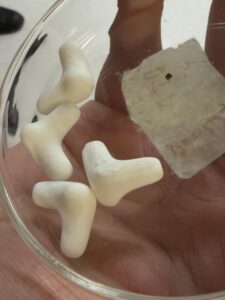
Afolayan said that poor soil management had led to loss of estimated 24 billion tonnes of soil annually, warning that up to 90 per cent of soils could become unable to support food production by 2090, if the trend would continue.
Climate change is worsening the situation, with even advanced economies affected, according to Afolayan.
“The UK recently experienced its second worst harvest year, underscoring the global scale of the problem,” she said.
She noted that healthy soils could take up to a decade to recover.
To address this gap, Muju Earth has developed Aeropods, nature-activated, climate-responsive soil aeration capsules designed to improve soil health without compromising immediate yields.
She said that the capsules would activate when soil would reach critical levels of compaction and moisture, reducing oxygen stress and improving soil conditions.
According to Afolayan, each hectare of farmland requires about 50,000 Aeropods, equivalent to one million seeds, annually.
“By enabling continuous soil aeration for the first time, Aeropods could change how soil health is maintained at scale,” she said.
She added that the innovation fitted within a broader commercial and policy-driven ecosystem, shaping the future of regenerative agriculture, while large-scale deployment would also generate data to continuously improve the technology.
Meanwhile, Polymateria Lab is tackling plastic pollution through the development of biodegradable materials designed to reduce environmental impact.
Across the laboratories, collaboration was evident, with researchers combining expertise in medicine, engineering, data technology and others.
This aligns with the vision of the institution’s President, Prof. Hugh Brady, who emphasised that solving global challenges such as pandemics, food insecurity, and climate change would require multidisciplinary and international collaborations.
Works emerging from Imperial’s laboratories reflect this approach, demonstrating how research and global partnerships are delivering practical solutions to the world’s most urgent problems. (NANFEATURE) (www.nannews.ng)
***If used, please credit the writer and the News Agency of Nigeria (NAN) **
Edited by Ijeoma Popoola


Comments