



By Sumaila Ogbaje
The Minister of Budget and National Planning, Sen. Atiku Bagudu, has underscored the urgent need for Nigerian youths to understand and engage in addressing the root causes of conflicts.
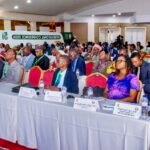
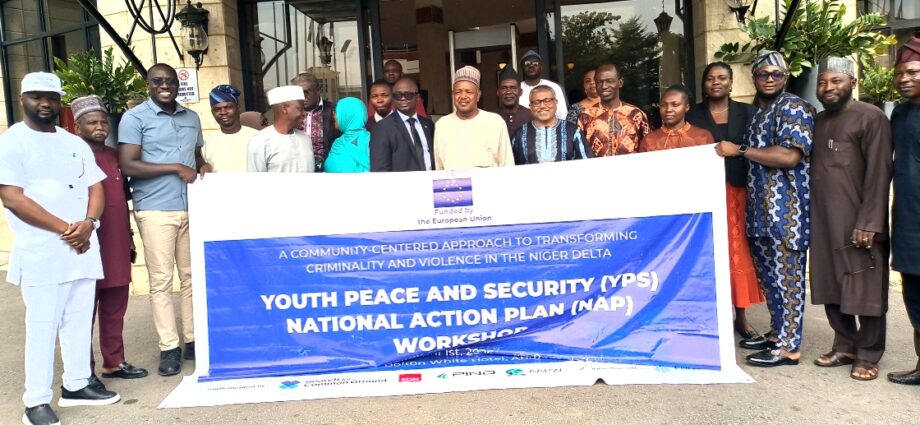
Bagudu made this known on Wednesday in Abuja, at the Youth Peace and Security Planning Workshop organised by Search for Common Ground Nigeria in collaboration with the Ministry of Youth Development,
He said that peace and security were fundamental prerequisites for national development, identifying historical grievances, competition over resources, and mismanagement of land as key drivers of local conflicts.
The minister said that various conflicts had been exacerbated by the breakdown of historical arrangements, modernisation pressures, corruption, and exploitation by outsiders.
“When I was governor, I observed that many young people can not articulate or explain the drivers of conflict in their communities.
“If they do not understand these drivers, they cannot effectively contribute to solutions,” he said.
Bagudu urged that youth must be equipped with knowledge of conflict drivers, both historical and contemporary, and encouraged collaboration across ethnic, religious, and regional lines.
He also emphasised the role of institutions including religious organisations, in guiding communities, warning that leaders could either mislead or educate depending on their messaging.
Describing the broader national context, Bagudu pointed out that Nigeria’s challenges were not population size or religious diversity, but the need for youth to understand underlying causes of conflict and participate actively in fostering collaboration.
He drew lessons from countries like China, India, and Pakistan, which have managed large, diverse populations successfully.
Bagudu urged youth to leverage education, civic engagement, and social collaboration to build harmonious communities.
“We must create an environment where religion, tribe, or origin do not divide us, and where young people grow up collaborating, sharing, and building for the common good,” he said.
Representing the Minister of Youth Development, Mr Tayo Olosunde, Senior Technical Adviser on Institutional Capacity and Programme Sustainability, highlighted Nigeria’s rich cultural, religious, and demographic diversity.
Olosunde said finding common ground is critical in such a context. “Nigerians are highly opinionated, and every voice matters.
He commended the ability of the current administration to bring diverse opinions together and build consensus to ensure full implementation of the National Action Plan.
“Today’s gathering provides an opportunity to reflect on progress in implementing the National Action Plan on Youth, Peace and Security and explore ways to advance it further,” he said.
Despan Kwardem, Director of Education and Youth Developmet, Ministry of Youth Development, explained that the workshop aims to revise Nigeria’s first National Action Plan on Youth, Peace and Security, developed in 2021.
He said the plan was designed in collaboration with civil society and the Institute for Peace and Conflict Resolution.
Kwardem noted that the plan positioned young people as frontline actors in peace promotion, turning them from perceived drivers of insecurity into agents of peace.
“The revised plan seeks to actively engage youth within their communities. Young people are not bystanders in insecurity—they are participants.
“If they do not take positive roles, criminal elements may dominate and intimidate others,” he said.
Kwardem also highlighted the ministry’s help desk, which has successfully resolved over 5,000 complaints between youth and security agencies, and stressed the need to engage online communities that have become significant spaces for influence and recruitment into violent extremism.
Saji Frelis, Global Director of Children and Youth Programmes at Search for Common Ground, said the workshop brings together government, civil society, and donors to support Nigeria’s second National Action Plan.
Frelis, who is also co-chair, Global Coalition on Youth, Peace and Security, described for action plan as forward-looking, intergenerational, and impact-focused.
According to him, the first NAP was groundbreaking, but it was difficult to measure long-term impact.
He emphasised the social and economic value of investing in youth peacebuilding, citing evidence that every dollar invested can yield a five to 10 dollars return.
“Today, Nigeria has the opportunity to lead with a plan that is collaborative, impact-oriented, and measurable over time,” he said.
Frelis said Search for Common Ground is providing technical support to ensure the revised plan is inclusive, with a robust impact framework that stakeholders can use to track progress.
He expressed optimism that by next year, the new NAP will enable Nigeria to demonstrate measurable improvements in youth agency, institutional trust, intergenerational cooperation, and community safety.
The event brought together government officials, civil society actors, and development partners to consolidate efforts toward a more prosperous, inclusive, and peaceful Nigeria. (NAN) (www.nannews.ng)
Edited by Sadiya Hamza