









By Kemi Akintokun
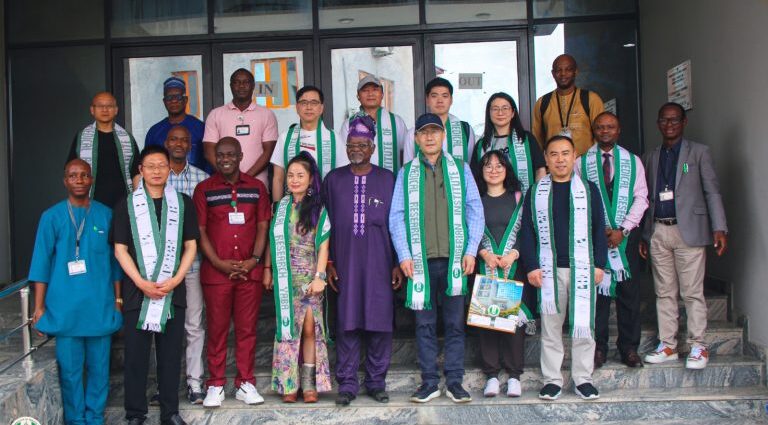
A Chinese scientific delegation has visited the Nigerian Institute of Medical Research (NIMR) to explore opportunities for strategic collaboration in infectious disease research, vaccine development, and capacity building.
The delegation was led by Prof. George Gao, a renowned Chinese Virologist and former Director-General of the China Center for Disease Control and Prevention (China CDC).
The delegation, which included experts from the Chinese Academy of Sciences, China CDC, Peking University, and Shanghai Junshi Biosciences, were on a visit to some Nigerian health institutions.
Speaking during the meeting held at NIMR, Gao said the visit was part of ongoing efforts to strengthen scientific partnerships with African institutions, particularly in areas of shared public health concern.
“We are here looking for future collaborations in Nigeria.
“I have worked extensively in Africa and understand the public health landscape, there is a strong basis for partnership,” he said.
Gao, who played a frontline role in virus discovery and vaccine development during the COVID-19 pandemic, noted that global health threats such as emerging and re-emerging diseases required cross-border scientific cooperation.
The virologist highlighted existing professional relationships with Nigerian public health leaders, underscoring a history of engagement between Chinese and Nigerian health institutions.
Speaking also, Prof. John Obafunwa, the Director-General of NIMR , welcomed the delegation and reaffirmed the institute’s readiness to partner global institutions to strengthen Nigeria’s research and innovation capacity.
Obafunwa emphasised that collaborations not only advanced science but also built local capacity and addressed health challenges specific to the African context.
He said NIMR had built research capacity over the years, noting an urgent need for strategic partnerships that would support research and focus on transition from research to full-scale production, particularly in vaccines and diagnostics.
“We have facilities we can start with, but we are still in the middle of developing full vaccine production capacity but with the right collaboration, we can move from potential to impact,” he said.
The D-G reaffirmed NIMR’s commitment to expanding collaborations with both local and international institutions, including the Nigeria Centre for Disease Control (NCDC), the World Health Organisation (WHO), and universities within Nigeria, U.S. and UK.
He noted that a bulk of the institute’s work was sourced through international partners.
He added: “I observe that some of the things that foreign donors/grantors focus on are things that peculiar to their environment, as opposed to things that are related to our environment.
“I’m hoping that this relationship can modify that approach.
“Of course, there are things that cut across boundaries but again, we want to possibly concentrate more on things that are common in our environment”.
The NIMR boss also highlighted the institute’s growing capabilities in molecular biology and genomics but stressed the need for advanced technologies and training to reduce dependence on foreign laboratories.
“It is time we looked inward rather than depending on other countries for whole human genome sequencing,” he said, calling for support in technology transfer and capacity building for Nigerian scientists.
Obafunwa, however, pointed to infrastructure and funding gaps as key challenges limiting optimal performance.
He disclosed that plans for a centralised, fully equipped research laboratory were yet to materialise due to funding constraints, resulting in fragmented facilities across departments.
The engagement marked a significant step in deepening Nigeria–China cooperation in medical research, with both sides expressing optimism about translating discussions into tangible, high-impact projects.
The visit featured technical presentations from both sides, including cutting-edge research on next-generation vaccine development.
A key presentation by Prof. Han Wang of Peking University, focused on advances in Mpox vaccine development, with an emphasis on creating safer, more effective, and affordable vaccines tailored for regions with the highest disease burden, including Africa.
According to Wang, current vaccine options faced significant limitations, including safety concerns, reduced effectiveness, and high costs—factors that restrict access across many African countries.
“Africa is where vaccines are most needed, yet affordability remains a major barrier,” she noted, citing costs of over 60 dollar per dose for some existing vaccines.
She explained that her team was developing a next-generation, cost-effective vaccine using a novel “chimeric immunogen” approach, designed to improve immune response while simplifying production.
Wang noted that preliminary findings showed significantly higher immune response levels compared to traditional vaccines, alongside improved safety and potential for broader accessibility.
According to her, the research, which is being advanced in collaboration with industry partners, is expected to contribute to global efforts to control Mpox and similar viral outbreaks.
The visit also created a platform for both institutions to explore collaboration in areas such as vaccine research and development, genomic sequencing, clinical trials, technology transfer and training and rapid response to emerging infectious diseases.
The Chinese delegates, led by Prof. George Gao, were Dr Hong Yang also from China CDC; Prof. Haitao Hu, Prof. Jiawxwu Qi, Prof. Likui Wong from the Chinese Academy Of Science; Prof. Ham Wang from Peking University, Zhuobing Zhang and Siyuan Wang from Shanghai Junshi Bioscience Company.
Others were Siu Sun of Carloha Nigeria, Rainy Farid Folake, CEO AFKMED Biotech Nigeria Ltd. and Adelowo Emmanuel, also of AFKMED,
The NIMR team, led by Obafunwa, included Head of NIMR Clinical Trial Centre, Dr David Oladele, Head, Centre for Human Virology, and Dr Azuka Okwuraiwe, Head Biochemistry and Nutrition Department
Others were Dr Olusola Ajibaye, Manager, NIMR Biobank, Dr Toyosi Raheem; Dr Victor Akinseye of the Tuberculosis laboratory, Dr Chika Onwuamah Head, Central Research Laboratory and Mr. Sam Eferaro, the Media Consultant. (NAN) (www.nannews.ng)
Edited by Vivian Ihechu