








By Grace Alegba
An economist, Prof. Jonathan Aremu, has urged the Federal Government to align annual budgets with Nigeria’s development plan for effective implementation and measurable progress.
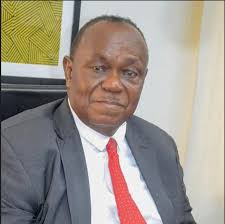
Aremu, Professor of International Economic Relations at Covenant University, gave the advice in an interview with the News Agency of Nigeria (NAN) in Lagos.
He reacted to President Bola Tinubu’s assent to the 2026 Appropriation Bill of N68.32 trillion and extension of the 2025 budget to June 30, 2026.
He said standard economic practice required annual budgets to derive from development plans, serving as phased instruments for executing clearly defined national priorities.
According to him, any disconnect between the budget and development plan could undermine policy coherence, monitoring, and overall economic outcomes.
“The development plan is the bedrock of economic management. The annual budget is simply a breakdown into implementable yearly components,” he said.
Aremu expressed concern over the extension of the 2025 budget, noting rollover of unspent funds raised questions about alignment with the development framework.
He said it was difficult to situate such fiscal actions within conventional public finance principles without adequate data and clarity from authorities.
“I do not fully understand a situation where funds meant for a fiscal year are extended. It is unclear how this fits development plan structures,” he said.
The economist noted Nigeria’s development plans, from post-independence to the 2021–2025 framework, include detailed financial programming and monitoring mechanisms.
Aremu, also a consultant to the ECOWAS Common Investment Market, stressed that deviations from structured planning must be clearly explained and backed by transparent data.
He described ongoing tax reforms as positive for revenue generation, but said effectiveness would depend largely on proper implementation and alignment with development plans.
“Tax reform is a good initiative, but implementation is key. Without alignment with development plans and budgets, its impact may be limited,” he said.
He added that directives to improve revenue remittances could support fiscal performance if properly integrated into the broader development strategy.
On capital expenditure, Aremu said allocating a significant portion of the 2026 budget to capital projects was commendable for infrastructure and economic growth.
He cautioned that such spending must align with clearly defined priorities within the national development plan to achieve desired outcomes.
The economist stressed the need for clarity on how current fiscal decisions align with existing plans or for a revised framework where necessary.
“If there is a new direction, it should be documented. Development planning requires structure, data, and consistent monitoring, not trial and error,” he said.
He urged stronger coordination between planning and budgeting institutions to ensure Nigeria’s economic trajectory remains focused and measurable.
Aremu, a retired Acting Assistant Director of Research at the Central Bank of Nigeria, called for improved transparency in budget implementation.
He said transparency would enable stakeholders to assess performance against set targets and strengthen accountability in public finance management.
The economist reiterated that Nigeria’s size and strategic position demand disciplined planning and execution to drive sustainable growth.
“Budgeting and development planning must go hand-in-hand to achieve long-term economic objectives,” he said.(NAN)(www.nannews.ng)
Edited by Kamal Tayo Oropo