








By Philomina Attah
The Federal Government has reaffirmed its commitment to bridging the trust deficit between the government and the Nigerian youth through targeted empowerment and protection frameworks.
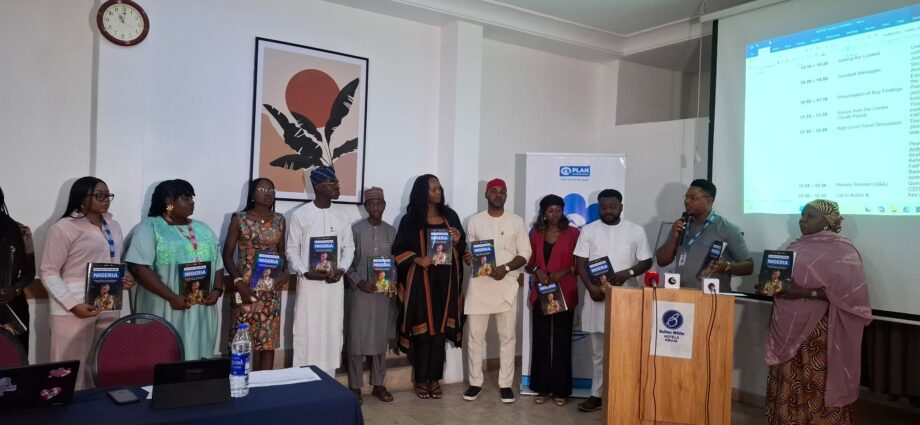
Ms Kehinde Awujoola, the Senior Special Assistant (SSA) on Gender Matters to the Minister of Youth Development, gave this assurance in Abuja on Thursday during the launch of the ‘Put Us at the Centre’ research report.
The report, produced by Plan International Nigeria, highlights the experiences of children and youth in the Northeast regarding humanitarian assistance and the impact of funding cuts.
Awujoola noted that the ministry was working on a “SEP” work plan an acronym for ‘Support, Empower, and Protect’ to address the specific challenges identified in the report, including safety, protection, and access to quality education.
“The Nigerian youth are disappointed in the government; they don’t believe anymore. We have a challenge where even opportunities they can grab on their phones are ignored because they feel their voices are not heard.
“It is a process to win back this trust, and we are going there. We want the Nigerian youth to feel the government more and feel closer to us when they have issues, especially regarding safety and protection,” she said.
Awujoola added that the ministry has established a ‘Youth Help Desk’ to handle issues such as police brutality and also launched the ‘Waste to Wealth’ programme to build the capacity of graduates who are unemployed.
In his remarks, Mr Jonathan Abakpa, Advocacy and Youth Programme Lead for Plan International Nigeria, acknowledged the government’s efforts but stressed the need for consistent accountability.
“It gives us assurance that we still have voices within the government who can speak truth to power when it is most necessary,” he said.
Contributing to the panel discussion, Mr Ibrahim Sunoma, Deputy Speaker of the National Children’s Parliament, urged stakeholders to take proactive roles in nation-building.
“Let everyone sweep in front of his own door and the world will be clean again. No matter how long the night is, darkness must give way to the light of dawn,” Sunoma stated.
Addressing the issue of sustainability, Mr Aniebiet Obot, Research Lead at Envision Platform, called on the government and NGOs to move from short-term projects to long-term programming.
“When we execute a project in a community, we must think of sustainability. Instead of just planting beautiful trees, why not plant economic crops that the people can sustain for their livelihoods?” he asked.
Ms Faith Karang, Programme Specialist with the Norwegian Refugee Council (NRC), emphasised the need for integrated programming that combines education, livelihoods, and protection.
“NRC is committed to the localisation agenda, partnering with youth-led and women-led groups to ensure they have the capacity to engage directly with donors,” she said.
Mr Anthony Sie, Child Protection Specialist at Plan International Nigeria, called for a “power shift” rather than just power sharing.
“We need to move from consultation to accountability. This can only happen if we rethink and ensure there is a deliberate power shift to young people and children,” Sie said.
Also speaking, Mrs Halima Ciroma, Director of Administration at the Borno State Ministry of Women Affairs and Social Development, pledged to present the report’s recommendations to the state government for immediate action.
The News Agency of Nigeria (NAN) reports that the ‘Put Us at the Centre’ report was based on consultations with 132 participants across Borno, Adamawa, and Yobe States.
NAN also reports that the report identified safe education, food security, and child protection as the top priorities for youth in crisis-affected areas.(NAN)(www.nannews.ng)
Edited by Folasade Akpan