









By Justina Auta
The Women Advocates Research and Documentation Centre (WARDC) and partners have intensified efforts to tackle online abuse against women and girls.
The efforts have resulted to the unveiling of a new research and stakeholder training in Sub-Saharan Africa.
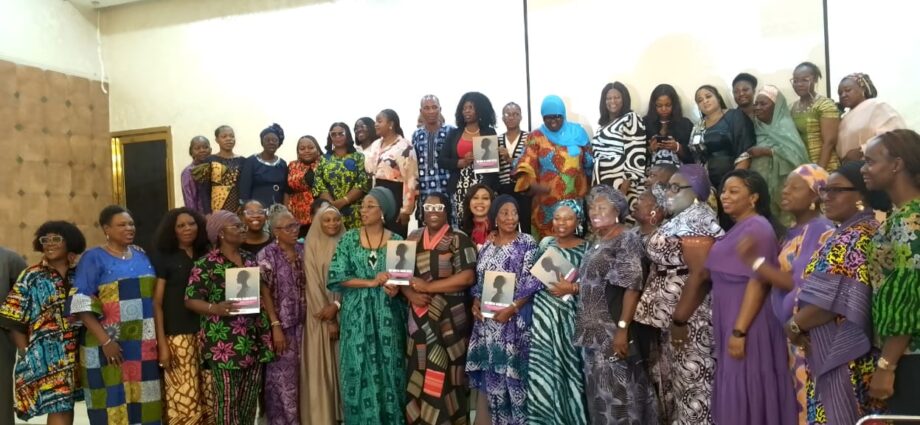
The report, titled “The Digital Harm Effect: Confronting Technology-Facilitated Violence Against Women and Girls in Africa: A Case Study of Nigeria and Kenya” was unveiled in Abuja.
The programme, in partnership with the International Federation of Women Lawyers (FIDA), Kenya, is being supported by the United Nations Trust Fund (UNTF).
Dr Abiola Akiyode-Afolabi, Research Lead and Editor of the report, noted the increasing misuse of digital platforms to perpetrate abuse across Sub-Saharan Africa.
Akiyode-Afolabi said the report highlighted the prevalence, forms and far-reaching impacts of technology-enabled violence across the region.
She highlighted the prevalence, patterns and far-reaching impacts of online harassment, cyberstalking, image-based abuse and other forms of digital violence targeting women and girls in the region.
”Through the research, we engaged a wide range of participants and discovered significant gaps, including widespread stigma and underreporting.
”The findings revealed that many young women face severe online threats, with some even contemplating suicide as a result of the abuse they experience.
”We also identified cases where certain online business platforms, particularly those offering small-scale financial support, often below N100,000 have exploited women using digital tools,” she said.
According to her, the project has reached 2,000 people across Nigeria and Kenya.
Dr Princess Olufemi- Kayode, Acting Executive Director, WARDC, stressed the need to educate the public, especially women and girls on navigating digital space safely.
Olufemi-Kayode also called for the establishment of laws and policies to effectively address emerging challenges associated with technological advancement such as AI.
”Empowering women and girls includes educating them on privacy settings, responsible online behaviour, and digital etiquette on communicating and engaging safely online.
”Artificial intelligence continues to evolve rapidly, and as it does, laws and policies must also evolve to effectively address emerging challenges associated with technological advancement,” she said.
Dr Adedayo Laniyi-Benjamins, Mandate Secretary, FCT Women Affairs Secretariat, stressed the need to ensure that technology-driven, technology-enabled gender-based violence is directly challenged, both in terms of perception and in the delivery of justice.
”We must be able to identify perpetrators, call them out, and hold them accountable. Where threats arise, it is important to report to appropriate authorities,” she said.
Evelyn Ugbe, Executive Director, Centre for Redefining Alternative Civic Engagement for Africa (RACE), noted the trend of using AI to manipulate images and videos.
Ugbe said that the trend had added to mental and psychological trauma for survivors of Technology-Facilitated Violence Against Women and Girls (TFVAW/G) without access to psychosocial support.
”This highlights a growing concern that while young people have increasing access to technology, they often lack knowledge about its ethical use,” she said.
According to her, RACE centre is working to establish digital safety clubs in schools to equip both educators and students with the skills to use technology responsibly.
She said that the centre also established the Feminist Digital Watch, a safe space for survivors of online gender-based violence.
“The initiative aims to bridge gaps in access to mental health, legal and psychosocial support, while also creating platforms for collective advocacy, learning and empowerment,” she said.
According to her, the book is part of a broader project aimed at strengthening inter-generational movements to demand accountability, combat emerging digital threats, and promote coordinated action among women’s rights groups.
The News Agency of Nigeria (NAN) reports that various stakeholders were in attendance to share experiences, exchange strategies and advance collective responses to the growing challenge of technology-facilitated violence.
They include women rights advocates, media practitioners and other stakeholders(NAN) (www.nannews.ng)
Edited by Dorcas Jonah/Kadiri Abdulrahman