







By Mark Longyen, News Agency of Nigeria (NAN)
When UN Secretary-General, Antonio Guterres, eulogised China as “the country that has made the greatest contribution to global poverty reduction,” he was, in effect, articulating what many observers already acknowledge about China’s record-time economic transformation.
“China has lifted over 800 million people out of poverty, which is the greatest poverty reduction feat in history,” Guterres wrote in a message to the 70th anniversary of the founding of the People’s Republic of China in 2019.
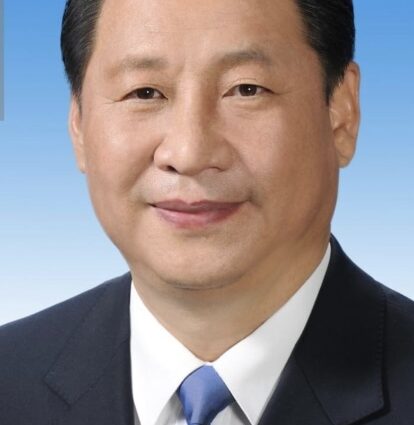
Building on this achievement, Chinese President, Xi Jinping, announced in 2020 that under his leadership, China eliminated absolute poverty by lifting over 100 million people out of destitution within seven years; an unparalleled feat in human history.
Similarly, China became the first developing country to achieve the UN’s Millennium Development Goals, having lifted more than 12 million people out of poverty annually between 2013 and 2018, thereby reducing poverty from 10.2 per cent to 1.7 per cent.
Indeed, China’s transition from a poverty-stricken nation 50 years ago to its current status as the world’s second-largest economy remains one of the most remarkable economic transformation stories globally.
Analysts say the country’s growth trajectory; from widespread poverty to a contemporary global economic powerhouse offers a complex but instructive case study in state-led capitalism.
Historically, in the late 1970s, China was largely agrarian, with over 80 per cent of its population living below the poverty line and a GDP per capita of about 158 dollars.
This placed it at par with, or even below, some of the world’s poorest nations, including Burundi, Chad, Cape Verde, Madagascar, Malawi, Mozambique, Niger and Liberia.
However, fast forward to the present, China’s GDP per capita has surged to approximately 14,730 dollars, while its nominal GDP stands at about 20.85 trillion dollars.
In addition, China now holds the world’s second-largest financial assets, valued at over 20 trillion dollars, and has evolved into a global hub for high-tech innovation and international trade.
It is also one of the largest recipients of Foreign Direct Investment (FDI), attracting inflows of 107 billion dollars, while maintaining the third-largest outbound FDI at 192.20 billion dollars.
Beyond macroeconomic indicators, the country boasts one of the highest home ownership rates globally, with nearly 90 per cent of urban households owning residential properties.
Nevertheless, analysts emphasise that China’s transformation was neither sudden nor accidental.
Rather, it was driven by a carefully articulated development strategy, anchored on successive five-year plans; implemented consistently over decades and guided by policies of reform, review, modernisation and opening up to the world.
Prof. Zhang Yongpeng of the Institute of West Asian and African Studies, Chinese Academy of Social Sciences, attributes China’s success largely to the strategic leadership of the Communist Party of China (CPC).
According to him, the CPC provides consistent policy direction and ensures alignment of economic initiatives with long-term national development goals.
Crucially, this approach integrates rural development into national planning, promoting inclusive growth and minimising environmental degradation.
In effect, China has blended elements of socialism and capitalism to evolve a unique political-economic system often described as “Chinese characteristics”.
Providing further insight, Amb. Ma Jianchun, former Chinese Ambassador to The Gambia and President of the China Society of World Trade Organisation (WTO) Studies, identified the 1978 economic opening as a turning point.
He noted that China’s accession to the World Trade Organisation in 2001 further strengthened its reforms and cemented its role as the “world’s factory.”
Ma explained that former President, Deng Xiaoping, initiated the shift toward a socialist market economy, moving away from the rigid system under Mao Zedong.
Importantly, he described the reform process as gradual and pragmatic; famously characterised by Deng as “crossing the river by feeling the stones”.
The opening-up policy, he added, led to landmark initiatives such as Special Economic Zones and increased foreign investment.
Comparatively, analysts note that China’s rapid rise has only been rivalled by the so-called Asian Tigers in Singapore, South Korea, Taiwan and Hong Kong.
For example, formerly modest fishing settlements like Shenzhen have transformed into major industrial and technological hubs through targeted incentives and foreign investment.
In tandem with this, China invested heavily in infrastructure, including high-speed rail systems, while strengthening its manufacturing sector to remain globally competitive.
It also prioritised urbanisation, relocating hundreds of millions from rural areas to cities, thereby creating a strong labour base and reinforcing industrial growth.
On the global stage, China’s current strategy focuses on South-South cooperation and shared prosperity, especially with developing countries.
To this end, President Xi, in 2013, launched the Belt and Road Initiative (BRI), through which China finances infrastructure projects across Asia, Africa and Europe to enhance connectivity and economic integration.
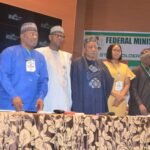
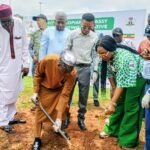
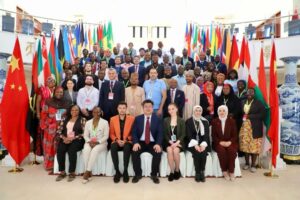 Participants at the two-week seminar organised by the Chinese government for senior officials nominated from the Global South, held in Beijing, themed: “Seminar on the Exchange of China’s Experience in Reform and Opening-up for Developing Countries.”
In line with this vision, China recently hosted a two-week seminar in Beijing for 25 senior officials from the Global South.
The programme, themed “Seminar on the Exchange of China’s Experience in Reform and Opening-up for Developing Countries,” aimed at fostering knowledge exchange and strengthening cooperation.
Participants also undertook study visits to key cities, including Beijing, Fuzhou, Longyan, Zijin, Xiamen and Gutian, gaining first-hand insights into China’s development trajectory.
Mr Wu Hao, Deputy Director of the Executive Department, China Aid Training Programme, urged developing countries to adopt elements of China’s model to enhance their development capacity.
He noted that over five decades of reform, China had achieved major milestones in industrialisation, manufacturing and global value chain integration.
“To date, China’s manufacturing sector has become the largest in the world in terms of scale,” he said.
Wu added that the seminar was designed to equip participants with practical knowledge to strengthen their countries’ development frameworks.
“As we in China often say, give a man a fish, you feed him for a day; teach a man to fish, you feed him for a lifetime,” he said.
Similarly, former Chinese Ambassador to Gabon, Sun Jiwen, underscored the importance of sustained reforms and modernisation in driving China’s growth.
He noted that the reforms initiated after Mao’s era opened China to foreign investment and accelerated its development trajectory.
“Deng’s rural and urban reforms paved the way for a socialist market economy,” he said.
Looking ahead, Sun projected that China would deepen reforms further, achieving socialist modernisation by 2035 and becoming a fully developed nation by 2050.
Prof. Qu Bo of the China Foreign Affairs University highlighted China’s strategic leadership in achieving rapid poverty reduction.
He noted that under Xi, China lifted 100 million people out of poverty ahead of its 2030 target.
Through what he described as “Xi Jinping Thought on Diplomacy,” China has shifted from a low-profile foreign policy to a more proactive global engagement.
Prof. He Wenping also attributed China’s success to its “Chinese-style poverty alleviation policy,” which eradicated absolute poverty by 2020.
From 1978 to 2018, she said, rural poverty declined dramatically from 770 million to 16.6 million people.
She projected that by 2035, China’s GDP per capita could reach 30,000 dollars, with nominal GDP rising to 43.6 trillion dollars.
Moreover, former Ambassador Wu Zexian noted that China is continuously willing to share its development experience globally, including through initiatives such as zero-tariff policies for African countries.
However, observers caution that challenges remain, including an ageing population, environmental concerns and shifting geopolitical dynamics.
Wang Enlai, a Chinese citizen, observed that while China’s growth has generated immense wealth, it has also introduced new socio-economic complexities.
These include widening regional disparities and the need to expand the middle class while reducing inequality.
Consequently, experts stress the need for China to prioritise quality growth over sheer economic expansion.
Overall, China’s experience underscores the importance of consistent policy implementation, strong institutions and long-term planning in achieving sustainable economic development.
With expanding opportunities for collaboration, China is likely to remain a key partner for Global South countries seeking viable development models.
For Nigeria and other developing nations, China’s reform trajectory offers valuable lessons in governance, industrialisation and inclusive growth.
Deepening cooperation and leveraging initiatives such as the Belt and Road Initiative could unlock significant development opportunities. (NANFeatures)
***If used, please credit the writer and the News Agency of Nigeria.