






By Naomi Sharang, News Agency of Nigeria (NAN)
Stakeholders recently converged in Abuja to explore pathways for harnessing Nigeria’s emerging marine and blue economy, a sector widely regarded as a critical frontier for sustainable growth and economic diversification.
The gathering, tagged the Blue Economy Investment Summit, was organised by the Maritime Innovation Hub in collaboration with the Federal Ministry of Marine and Blue Economy.
It brought together policymakers, industry leaders and investors to deliberate on strategies for unlocking the vast opportunities within Nigeria’s maritime domain.
At the summit, participants agreed that Nigeria stands on the threshold of a largely untapped economic resource.
With more than 850 kilometres of coastline and an extensive network of inland waterways, the country is richly endowed with marine assets capable of transforming its economic landscape.
However, in spite of these advantages, the sector remains underdeveloped and insufficiently integrated into national planning.
Available data further underscores the scale of missed opportunities.
Nigeria is estimated to be losing about N33.3 trillion annually due to the underutilisation of its marine and inland water resources.
In addition, experts estimate that the country’s blue economy could generate at least N1 trillion annually if properly harnessed.
In broader economic terms, Nigeria’s marine and blue economy potential has been valued at approximately 296 billion dollars, reflecting its capacity to significantly boost national revenue and employment.
Globally, the blue economy; covering maritime transport, fisheries, aquaculture, tourism, renewable energy and ocean governance, is valued at over 2.5 trillion dollars annually and continues to expand rapidly.
Furthermore, global projections highlight even greater opportunities ahead.
The Organisation for Economic Co-operation and Development (OECD) estimates that ocean-based industries generated about 2.6 trillion dollars in value in 2020.
Projections, however, suggest that the sector could exceed 34 trillion dollars annually and create up to 300 million jobs worldwide by 2030.
For Nigeria, which is strategically located along the Gulf of Guinea, the potential benefits are immense.
From enhancing port efficiency and boosting trade to expanding fish production and developing coastal tourism, the sector offers a viable pathway away from oil dependence.
In recent times, policy engagements have indicated a growing recognition of this potential.
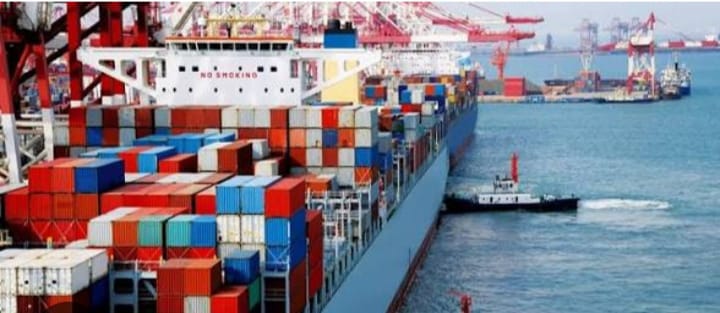
Central to the conversation is maritime transport, a key pillar of the blue economy.
Nigeria’s ports serve as major gateways for international trade; nonetheless, persistent challenges such as congestion, inefficiencies and inadequate infrastructure continue to limit their performance.
Chief Executive Officer of the Maritime Innovation Hub and convener of the summit, Ronke Kosoko, described Nigeria as being at a critical economic juncture.
She noted that the current administration is pursuing a commercially driven approach aimed at stimulating private sector growth and attracting investment.
According to her, strategic leadership and policy reforms could unlock major economic value, citing examples of urban development projects that have transformed previously undervalued areas into high-value economic zones.
Furthermore, she added that ongoing infrastructure initiatives, including major coastal and transport corridors, are expected to open up new investment opportunities, increase land value and stimulate multi-sector growth.
Minister of Marine and Blue Economy, Adegboyega Oyetola, also emphasised that nations worldwide are currently recognising the importance of maritime resources as drivers of economic development.
He noted that the global blue economy, valued at over 3 trillion dollars annually, plays a major role in trade, employment and innovation.
Against this backdrop, he said Nigeria is uniquely positioned to benefit, given its coastline, inland waterways and strategic location.
He disclosed that the country has, for the first time, developed a comprehensive national policy on the marine and blue economy.
According to him, the policy provides a clear framework for investment, outlines strategic priorities and signals a shift from fragmented approaches to coordinated development.
He explained that the policy aims to enhance productivity, improve global competitiveness and promote sustainable practices across key areas.
They include the maritime transport and logistics, fisheries and aquaculture, as well as emerging sectors like marine biotechnology.
In addition, the minister pointed to improvements in port operations, including efforts to address longstanding congestion challenges and enhance efficiency.
Similarly, he noted a significant increase in revenue generation by agencies under the ministry, reflecting improved performance and accountability.
At the subnational level, Gov. Sheriff Oborevwori of Delta said the blue economy has become a priority in policy frameworks across many countries.
He commended the Federal Government for accelerating efforts to harness Nigeria’s maritime resources for job creation and sustainable growth.
He, however, stressed the need for coordinated action between federal and state governments.
He revealed that Delta has developed a roadmap to guide the implementation of its blue economy agenda, noting that more than half of the state’s local government areas are connected to marine and riverine ecosystems.
To this end, he said the state has established a Blue Economy Steering Committee and a Technical Working Committee.
“These bodies are tasked with formulating policies, developing frameworks and ensuring effective coordination of programmes across various ministries and agencies”.
Executive Secretary of the Nigeria Shippers Council, Pius Akutah, on his part, underscored the importance of maritime connectivity within the African subregion.
He warned that inadequate logistics infrastructure could undermine the objectives of the African Continental Free Trade Area (AfCFTA), which seeks to boost intra-African trade.
Akutah observed that, due to poor connectivity, cargo movement between African countries often relies on routes outside the continent, thereby increasing costs and inefficiencies.
Consequently, he argued that Nigeria, with its extensive coastline and inland waterways, is well positioned to become a regional maritime hub but must invest significantly in infrastructure and logistics systems.
Akutah outlined transport connectivity as a critical enabler of the blue economy, encompassing ports, coastal shipping, inland waterways and hinterland linkages.
In his view, improved connectivity would reduce logistical bottlenecks, lower costs and integrate Nigeria more effectively into regional and global markets.
He also highlighted ongoing efforts to develop inland dry ports in locations such as Kaduna, Kano and Funtua.
According to him, these facilities are designed to function as ports of origin and destination, helping to decongest seaports and improve cargo distribution across the country.
Chief Executive Officer of APM Terminals Nigeria, Frederik Klinke, further noted that the global maritime industry is undergoing significant transformation.
He cited trends such as decarbonisation, the adoption of cleaner fuels, automation driven by artificial intelligence and shifts in global supply chains.
Klinke said Nigeria has taken commendable steps to modernise its maritime sector, including the introduction of the National Single Window; a centralised digital platform aimed at simplifying import and export processes.
In practical terms, the initiative is expected to significantly reduce cargo clearance times and enhance Nigeria’s competitiveness in global trade.
He added that APM Terminals has invested over 600 million dollars in Nigeria, focusing on energy-efficient equipment and sustainable technologies to support long-term growth in the sector.
Beyond infrastructure and trade, stakeholders at the summit also emphasised the role of sustainability in developing the blue economy.
As the world transitions towards cleaner energy sources, Nigeria has the opportunity to harness offshore renewable energy while protecting marine ecosystems.
They stressed that unlocking the sector’s full potential would require sustained investment in infrastructure, innovation and human capacity development, alongside policies that promote environmental stewardship.
In conclusion, participants agreed that the time for action is now.
By leveraging its natural endowments and aligning with global trends, Nigeria can transform its marine and blue economy into a major driver of wealth creation, economic resilience and long-term national development. (NANFeatures)
***If used, please credit the writer and the News Agency of Nigeria.