







By Funmilayo Adeyemi
The Federal Government Girls’ College Bakori Old Girls Association (FEDGOBAOGA) has described entrepreneurship as a critical tool for solving societal challenges and driving economic growth.
Its President, Abuja Chapter, Motunrayo Afolabi, said this on Friday at the opening ceremony of the association’s 3rd Entrepreneurship Fair Exhibition in Abuja.
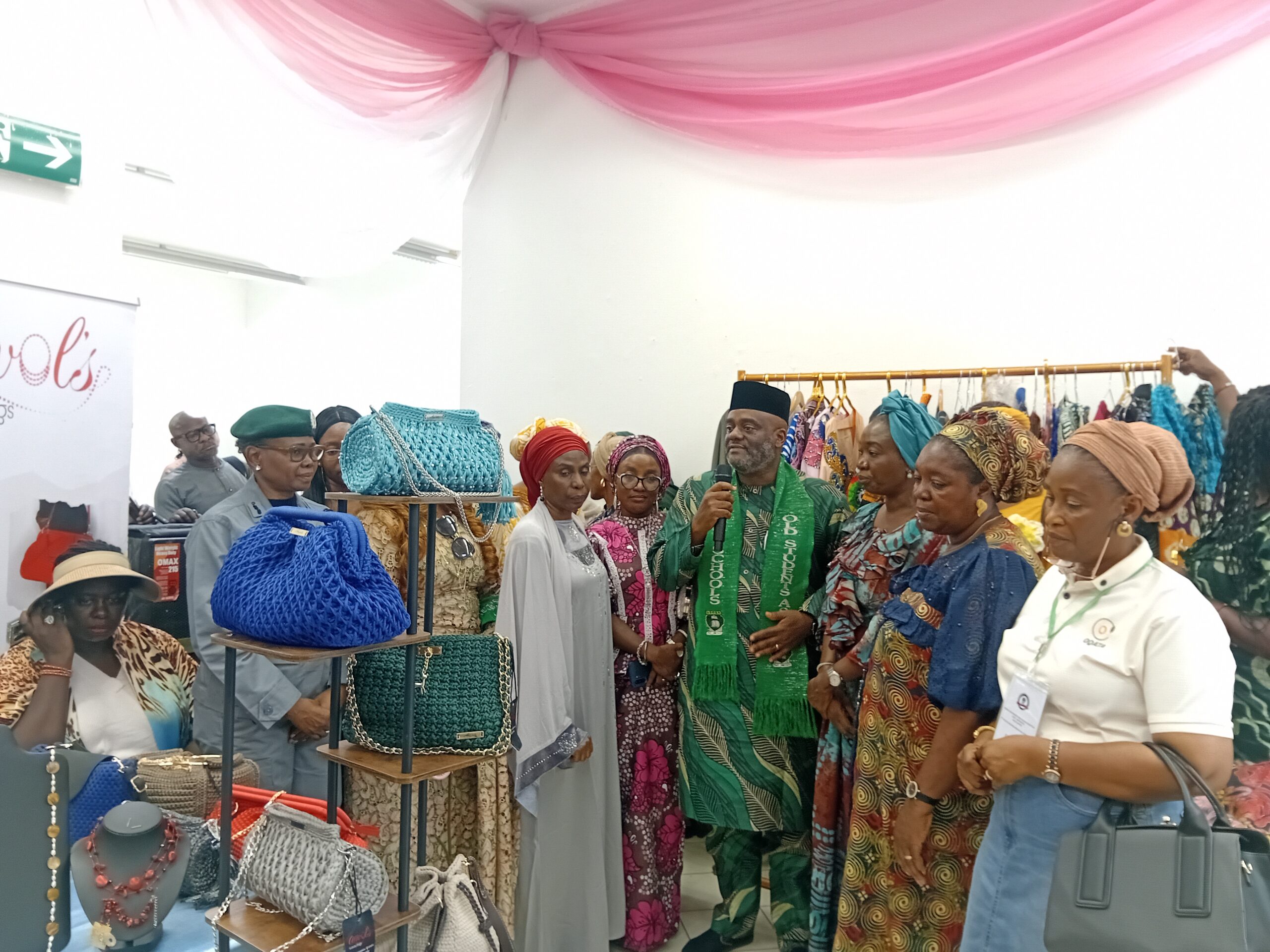
The event brought together entrepreneurs, investors, development partners and government agencies to showcase women-led businesses and strengthen support systems for female-owned enterprises.
Afolabi said, “Entrepreneurship is not just about starting a business, it is about solving problems, it’s about seeing what others overlook and daring to build in any way.
“So let us treat today not as just an exhibition, treat it as a marketplace of possibilities.
“Network, negotiate, invest your time, money and expertise. And if you see something you love, don’t just pick, don’t just take a picture for Instagram, take out your card.”
She said the exhibition aimed to promote women entrepreneurship, business networking and access to economic opportunities.
Afolabi said the fair featured about 35 women exhibitors displaying products and services ranging from technology and fashion to food processing and creative ventures.
According to her, the exhibition is designed to showcase women entrepreneurs, connect them with investors and inspire more women to venture into business.
Also speaking, the Global President of the association, Hannatu Ismaila, said strong female networks remained essential for economic empowerment, noting that many women-led startups still faced funding challenges.
Ismaila emphasised the need for collaboration among women entrepreneurs to create opportunities that would strengthen businesses and enable members to give back to their alma mater and society.
Mr Michael Magaji, President General, Unity School Old Students Association (USOSA), while declaring the exhibition open, commended the initiative and encouraged women entrepreneurs to explore regional and continental markets.
Magaji said women were increasingly playing significant roles across various sectors of Nigeria’s economy and urged participants to position their businesses for expansion beyond local markets.
“For you as women, female gender, what role are you playing in all that is happening in our local economy?
“How are you keying in? How are you trying to stand out to make a difference, to create impact in the economic space?
“We believe that women have a bigger role to play than even the other gender, because of your number, resilience, creativity, and because of your passion for what you stand for,” he said.
Mr Isaiah Achemta, Chief Enterprise Officer, Small and Medium Enterprises Development Agency of Nigeria (SMEDAN), highlighted support programmes available to entrepreneurs.
Achemta advised small businesses to formalise their operations to access funding, training and business development opportunities.
He noted that capacity building and financial management skills were essential for sustaining small and medium enterprises.
Similarly, Sarah Kwanegu, Assistant Chief, Trade Promotion Officer, Nigeria Export Promotion Council (NEPC), encouraged participants to leverage export opportunities.
According to her, registration with the council enables businesses to access export licences, training and international market linkages.
She also highlighted ongoing support programmes targeted at women exporters under global digital trade initiatives.
According to her, women should take advantage of the World Trade Organisation (WTO) digital economy fund.
She said 141 women-led businesses had been selected to benefit from grants ranging from 5,000 dollars to 30,000 dollars to scale their operations and expand access to international markets.
She said the initiative was designed to strengthen women-owned enterprises through financial support, capacity-building programmes and technical assistance aimed at enhancing participation in the digital economy.
“Nigeria won as an implementing partner in Africa, and we have 141 women-led businesses who have been selected to get grants of between 5,000 dollars to 30,000 dollars.
“They are going to be undergoing capacity building programmes and supports for the programme which started in 2025 and it’s going to be ending in the last quarter of this year,” she said.(NAN)(www.nannews.ng)
Edited by Deji Abdulwahab