


By Salamat Abu
The National Human Rights Commission (NHRC) has called for stronger collaboration among government agencies, civil society groups, and other stakeholders to ensure effective implementation of Nigeria’s National Action Plan (NAP) 2024-2026 on human rights.
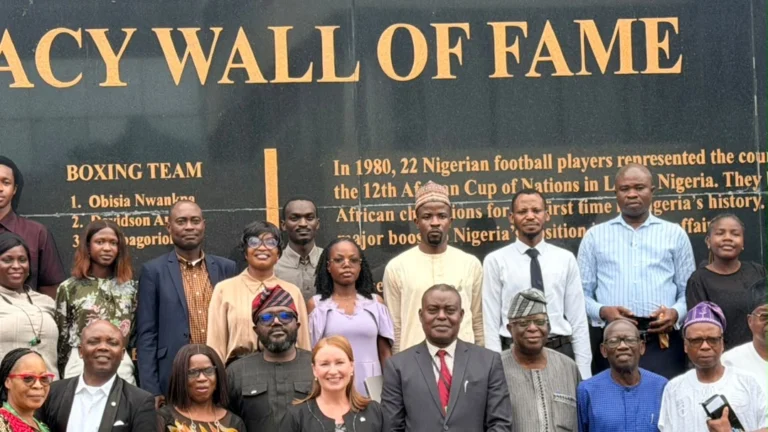
The appeal came during a state consultative meeting held on Monday in Lokoja in partnership with Marian Marketing Co. Ltd.
The forum brought together focal persons from ministries, departments, and agencies (MDAs) alongside civil society organisations (CSOs), who all agreed on the need for coordinated action to advance human rights promotion and protection across the state.
In his remarks, the NHRC Executive Secretary Dr Tony Ojukwu, described the National Action Plan as a guiding document aligned with the 1993 Vienna Declaration and Programme of Action.
He said that the NAP 2024-2026 reflects a renewed and broader commitment to safeguarding human rights in Nigeria.
Ojukwu, who was represented by the Kogi State Coordinator Dr Abdulwahab Oyedokun, said the NHRC, as the coordinating and oversight body for NAP implementationm, convened the meeting to clarify roles and responsibilities for stakeholders.
“Human rights is everybody’s business,” he stated, urging CSOs to actively monitor MDAs on human rights issues.
Participants identified key challenges undermining human rights in the country, including extrajudicial killings, torture and poor prison conditions, insurgency and kidnapping, and high unemployment.
Adekola Ranti of the Network of People Living with HIV and AIDS in Nigeria (NEPWHAN) called on CSOs to intensify efforts to hold MDAs accountable and encouraged the NHRC to hold more dialogue sessions.
Idris Maliki Abdul, Executive Director of Conscience for Human Rights and Conflict Resolution, stressed the need for wider awareness through traditional and modern media.
He advised that the NHRC leverage its radio programmes to sensitise citizens on their rights.
Also, Mrs Eunice Agbogun of Challenged Parenthood Initiative (CPI) emphasised grassroots advocacy, noting that most human rights violations occur at the community level.
Stakeholders also recommended that the NHRC should work with social welfare officers to train them in documenting violations, and that similar engagements be extended to senatorial zones.
The meeting was attended by representatives from the International Federation of Women Lawyers, the Nigeria Labour Congress, the Justice, Development and Peace Commission, TB Network and other organisations.(NAN)
Edited by Bayo Sekoni


Comments