

By Charity Nwosu
Some residents of Dei-Dei and Kubwa Communities in the Bwari Area Council, FCT, have expressed concern over the sharp increase in the prices of rams ahead of the forthcoming Eid-el-Kabir (Sallah) celebration.
The residents spoke in interviews with the News Agency of Nigeria (NAN) on Monday in Abuja.
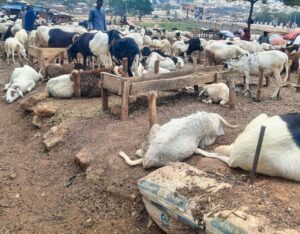
The residents said that the rising cost of livestock was making it difficult for many Muslim faithful to fulfil the religious obligation of sacrificing rams during the festival.
A NAN visit to major livestock markets in Dei-Dei and Kubwa revealed that the prices of rams had risen significantly compared to previous years.
Some ram sellers attributed the increase to rising transportation costs, insecurity in some northern states and the high cost of animal feed.
A livestock dealer at the Dei-Dei Market, Mohammed Saminu, said the cost of transporting animals from states such as Jigawa, Kano, Sokoto, Katsina and Plateau had doubled due to the increase in fuel prices.
According to him, a medium-sized ram now sells for between N500,000 and N700,000, depending on the size and breed.
“Last year, people could buy a good ram for less than N400,000, but things have changed because of the economic situation and transportation costs,” he said.
“This year, everything has changed. Rams are more expensive than last year, and people are not coming to buy like before.
“Customers are not even offering up to the amount we bought the animals for in the market.
”Transportation and feeding have become very expensive, and this affects the final price of the animals,” he said.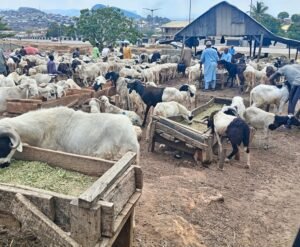
Mrs Zainab Danjuma, a resident of Kubwa, said the high prices had forced her family to consider alternatives.
“We usually buy a ram every year, but the prices are too high now. We may have to contribute with relatives or settle for something smaller,” she said.
“We are already struggling with food prices, school fees and transportation. Buying a ram this year may be difficult for many families.”
Another trader, Sani Yahaya, said insecurity along major highways had also discouraged many livestock dealers from bringing large numbers of animals to the markets.
“Some traders are afraid of attacks on the road, and this has reduced supply. When supply is low, prices automatically go up,” he said.
Another resident, Muhammed Ahmed, said the current economic hardship had reduced the purchasing power of many Nigerians.
He appealed to the government to address rising transportation costs and insecurity to ease the burden on both traders and consumers.
Ahmed, however, expressed optimism that prices might reduce slightly closer to the Sallah period as more animals arrive in the markets.
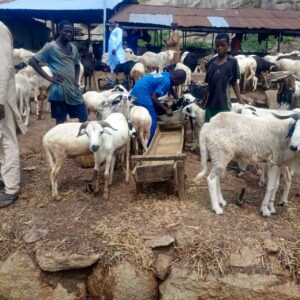
He also urged Muslims to celebrate within their means and avoid unnecessary pressure during the festive period.
“Sallah symbolises sacrifice, love and sharing. The sincerity of worship is more important than the size of the ram purchased,” he said.
Some prospective buyers described the situation as discouraging, noting that many families might not be able to afford rams this year.
The News Agency of Nigeria (NAN) reports that Eid-el-Kabir, also known as the Festival of Sacrifice, is one of the major Islamic celebrations observed by Muslims worldwide.(NAN)(www.nannews.ng)
Edited by Magdalene Ukuedojor
Comments