








Review
By Kennedy Sheyin
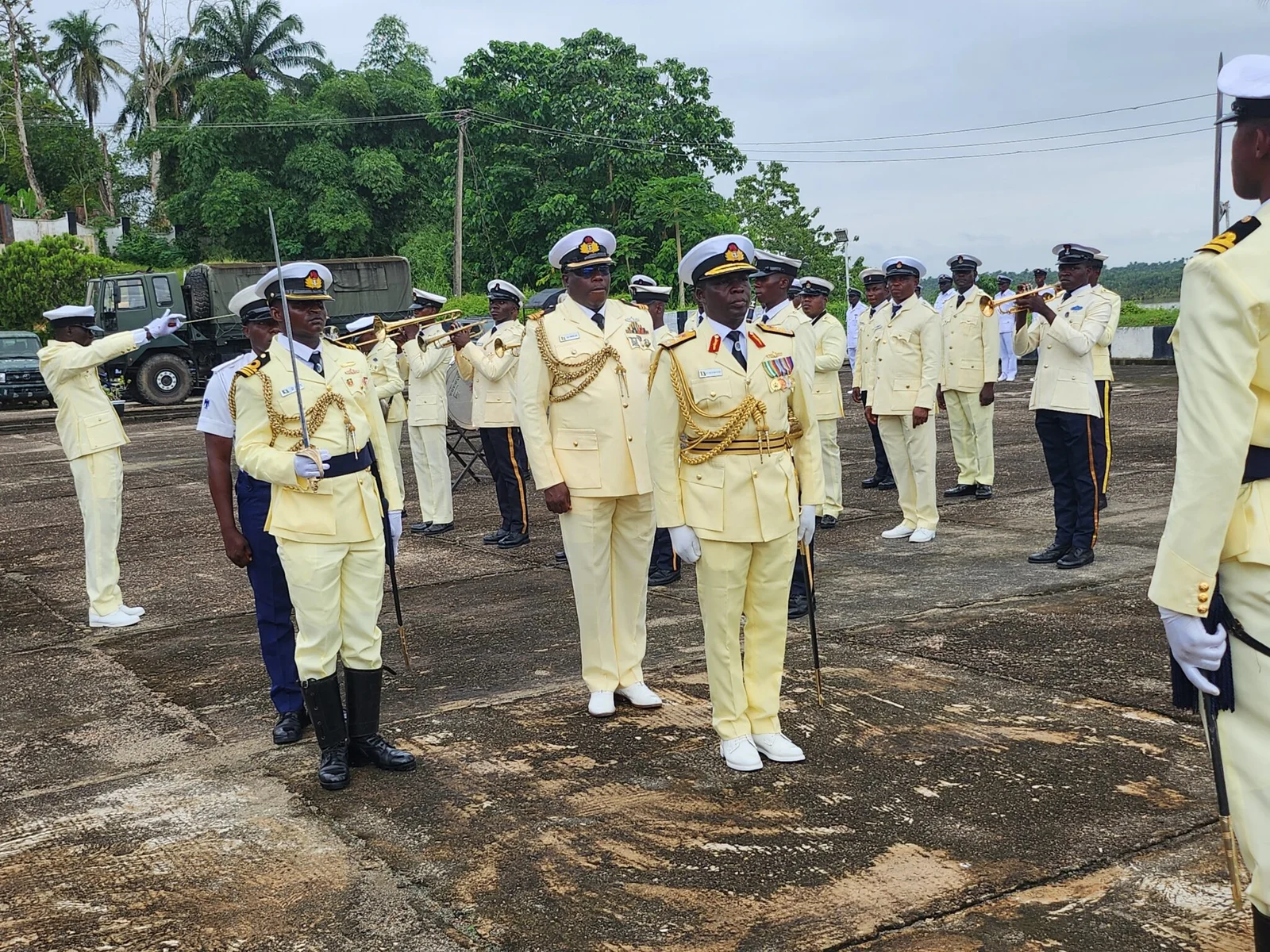
The Nigerian Navy has commenced a two‑week platinum jubilee celebration to mark 70 years since its founding, describing itself as the top security provider, logistics backbone and shipbuilder in Africa
The Chief of Policy and planning, Nigerian Navy, Rear Adm. Olatunde Olodude, said this on Tuesday in Abuja, at a news conference heralding the commencement of activities to mark the 70 years anniversary of the force.
Olodude described the anniversary as a testament of institutional resilience and strategic adaptability, tracing the service history from a 250‑man coastal policing force established in 1956 to what it was today.
He outlined the schedule to include an international fleet review to be inspected by President Bola Tinubu on June 1, and the formal flag-off of a Combined Maritime Task Force for the Gulf of Guinea.
According to him, other activities include the arrival of friendly foreign warships, inauguration of ships, and the ‘6th Sea Power for Africa Symposium with the theme Leveraging Technology for Enhanced Maritime Security in Africa’.
”To mark the 2026 Children’s Day, we will also carry out various community outreaches across the country focusing on children.’’
He recounted the Navy’s origins as the Naval Defence Force established in 1956, its evolution to Royal Nigerian Navy and the drop of the royal prefix as the nation became a republic in 1963.
He noted the force’s strategic impact during the 1967–1970 civil war, when naval blockades, amphibious operations and sealift were decisive and the subsequent peacekeeping and regional stabilisation roles in Lebanon, Liberia and, most recently, The Gambia (2017) and Guinea‑Bissau (2022).
“Those deployments helped drive a 2025 Strategic Sealift Memorandum of Understanding between Nigeria and the African Union, naming the Navy as an approved sealift provider for peacekeeping, disaster response and troop movement across the continent,’’ he said.
The Naval chief of policy and planning also highlighted internal successes between the navy and other security agencies; a partnership he said resulted in the clamping down on oil theft and illegal refining in the Niger Delta that had led to rising crude output.
“Nigerian National Petroleum Corporation figure has shown that the nation’s average crude oil production climbed from 1.3 million barrels per day in January 2023 to a 1.7 million barrels per day as of April 2026,” he said.
He revealed that due to the hard work of the navy, Nigeria had been removed from the International Maritime Bureau’s list of piracy‑prone nations in 2022.
According to him, this has lowered shipping and insurance costs and improved trade prospects in the Gulf of Guinea.
Olodude also said that Nigeria’s shipbuilding effort had delivered five vessels since 2010, including a ferry, a tug and three seaward defence boats, with the dockyard and shipyard still building additional craft and carrying out refits for friendly navies.
“Between 2024 and 2025 the dockyard refitted three warships for Benin and is refitting three more,” he disclosed.
According to him, in a further sign of Nigeria’s regional profile, foreign naval vessels from Benin, Brazil, Cameroon, Côte d’Ivoire and Ghana will visit Lagos.
”Our participants from these countries will join us on May 30, for novelty matches like basketball, volleybal and golf.
”Heads of navies from 15 African countries and delegations from numerous international organisations are also expected for the June 1, review and the Sea Power for Africa conference.”
Olodude further said that the newly inaugurated Combined Maritime Task Force (CMTF) would bring together regional navies, including Gambia, Ghana, Liberia, Sierra Leone and Nigeria, to coordinate patrols and tackle transnational organised crime across the Gulf of Guinea’s roughly 6,000 Kilo Metre maritime expanse.
He emphasised that the navy was committed to digitisation and technological modernisation, adding that it was posed for fleet recapitalisation, induction of new patrol vessel and investments in training to confront asymmetric and emerging fifth‑generation threats.
”We are committed to becoming a highly digitised and networked blue‑water navy,” he said
He urged partners and Nigerians to share in the force’s achievements and challenges as well as take pride in the navy’s contributions to national security and regional stability.
“The Navy is at the centre of Nigeria’s efforts to secure maritime trade, reduce oil theft and project stabilising influence across West Africa.
”Observers will be watching whether the jubilee catalyses sustained investment in indigenous shipbuilding, improved maritime governance and effective multilateral operations across the Gulf of Guinea,” he said.(NAN)(nannews.com.ng)
Edited by Deborah Coker