


By Maureen Okon
The Nigerian Technical Aid Corps (NTAC) has received 11 Technical Aid Corps (TAC) volunteers who returned from Uganda after completing 24 months of service.
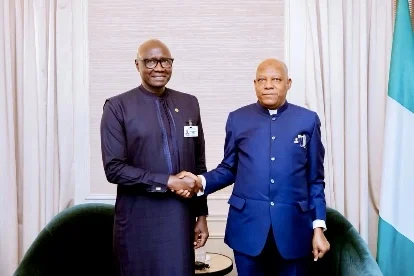
The Director-General of NTAC, Dr Yusuf Yakub, received the volunteers on Monday at the agency’s headquarters in Abuja.
Yakub thanked President Bola Tinubu for sustaining the “soft power diplomacy programme” aimed at bridging educational and professional gaps in African, Caribbean and Pacific (ACP) countries.
The NTAC boss commended the volunteers for what he described as their impactful contributions to their host communities and institutions.
He said the programme had continued to boost Nigeria’s image internationally, adding that the Tinubu administration was taking soft power diplomacy to a higher level at a time the world was increasingly embracing the approach.
According to him, NTAC has deployed several skilled professionals to ACP countries in the last three years, with new batches replacing outgoing volunteers after the mandatory 24-month service period.
Yakub said the agency currently oversees more than 300 TAC volunteers serving in 13 ACP countries.
He described Nigerians as resilient, hardworking and outstanding wherever they find themselves.
“Also, the impact they are making will last till eternity because this set just graduated nine Ph.D students and many MSc students, which shows that the Nigerian foreign policy is impactful.
“We have two vice chancellors and two deputy vice chancellors in The Gambia who are our volunteers, and in many key roles our volunteers are impacting lives in their host communities.
“So we will keep doing that because it is a very great achievement for the country,” he said.
Responding on behalf of the volunteers, Prof. Yusufu Ali of the Department of Political Science and International Relations, University of Abuja, said the world was shifting away from producing graduates who were neither employable nor self-reliant.
Ali, who led the team, said the volunteers exposed students to practical and relevant knowledge needed in today’s world.
According to him, universities are now combining theory with practical skills to better prepare students for life after graduation.
“But now we are in a situation where we teach them that if you are in the social sciences today, you can become a consultant while still in school.
“You must be able to develop some of these skills so that after graduation you can go into consultancy,” he said.
Also speaking, Dr Buki Shua, described their experience in Uganda as eventful and impactful, adding that the programme provided opportunities to project Nigeria positively.
She said beneficiaries of the intervention appreciated the Nigerian Government for helping to bridge educational and professional gaps in ACP countries.
According to her, Nigeria remains at the forefront of promoting international best practices because of the resilience and brilliance of its people.
“We succeeded in building their faculty. The law faculty just started a Ph.D programme, and one of the main reasons they got accreditation was because of the qualifications we had.
“My colleague, Dr Udukosi, and I are lawyers, and we brought our professionalism into their education department, which helped them secure accreditation for programmes.
“They were worried when we were returning home because we improved their standards and showed them the need to do things professionally.
”At the end of the day, I think we succeeded in doing that,” she said. (NAN)(www.nannews.ng)
(Edited by Emmanuel Y
Comments