




By Folasade Akpan
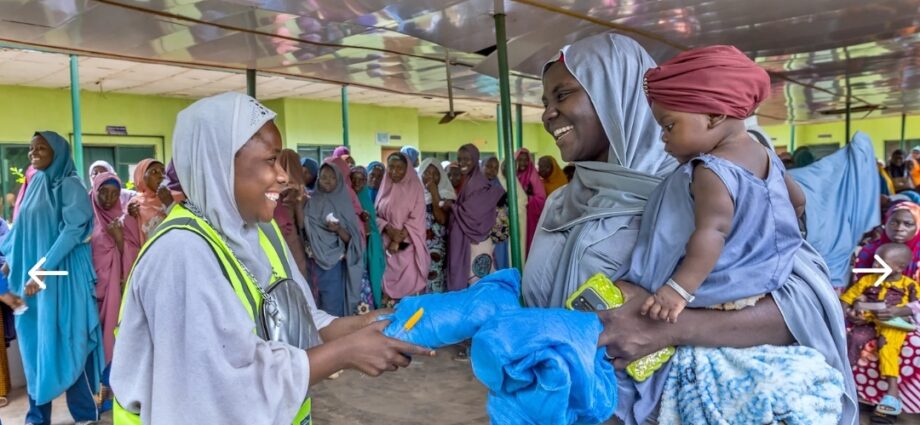
The Supply Chain Initiative (SCI), implemented by Society for Family Health (SFH), says strengthened logistics systems enabled the successful delivery of 34.7 million insecticide-treated mosquito nets across 10 states in 2025.
SCI Project Director, Mr Christopher Dangana, said this in a statement issued on Monday in Abuja.
According to him, the distribution exercise was one of the most ambitious malaria logistics operations undertaken in Nigeria in recent years, reaching communities through coordinated transportation and supply chain management systems.
Dangana said success in malaria control was often measured by medicines delivered, mosquito nets distributed and lives saved, but effective logistics remained a critical factor in ensuring interventions reached intended beneficiaries.
“SCI offers a compelling example of how innovation, accountability and strong partnerships can dramatically expand the reach of lifesaving interventions,” he said.
The director said that Nigeria carried one of the world’s heaviest malaria burdens, with insecticide-treated mosquito nets remaining one of the most effective preventive measures, particularly for pregnant women and children under five.
He said ensuring that mosquito nets reached households required a complex logistics network spanning warehouses, transport corridors, local government storage facilities and thousands of community distribution points.
According to him, the programme worked in partnership with the National Malaria Elimination Programme (NMEP), Catholic Relief Services (CRS), with support from the Global Fund and other malaria partners.
“Across the ten campaign states, SCI successfully transported 36.5 mosquito nets to local government area stores (macro distribution) and ensured 34.7 nets were delivered to community distribution points (micro distribution) where families could access them directly.”
Dangana described the scale of the exercise as remarkable, noting that each delivery represented families protected from a disease that continued to affect millions of people annually.
He attributed part of the success to the deployment of digital technology to strengthen accountability and improve visibility throughout the supply chain.
“What makes the achievement even more striking is that the programme recorded 100 per cent delivery to all local government stores and distribution points with zero losses during transportation.
“To improve visibility and tracking, SCI developed a Logistics Tracking Application designed specifically for malaria campaign operations,” he stated.
He explained that the application was first piloted in two states in 2024 before being expanded to 10 states in 2025, allowing programme managers, logistics partners and health officials to monitor shipments in real time.
Giving a breakdown, he said that distribution data showed that Kano received the highest number of the nets at 7.74 million, followed by Kaduna with 4.5 million and Katsina with 4.3 million.
Niger received 3.1 million, while Delta got 3.1 million and Jigawa was allocated 2.98 million and Ogun received 2.91 million.
Also, Gombe got 2.1 million, while Yobe received 2.05 million, Taraba received the least allocation among the campaign states with 1.7 million nets.
According to Dangana, each shipment followed a digital workflow covering initiation, transportation, arrival and confirmation stages, while electronic proof of delivery was generated upon receipt of commodities.
He also said that the system introduced a new level of transparency into malaria campaign logistics by ensuring every consignment was verified and documented.
The director, however, noted that technology alone did not move mosquito nets across Nigeria’s diverse terrain, as logistics teams encountered difficult road networks, seasonal flooding and remote riverine communities.
He said transport teams in parts of Delta State relied on a combination of trucks and boats to reach isolated communities, while some consignments underwent multiple transfers before arriving at final distribution points.
He added that limited mobile network coverage in remote locations occasionally slowed digital reporting during the campaign.
In spite of the challenges, Dangana said delivery schedules were maintained and mosquito nets reached every targeted distribution centre.
“SCI maintained delivery schedules and ensured that mosquito nets reached every targeted distribution centre.
“The outcome was a logistics performance many public health programmes strive for but rarely achieve. SCI achieved complete coverage, verified deliveries and zero losses across ten states,” he said.
While underscoring the importance of collaboration in malaria control efforts, he said that NMEP provided national leadership while CRS served as principal recipient of malaria grants from the Global Fund.
“When logistics systems are strong, donor investments go further, programmes reach deeper into communities, and prevention becomes more effective.
“In the fight against malaria, 34.7 million nets mean 62.5 million lives protected,” Dangana said.(NAN)(www.nannews.ng)
Edited by Abiemwense Moru