










By Adeola Akinbobola, News Agency of Nigeria (NAN)
Recently, policy experts highlighted that Nigeria’s outdated Bilateral Investment Treaties (BIT) fail to serve the country’s current development needs, creating significant legal, fiscal and policy risks.
It is worth noting that in the early 1990s, Nigeria entered a series of BITs with capital-exporting countries, motivated by the expectation that legal certainty and investor protection would attract foreign direct investment (FDI) and accelerate development.
Three decades later, that expectation warrants critical reassessment, as Nigeria today faces a markedly different economic and policy landscape– persistent fiscal pressures and growing demands for economic diversification.
Yet, many of its BITs remain anchored in an earlier paradigm, one that prioritised investor protection over regulatory flexibility and legal openness over strategic control.
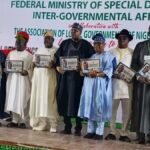
Civil Society Organisations (CSOs) that were present at the just-concluded 2-day National Policy dialogue on Nigeria’s Bilateral Investment Treaties (BITs) held in Abuja, which was organised by ActionAid Nigeria (AAN) in partnership with Policy Alert, weighed in.
They observed that across Africa, there is increasing concern about outdated agreements and the Investor-State Dispute Settlement system (ISDS).
The ISDS allows investors the protection rights over the national interests, and shrink decisions making spaces.
The Country Director of ActionAid of ActionAid Nigeria (AAN), Dr Andrew Mamedu, explained that in Nigeria, experiences in the extractive sectors had shown that these agreements could expose the country to significant fiscal and financial risks.
Mamedu said Nigeria was currently at a critical point in reviewing its investment governance framework, particularly its Bilateral Investment Treaties.
He said as the country sought to attract foreign direct investment, there were also growing needs to ensure that the agreements protect national interests, preserve policy space, human rights, dignity of labour and align with sustainable development priorities.
Also, the Head of Programme and Policy, Mr Celestine Okwudili-Odo, said discussions on investment treaty reform were gaining momentum globally and across Africa.
“This event creates a timely space for Nigeria to take a more deliberate and informed approach to reforming its investment framework in a way that supports development and accountability.
“This capability of spurring Effective reform requires coordinated sustainable development engagement.
“This initiative, capable of spurring effective reform, requires coordinated, sustainable development engagement.
“All stakeholders must work towards shared outcomes that reflect national priorities,” he said.
In addition, Tijah Bolton-Akpan, Executive Director of Policy Alert, described many BITs as “outdated” and biased in favor of investors.
He argued that the ISDS system had “outlived its usefulness” and often sidelined the interests of host countries.
Bolton-Akpan cited Nigeria’s experience in the high-profile P&ID arbitration case, where an initial claim of 6 billion dollars rose to about 11 billion dollars, as evidence of the financial risks associated with international arbitration.
He said such cases placed enormous strain on public finances and highlighted structural flaws in existing agreements.
Bolton-Akpan also warned that BITs could hinder Nigeria’s commitments to climate action, including its obligations under the Paris Agreement and its goal of achieving net-zero emissions by 2060.
According to him, investment treaties tied to fossil fuel sectors may obstruct the country’s transition to cleaner energy.
On his part, Tunde Salman, Team Lead and Convener of the Good Governance Team (GGT), said access to information on international investment agreements was essential for accountability and citizen engagement.
According to him, the increasing number of bilateral investment arrangements being entered into by governments makes it necessary for civil society, the media, parliament and affected communities to have access to treaty details and clauses.
“For us to be able to engage and participate effectively there is a need for transparency.
“If we don’t have much information or no information at all about these bilateral investment treaties, there is a risk that the country could face defaults or other consequences arising from poorly negotiated agreements,” he said.
Salman noted that public disclosure of treaty texts would enable stakeholders to independently monitor implementation and raise concerns early, particularly on issues such as prior consent from impacted communities and the protection of national assets.
Addressing concerns that Nigerian Civil Society Organisations were often excluded from treaty negotiations, Salman acknowledged that most agreements were initiated at the highest levels of government through government-to-government engagements.
However, he stressed that Ministries, Departments and Agencies (MDAs) responsible for implementation should ensure regular consultations with citizens and relevant stakeholders.
Salam argued that existing policy mechanisms such as the Medium-Term Sector Strategy (MTSS) and the Medium-Term Expenditure Framework (MTEF) could be used to keep stakeholders informed throughout the negotiation process.
He also emphasised the critical oversight role of the National Assembly, describing parliament’s accountability mandate as “statutory” and therefore indispensable in reviewing agreements from the drafting stage onward.
“It is important as part of participatory governance to ensure that all critical stakeholders are carried along, including civil society and the media,” he said.
He further advocated for the publication of treaty contents under Nigeria’s Open Government Partnership commitments, in spite of concerns often raised about trade secrecy and proprietary rights.
Citing remarks by African businessman Mo Ibrahim, Salman said transparency should not be viewed as a threat to business interests.
“Transparency will work for everyone, including businesses. The openness in international agreements could help identify problematic clauses before disputes arise,” he said.
On recommendations, Mrs Omotunde Balogun, Deputy Director Bureau of Public Enterprise, urged Nigerian stakeholders to move beyond signing international agreements and focus on tangible implementation.
She warned that the country risked missing out on development opportunities despite numerous commitments.
Balogun noted that Nigeria had signed at least 29 treaties, but many had failed to translate into meaningful outcomes due to weak execution.
She said while agreements provided a framework for cooperation, the real challenge lay in translating those frameworks into action.
“We are very good at talking and asking questions. But, we need to implement it.
“The challenge is willpower, openness, and overcoming self-interest; we must become country-focused,” she said.
The remarks also touched on the role of international partnerships.
All in all, stakeholders urge policymakers and citizens alike to prioritise actionable policies over rhetoric, emphasising that real progress depends on commitment, accountability, and a shared vision for national development.(NAN Features)
***If used, please credit the writer and the News Agency of Nigeria.