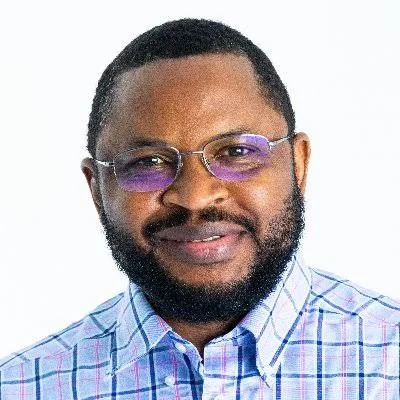
Prof. Ayo Omotayo, the Director-General of the National Institute for Policy and Strategic Studies (NIPSS), says democracy has shaped Nigeria’s destiny through the ballot rather than the bullet.
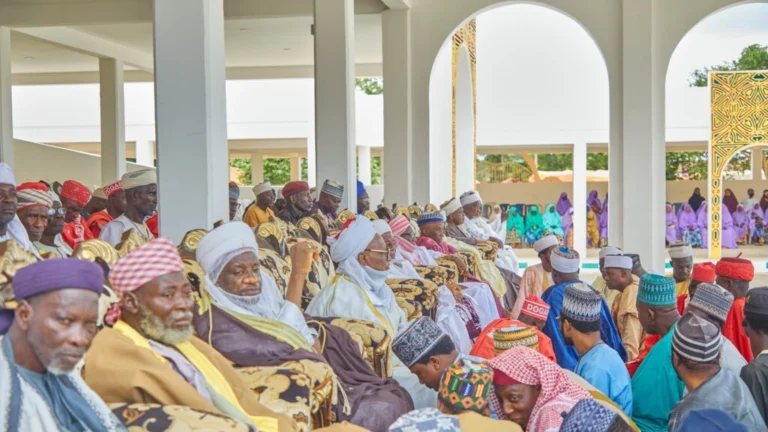
Omotayo said this in Abuja on Thursday at a public lecture on the 27th Anniversary of Democracy Day themed “27 years of Democratic Governance in Nigeria: Challenges, Achievements and the Road Ahead”
He added that democracy had shaped the country through the law rather than decree, and through the rule of law rather than the rule of force.
Omotayo, who was the keynote speaker at the event, lauded President Bola Tinubu’s unwavering commitment to the democratic project, and for providing the leadership under which the country’s democracy continued to evolve and mature as Nigeria’s fifth President since 1999.
“Today, we celebrate not merely the passage of time, but the resilience of a people, the triumph of collective aspirations, and the enduring spirit of a nation determined to govern itself through constitutional means.
“Democracy Day is more than a public holiday.
“It is a solemn reminder of the sacrifices made by countless Nigerians who believe that the destiny of this nation should be shaped through the ballot rather than the bullet, through the law rather than decree, and through the rule of law rather than the rule of force.
“June 12 symbolises courage, sacrifice, patriotism, and the collective determination of Nigerians to establish a political order founded on popular participation, accountability, justice, and human dignity.
“We remember with gratitude the heroes and heroines of our democratic struggle, many of whom paid the ultimate price to ensure that future generations will inherit a nation governed by democratic principles.”
The NIPSS D-G said the commemoration of the 27 years of uninterrupted democratic governance provided an opportunity not only to celebrate the accomplishments but also to have a sober reflection and critically assess the nation’s journey.
According to him, it is also to evaluate our present realities, and chart a strategic pathway toward a stronger and more prosperous democratic future.
“This is critical because our nation emerged from a prolonged period of military rule and embarked upon a new democratic journey. The transition of 1999 represented far more than a change in government.”
The don said it signified a national rebirth and marked the resolution of constitutional governance and the renewal of hope among millions of Nigerians who desired a society governed by democratic norms and institutions.
“The democratic journey has not been without challenges. Yet, the fact that Nigeria has sustained uninterrupted democratic governance for 27 years represents a historic achievement.
“No period in our national history has witnessed such a prolonged experience of constitutional rule. This continuity has provided the stability necessary for institutional development, economic planning, and social transformation.”
Speaking on Nigeria’s achievements since democracy started 1999, the NIPSS D-G said the country was strengthening of political institutions.
“One of the most significant achievements of our democratic experience has been the strengthening of political institutions, the conduct of successive elections, and the peaceful transfer of power between administrations.
“The increasing sophistication of electoral management processes demonstrate that democratic norms are becoming more deeply embedded within our political culture,” he said.
Omotayo said the transfer of power from the political party to another at the federal level, was witnessed in 2015, when power shifted from the ruling party, Peoples Democratic Party (PDP) to the All Progressives Congress (APC).
According to him, this remains one of the most remarkable milestones in our democratic evolution and it stands as an evidence of the growing maturity of our political system.
“Our democratic experience has also expanded the space for citizen participation and more inclusivity. Today, Nigerians enjoy greater freedoms of expression, association, and political engagement than at any previous period in our history.
“Citizens are increasingly demanding accountability from public institutions and participating in national conversations about policy and development.”
He said that traditional media institutions have been complemented by digital platforms that enable citizens to engage directly with government processes.
According to him, this expansion of the civic space has strengthened democratic accountability and increased public awareness of national issues.
“Another notable achievement has been the gradual strengthening of key democratic institutions. The judiciary has continued to play an increasingly significant role in the interpretation of constitutional provisions and the resolution of political disputes.
“The National Assembly has expanded its legislative and oversight functions, contributing to the system of checks and balances that is essential to democratic governance.
“Anti-corruption agencies, regulatory bodies, and accountability institutions are also continuing to evolve in response to the demands of governors and public expectations.”
The NIPSS D-G said the economic landscape of Nigeria had equally experienced significant transformation during the past 27 years.
“From the uncertainties, policy acrobatic days, and the inexplicable abandonment of the economy by the military, our country in the past seven years under democratic governors have taken notable strides in the modernisation and transformation of the economy.
“From a unitary-styled economy and strict stronghold on the critical sectors of the economy, we have witnessed a more liberalised economic space,” he said
Omotayo said the liberalisation of key sectors of the economy, particularly telecommunications, had revolutionised communication, commerce, and social interactions.
“The telecommunications revolution has connected millions of Nigerians, facilitated financial inclusion, and created unprecedented economic opportunities.
“Gradually, over the last 27 years, we have witnessed the increasing application of market rules and participation of citizens in the oil, financial, transportation, education, health, and power sectors, which were hitherto controlled purely by the national government.”
The Director-General of NIPSS said the administration of President Bola Tinubu recently took a step that previous Nigerian presidents lacked the courage to take.
“Despite the challenges associated with the decision, he removed the fuel subsidy, which had for years, since the military era, continued to burden the nation’s economy.”
“Statistics have shown that from a GDP of 95.5 billion in the year 2000, we now have a GDP estimated at nearly 400 billion according to the IMF.
“For the first time in several years, Nigeria now has a great surplus. The cost reproduction of other economic parameters will show that the country has benefited from democratic dividends.
“The growth of the digital economy represents one of the defining achievements of democratic governments in Nigeria.
“Young Nigerians are increasingly leveraging technology to create businesses, generate employment, and drive innovation.”
The NIPSS boss said the emergence of a vibrant technology ecosystem has positioned Nigeria as one of Africa’s leading innovation and has demonstrated the immense potential of our youthful population.
According to him, democratic governance has also facilitated important reforms within the financial sector, enhanced regulatory frameworks, financial inclusion initiatives.
“And the expansion of digital banking services and fintech applications engendered by democratisation of the economic space has improved access to financial resources for millions of Nigerians.
“Entrepreneurship has flourished in many sectors contributing to economic diversification and wealth creation.
“The contributions of the digital economy to the GDP has grown rapidly since the inception of democracy. Of course, we acknowledge this was also driven by innovation in digital technologies in the last few years.”
The don said the social sector similarly witnessed notable progress, adding that investments in education, healthcare, transportation, and social protection programmes had improved the quality of life for many citizens.
“Access to educational opportunities has expanded significantly while healthcare interventions have contributed to improvements in public health outcomes.
“Infrastructure development has helped various sectors as they enhance connectivity and economic productivity. Examples exist of various conclusions made to the social sector since democracy in 1999.”
He, however, said one of the most pressing challenges confronting the nation’s democracy was the persistence of insecurity, terrorism, banditry, and kidnapping, including communal conflicts and emerging cyber threats.
According to him, these continue to pose significant risks to national stability and development.
“Security remains the foundation upon which economic growth, social progress, and democratic consolidation depend.
“A nation confronted by insecurity cannot fully realise its developmental aspirations.
“This is why we must accept that our security challenges are a part of the challenges that come while democracy is taking roots, especially in a multi-diverse and multireligious ecosystem as ours.”
He expressed optimism that the insecurity would soon be a thing of the past in the country.
“As a new democratic equilibrium is established, our security challenges are perturbations that should dissipate with time and with the application of courageous actions.
“One of such actions is the recent establishment of the Office of Homeland Security by the President.”
The don commended the security agencies for their efforts and gallantry in containing the challenges posed by insecurity.
“At every opportunity that I have, I always tell Nigerians that security agencies are not sleeping, they do not sleep, and they do a whole lot to keep our country safe.
“Whatever challenges we have at this time, let us consider them as perturbations that will soon dissipate.
He said economic hardship remained another big challenge, adding that in spite of economic growth, poverty, unemployment, and inequality continued to affect millions of Nigerians.
According to him, the aspirations of democracy cannot be fully realised when large segments of the population remain excluded from economic opportunities.
“Economic inclusion will become a central pillar of democratic governance. Youth unemployment deserves particular attention”
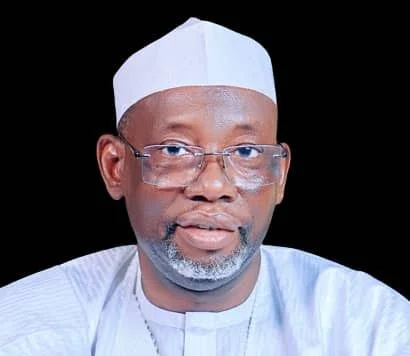
In his address of welcome, Sen. George Akume, the Secretary to the Government of the Federation, said under democratic rule, Nigerians must remain conscious of the need to build national cohesion.
Akume said, “We must not allow ethnic, religious, and regional fault lines to deepen the foundations of our democracy.
“We must therefore interrogate our democratic credentials and institutions on their performance and capacity to serve the needs of our diverse people.”
According to him, the theme of the 2026 Democracy Day Anniversary reflect critically on the past and record of the present while charting a bold path forward.
Also speaking, the Head of the Civil Service of the Federation, Mrs Didi Walson-Jack, said democracy placed a sacred duty on public institutions.
She said the civil service must be professional, responsive, innovative, ethical and citizen-centred, adding that policies must move from paper to impact and programmes must translate into real benefits.
“Citizens must feel government not as a distant authority but as a reliable partner in their daily lives.
“Under the Renewed Hope Agenda of President Bola Tinubu, we remain committed to building a civil service that supports national development, delivers measurable results, embraces digital transformation, strengthens performance management and upholds the values of integrity, hard work, diligence and empathy.
“These are not abstract ideals but practical tools for rebuilding confidence in public institutions and strengthening the bond between government and citizens.
She urged Nigerians to renew their commitment to a Nigeria where democracy delivers, institutions endure and citizens are proud participants in nation building.
“Above all, let us commit ourselves to rebuilding and deepening trust. Trust in our institutions, trust in our leadership, trust among citizens and trust in the future of our great country.” (NAN)(www.nannews.ng)
Edited by Funmilayo Adeyemi