


By Isaac Aregbesola
Stakeholders rose up from a joint review meeting on Wednesday to validate two draft toolkits aimed at ending ethnic stereotyping and profiling in Nigeria’s security and media sectors
The meeting was organised by Beacon Security and Intelligence Limited (BSIL,) and the WhiteInk Institute for Strategy, Education and Research (WISER)
The exercise, supported by key government institutions and development partners, focused on the Anti-Ethnic Profiling and Stereotyping Toolkit for Security Communication and its counterpart for Media Communication.
Rapporteurs said the validation exercise provided an opportunity to review both documents in a complementary manner to ensure consistency in language, conceptual framing, principles, and implementation approaches.
The crux of the engagement was agreement that both toolkits must share a common objective: promoting responsible, conflict-sensitive, evidence-based, and rights-respecting communication that reduces prejudicial narratives.
Participants stressed that the goal was to curb ethnic profiling while strengthening social cohesion, public trust, and national stability across Nigeria’s diverse communities.
To avoid confusion during implementation, it was agreed that both documents would maintain consistent definitions, terminology, and normative standards.
A key area of consensus was the need to clearly distinguish between unlawful ethnic profiling and legitimate, intelligence-led professional practice by security agencies.
The stakeholders emphasised that the toolkits should not create the impression that lawful security functions were being discouraged.
They reinforced the principle that ethical practice, professionalism, operational effectiveness, public accountability, and respect for human rights were mutually reinforcing, not competing objectives.
Both toolkits will now consistently promote neutral, factual, and non-ethnicised language in reporting security incidents, criminality, conflicts, and public communication.
Terms and examples that could generalise communities, ethnic groups, or institutions will be reviewed and refined to ensure neutrality and balance, the rapporteur summary noted.
Participants also agreed on a common approach to case studies, stating that examples should be contextual illustrations and not generalised conclusions that risk reinforcing stereotypes.
Each toolkit will include a concise executive summary and retain an operational, user-friendly structure that prioritises practical guidance over academic discussion.
Emerging threats were also addressed. Both documents will now integrate guidance on digital media, misinformation, disinformation, artificial intelligence, online hate speech, and information manipulation.
The President and Founder of WISER, retired Brig.-Gen. Saleh Bala commended the participants for their robust contributions to the validation of the two documents
He explained that the toolkits were designed to encourage accuracy, fairness, and professionalism in reporting issues around security, conflict, ethnicity, religion, and regional identities
Bala noted that language in security and media communications could either promote peace or deepen divisions across communities.
He said that inaccurate labels and harmful stereotypes fuel mistrust, undermine understanding, and shape public perception in ways that worsen conflict and ethnic tension.
On his part, Dr Kabiru Adamu, Managing Director of Beacon Security and Intelligence Limited, said the project was informed by extensive research and consultations with security practitioners, journalists, policymakers, and community leaders.
Adamu called on stakeholders to ensure implementation of the documents and not to be kept on the shelves.
A professor of Mass Communications and one of the rapporteurs, Prof. Umaru Pate, described the toolkits as a strategic intervention to address threats to peace, stability, and national development in the country.
Pate stressed the need for the media and security agencies to work in synergy to address insecurity, stereotyping and profiling.
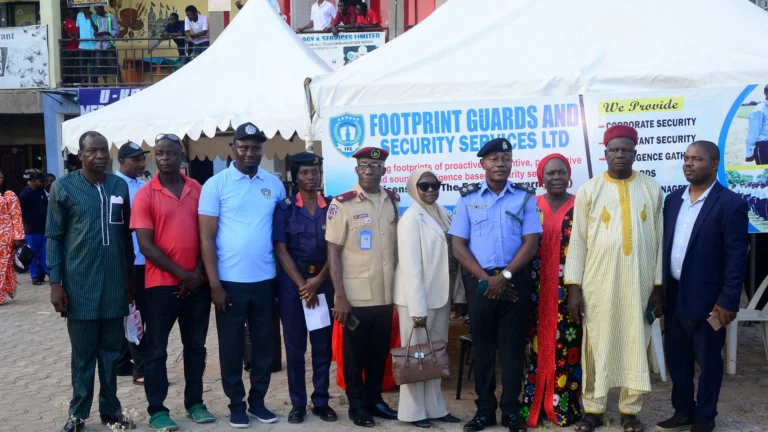
Participants at the meeting included retired and serving military and police officers, paramilitary officers, media practitioners, and academics, among others.(NAN)
Edited by Mark Longyen
Comments