







By Prisca Osaje
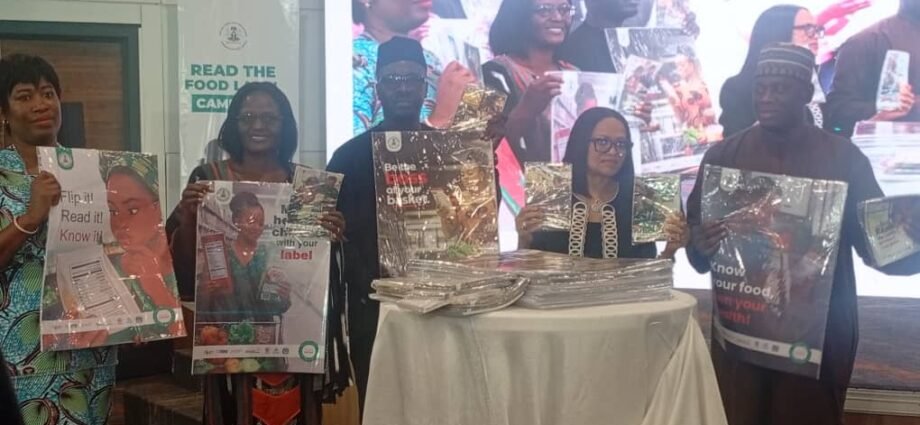
The National Agency for Food and Drug Administration and Control (NAFDAC) on Friday unveiled “Read the Food Labels” campaign, urging consumers to read packaged food labels before buying them.
The Director-General of NAFDAC, Prof. Mojisola Adeyeye, gave the advice at the Launch of the “Read the Food Label” campaign in Abuja, urging consumers against diet-related non-communicable diseases in the country.
Adeyeye said the ability of individuals living with hypertension, diabetes, obesity, food allergies, and cardiovascular diseases, to read and use food labels effectively can have a direct impact on disease prevention and management.
She said with rising urbanisation in Nigeria and the corresponding shift in dietary patterns towards increased consumption of packaged foods, it became imperative to deepen consumers’ understanding of food labels.
“Today, prepackaged foods represent an increasingly significant component of diets, especially in urban settings.
“Most packaged foods, from minimally processed foods such as milk to processed foods like bread and ultra-processed foods such as snacks and sugary beverages, carry some form of label.
“Advancements in food science and technology have made it possible to produce foods that satisfy a wide range of consumer preferences.
“However, with numerous products competing for attention on supermarket shelves, consumers often struggle to understand exactly what they are purchasing and consuming,” the NAFDAC D-G said.
According to her, the urgency of this campaign is underscored by the increasing levels of diet-related non-communicable diseases in Nigeria.
“According to the 2018 World Health Organization Non-Communicable Diseases Country Profile for Nigeria, non-communicable diseases accounted for approximately 29 per cent of all deaths in the country.
“Cardiovascular diseases were responsible for 11 per cent of these deaths, cancers accounted for 4 per cent, chronic respiratory diseases for 2 per cent, and diabetes for 1 per cent.”
The director-general said the excessive consumption of salt, sugar, saturated fats, trans-fats, and highly processed foods significantly contributed to the growing health burden.
“The ability of consumers to understand, interpret, and apply information on food labels has therefore never been more important.
“In an increasingly complex food environment characterised by rapid urbanisation, changing lifestyles, aggressive food marketing, and the growing availability of packaged and ultra-processed foods, consumers are confronted with an unprecedented number of food choices every day.
“Food labels help consumers understand what is in their food, compare similar products, identify ingredients of concern, monitor their intake of nutrients such as sodium, sugar, saturated fats, and trans-fats, and make informed decisions that support healthier dietary practices.
“For individuals living with specific health conditions such as hypertension, diabetes, obesity, food allergies, and cardiovascular diseases, the ability to read and use food labels effectively can have a direct impact on disease prevention and management.
“As Nigeria experiences rising rates of diet-related non-communicable diseases, food label literacy is no longer a matter of consumer preference — it is a public health necessity.
“A healthy food environment is one in which nutritious foods are available, affordable, acceptable, and desirable, while also making consumers aware of healthier options,” the NAFDAC boss said.
She added that an informed consumer is empowered to make healthier choices, avoid misleading claims, demand greater transparency and accountability from manufacturers, and contribute to the creation of a healthier food environment.
“When consumers routinely read and use food labels, they not only protect their own health but also influence market trends by encouraging manufacturers to reformulate products and provide clearer, more accurate information.
“Recognising this imperative, NAFDAC is launching the “Read the Food Label” Campaign as a long-term, sustainable public health intervention aimed at institutionalising a national culture of reading food labels and using the information to make better food choices.
“This campaign is not a one-time event. It is designed as a continuous, recurring initiative that will be implemented progressively across Nigeria’s six geopolitical zones through a coordinated, multi-stakeholder approach.”
In his remarks, Mr Akinbode Oluwafemi, Executive Director, Corporate Accountability and Public Participation Africa (CAPPA) described the campaign as a timely and important step towards empowering Nigerians to make informed food choices.
Oluwafemi was represented by Mr Abayomi Sarumi, Associate Director and Healthy Food Policy Manager, CAPPA.
He said that reading food labels helps consumers identify products that contain high levels of sugar, salt, trans fats, and other nutrients of concern that are risk factors for diet-related illnesses such as hypertension, diabetes, obesity, stroke, and heart disease.
“We commend NAFDAC for taking proactive measures to improve consumer awareness and promote healthier dietary habits.
“The campaign aligns with our healthy food policies campaign, which places public health at the centre of Nigeria’s food policy,” the CAPPA chief said.
According to him, CAPPA remains committed to working with NAFDAC and other stakeholders to promote healthier food environments and advance policies that safeguard the health and well-being of all Nigerians.
Also speaking, Dr Eva Edwards, NAFDAC Director, Food Safety and Applied Nutrition, urged consumers to develop the habit of checking the list of ingredients, noting allergen declarations, nutritional information.
According to Edwards, they should also check date markings such the production date, best before date, use by date or expiry dates as applicable, storage conditions, and other essential information that can influence their health and safety. (NAN)(www.nannews.ng)
Edited by Deji Abdulwahab