







Malaria
By Toba Ajayi
Dr Oluwatosin Fakayode, the Director of Public Health at the Kwara Ministry of Health, has said that about 60 per cent of malaria cases are linked to environmental factors.
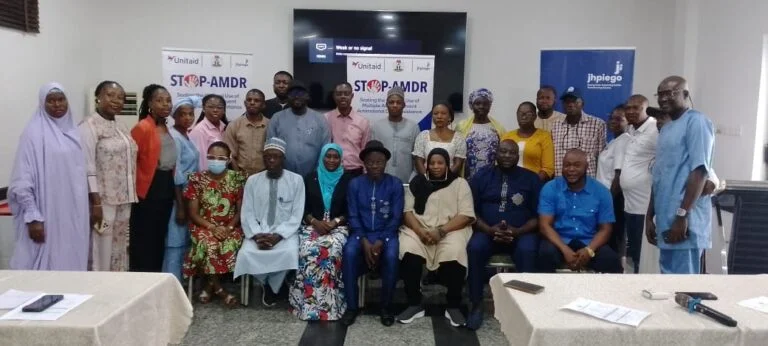
Fakayode said this on Tuesday in Ilorin at the Kwara State Malaria Advocacy, Communication and Social Mobilisation (ACSM) Quarterly Meeting and inauguration of the Malaria ACSM Working Group.
Represented by the Kwara Malaria Control Coordinator, Dr Kazeem Oladapo, Fakayode explained that malaria transmission is largely driven by environmental conditions that enable mosquitoes to breed and survive.
He noted that more than half of all malaria cases in Nigeria could be traced directly to environmental factors.
Quoting the National Malaria Elimination Programme, the director said effective malaria elimination and control required the commitment and collaboration of stakeholders and policymakers to tackle the disease.
He added that “the purpose of the meeting is to coordinate ACSM activities in the state, drive community participation and ownership of malaria prevention and increase the uptake of malaria interventions, especially in health facilities.”
Fakayode disclosed that through the efforts of the state government, malaria prevalence had reduced from 26 per cent to 13 per cent, describing the achievement as a welcome development.
Mr Jeremiah Ngutor-Ulaa, Data Analyst at John Hopkins Programme for International Education in Gynecology and Obstetrics (Jhpiego) STOP Antimicrobial Drug Resistance (AMDR) Project, said the programme was designed to bring together stakeholders involved in malaria elimination and control.
Ngutor-Ulaa said the goal was to ensure that all relevant structures worked together to eliminate malaria in Kwara and, by extension, other parts of Nigeria.
He expressed optimism that Nigeria would avert widespread anti-malarial drug resistance.
“There is need to deploy multiple therapy for treatment spectrum. Jhpiego is leveraging existing structures and will collaborate to drive demand and accountability tools to identify areas requiring support,” he said.
The ACSM Desk Officer, Mrs Yemisi Ajala, said the leading causes of malaria in the state included climatic, environmental, behavioural and social factors.
Ajala observed that there was inconsistent use of Long-Lasting Insecticidal Nets (LLINs) among households in the state.
She, however, said the state government had demonstrated commitment to malaria control through mass distribution of Insecticide-Treated Nets (ITNs), Seasonal Malaria Chemoprevention for children, community sanitation campaigns and the “Test, Treat, Track” policy. (NAN)(www.nannews.ng)
Edited by Hadiza Mohammed-Aliyu