


By Emmanuella Anokam
The Federal Government has urged African countries to form stronger institutional collaboration to fight illicit wealth and transnational corruption.
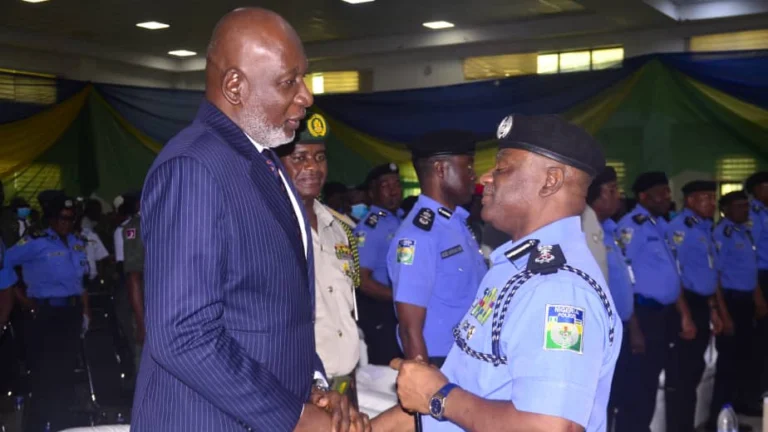
Mr Lateef Fagbemi, SAN, the Attorney-General of the Federation and Minister of Justice, made the call on Friday in Abuja during a seminar to commemorate the 2026 African Union Anti-Corruption Day.
Fagbemi said African countries should strengthen mutual legal assistance, intelligence sharing, joint investigations and institutional cooperation to deny criminals safe havens in the region.
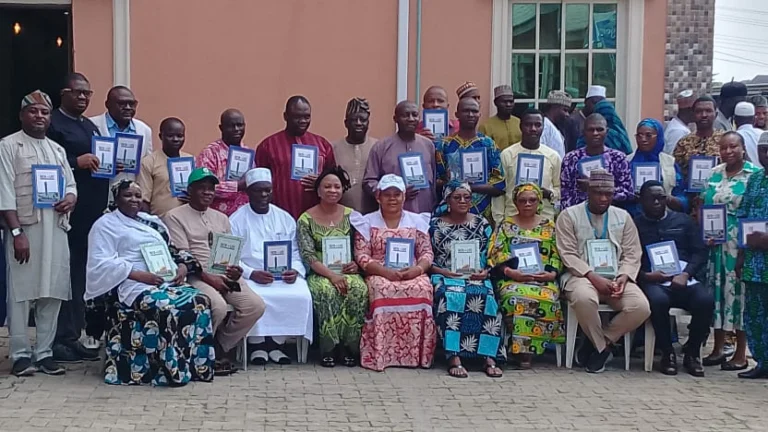
The seminar, themed “Scaling Up the Promotion of Integrity and Anti-Corruption Actions Across Africa” was organised by the Inter-Agency Task Team (IATT), a coordinating forum of agencies with anti-corruption and accountability mandates.
Fagbemi, represented by Mrs Odegbaro Gladys, Director, Solicitors Department, Ministry of Justice, underscored the need for African countries to strengthen integrity and accountability as corruption became increasingly sophisticated.
“Our experience has demonstrated that international cooperation is indispensable in combating corruption, Illicit financial flows, money laundering, and transnational organised crime do not respect national borders.
“Consequently, African countries must continue to strengthen mutual legal assistance, intelligence sharing, joint investigations and institutional cooperation in order to deny criminals safe havens for illicit wealth.
“Nigeria remains committed to fulfilling its obligations under the African Union Convention on Preventing and Combating Corruption and other relevant international instruments.
“We will continue to work with our African brothers and sisters to build stronger regional institutions capable of addressing emerging corruption risks,” he said.
He said that the Federal Government had continued to implement reforms aimed at strengthening public institutions, improving transparency, enhancing fiscal accountability and reinforcing the administration of justice.
The minister said the Ministry of Justice was providing the legal and policy framework needed to support the reforms and ensure that justice was administered fairly and efficiently.
He added that the recovery and transparent management of proceeds of crime remained a key pillar of the country’s anti-corruption policy.
The minister said Nigeria was strengthening cooperation with domestic institutions and international partners on asset tracing, confiscation, recovery and repatriation.
According to him, stolen public assets belong to the people and should be recovered and deployed transparently for projects that improve citizens’ welfare.
Fagbemi said Africa’s vast human and natural resources could only deliver sustainable development if managed with integrity, accountability and justice.
He reaffirmed Nigeria’s readiness to continue working with the AU member states and international partners to build an Africa where integrity was rewarded, corruption confronted decisively and justice served as the foundation for shared prosperity.
Dr Musa Aliyu, Chairman, Independent Corrupt Practices and Other Related Offences Commission (ICPC), called for stronger collaboration among governments, anti-corruption agencies, civil society and the private sector to promote integrity and curb corruption across Africa.
Aliyu said promoting integrity through collective action, stronger institutions, ethical leadership, youth engagement and technology was critical to addressing corruption and strengthening public trust in governance across the continent.
“The Commission also believes that integrity must be nurtured from an early age.
“In line with this philosophy of “catching them young,” ICPC actively engages youths through initiatives such as the National Youth Service Corps Anti-Corruption Lectures, Integrity Club programme in secondary schools and collaboration with the Nigerian Law School and universities.
“These initiatives are designed to integrate anti-corruption education into legal training and to cultivate a new generation of ethical leaders committed to accountability and good governance,” he said.(NAN)(www.nannews.ng)
==========
Edited by Francis Onyeukwu

Comments