







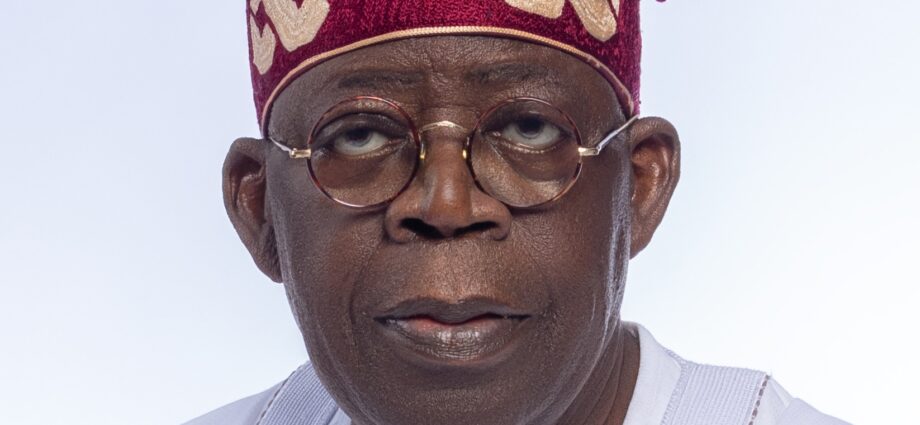
By Oyintutu Oyinkolade/Angela Atabo President Bola Tinubu says his administration has repositioned housing from a social service into a major driver of economic growth, employment generation, industrialisation and inclusive national development.
Tinubu, represented by the Minister of Housing and Urban Development, Muttaqha Darma, stated this on Tuesday at the 20th edition of the Africa International Housing Show in Abuja.
The theme of the show was “Housing Solutions for Low-Income and Informal Workers in Africa”.
He said the government embarked on far-reaching reforms to expand affordable housing supply, strengthen housing finance and modernise land administration.
The president added that the reforms also helped to promote urban renewal, encourage local production of building materials, attract private investment and improve coordination across the housing sector.
He said the Renewed Hope Housing Programme had emerged as one of the largest housing interventions in Nigeria’s history, with ongoing construction under the Renewed Hope Cities and Estates Programme across the country.
“We have elevated housing from a purely social service to a strategic driver of economic growth, job creation, industrialisation and inclusive national development.
“Across the federation, construction is progressing under the Renewed Hope Cities and Estates Programme, with 14 flagship projects at various stages of development, providing 10,112 housing units in the first phase.
“We have expanded the programme to all states of the federation and the Federal Capital Territory, with the long-term objective of delivering 100,000 affordable housing units through outright purchase, mortgage financing, and rent-to-own options for low- and middle-income Nigerians.”
Tinubu said the projects were simultaneously stimulating economic growth, creating thousands of jobs, and strengthening the construction value chain.
“We have also accelerated the expansion of the National Housing Programme, completing inherited projects across the country while initiating new developments to meet growing demand.
“In line with our collaborative approach, completed estates have been handed over to state governments for allocation to deserving citizens, ensuring timely occupation and maximising social and economic impact.
The president said the administration was expanding opportunities for affordable homeownership through public-private partnerships and innovative financing mechanisms.
This, he said, involved the MOFI Real Estate Investment Fund (MREIF), the Federal Mortgage Bank of Nigeria, Family Homes Fund, Nigeria Mortgage Refinance Company and private developers.
He said these partnerships were expanding opportunities for Nigerians to own homes.
Tinubu listed major Renewed Hope City projects to include the 2,888-unit development in Karsana, Abuja; the 2,084-unit project in Ibeju-Lekki, Lagos; and the 2,207-unit project in Lambu, Kano.
He also announced that the government was advancing the proposed Tinubu Mass Social Housing Scheme (TMSHS), designed to deliver 154,800 affordable housing units across Nigeria’s 774 Local Government Areas in two phases.
He said the programme would provide housing opportunities for low-income households, informal sector workers, young families and vulnerable Nigerians.
The president stressed that government alone could not solve Africa’s housing challenges, calling for stronger collaboration among governments, financial institutions, development partners, private investors, professional bodies and communities.
He described the Africa International Housing Show as a strategic platform for policy dialogue, investment promotion, knowledge sharing, technology transfer and regional cooperation.
Also speaking, Shehu Osidi, the Managing Director and Chief Executive Officer of the Federal Mortgage Bank of Nigeria (FMBN), emphasised the importance of affordable housing finance.
Osidi said sustainable mortgage solutions remained critical to closing Nigeria’s housing deficit.
“Across Africa, rising land and construction costs, inadequate infrastructure, and limited access to affordable housing finance have placed homeownership beyond the reach of many low-income earners and informal sector workers.
“As rapid urbanisation continues to outpace housing supply, the affordability gap is widening, highlighting the urgent need for innovative financing models, enabling government policies, and stronger public-private partnerships.
“By working together to reduce the cost of housing delivery and expand access to affordable housing finance, we can develop sustainable solutions that make decent housing accessible to millions of Nigerians.
“FMBN recognises housing not merely as a social necessity, but as a catalyst for economic growth, job creation, social inclusion and national development.
“As the apex mortgage institution in Nigeria, the Bank remains steadfast in its commitment to making homeownership affordable through accessible and affordable housing finance.”
The Convener of AIHS, Festus Adebayo, said the housing show represented the success of a vision that began 20 years ago to create a platform dedicated to solving Africa’s housing challenges.
Adebayo said AIHS had grown into Africa’s largest housing and construction gathering, bringing together governments, developers, financial institutions, investors, researchers and international partners to address the continent’s challenges.
He called for innovative financing models, effective land reforms, sustainable infrastructure, modern construction technologies and stronger partnerships to make housing accessible to all Africans.(NAN)(www.nannews.ng)
Edited by Deji Abdulwahab