





By Deji Abdulwahab
Prof. Is-haq Oloyede, Secretary-General, Nigerian Supreme Council for Islamic Affairs (NSCIA) has urged stakeholders in the Hajj industry to always render best service to the guests of Allah preforming pilgrimage in the Kingdom of Saudi Arabia.
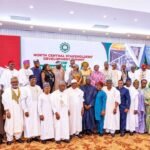
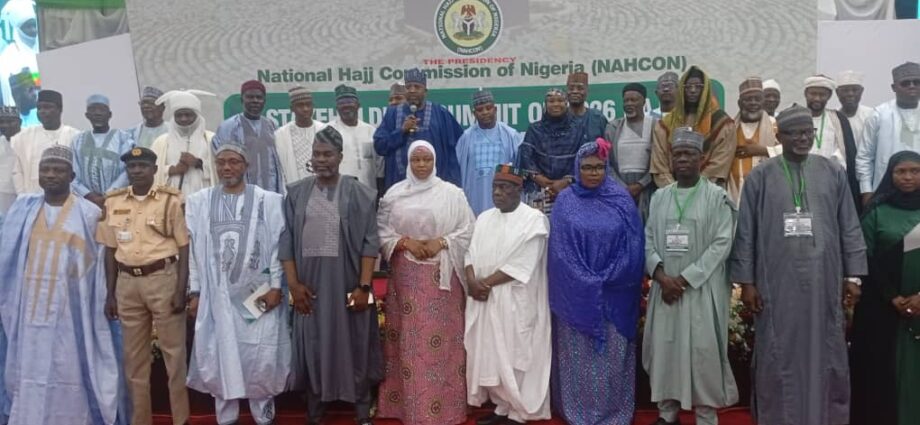
Oloyede said this on Wednesday while delivering a keynote address at the Stakeholders’ Summit on the Review of the 2026 Hajj and National Hajj Commission of Nigeria (NAHCON) Reform Agenda in Abuja.
The theme of the summit was “Repositioning Nigeria’s Hajj Industry as a Model for Service Excellence”.
The NSCIA scribe said that sincere service within the hajj ecosystem was a ticket to Al-jannah.
He said the responsibility of Hajj administrators was to help the pilgrims to fulfil Hajj as one of the five pillars of Islam safely, correctly, affordably and with dignity.
According to him, Hajj is more of a religious assignment than a national assignment.
“Everyone connected with the hajj industry should see themselves as servants of Allah serving the guests of Ar-Rahman, not just civil or public servants in any other agency.
“It is a fact that for many years now, NAHCON has operated like an overworked fire department.
“It is always seeking registration extensions, rushing to arrange last-minute hotel bookings, resolving disputes with caterers, struggling over complaints on accommodation, and manually tracking flight delays.
“A starting point is to be convinced of the need to make a change and change is possible,” Oloyede said.
He said that the real measure of Hajj administration was not the number of meetings held, committees inaugurated or contracts signed.
“It is the overall pilgrim’s experience.
“It is found in the older woman who receives assistance before she collapses, and in the first-time pilgrim who understands the rites because orientation was clear.
“It is found in the sick pilgrim who receives timely medical care, and in the traveller whose luggage is traceable, whose meal is safe and whose complaint is answered respectfully.
“It is also found in the pilgrim who returns to Nigeria spiritually transformed, morally renewed and more committed to honesty, patience, justice and service to society,” he said.
Oloyede urged the NAHCON management and other stakeholders to cooperate to build a Hajj system in which regulation protects the pilgrim, technology simplifies the journey, leadership demonstrates integrity, officials embody service and operators deliver value.
“Every institution understands that it is accountable before the public and before Allah.
“The repositioning we seek must begin with a simple but profound conviction; the pilgrim is not an interruption to the work of Hajj institutions; the pilgrim is the reason those institutions exist.
“Every official and every decision, policy and programme should be pilgrim-centric,” he said.
The Chairman/CEO of NAHCON, Amb. Ismail Yusuf, unveiled an eight-point reform agenda aimed at repositioning Nigeria’s Hajj and Umrah industry in line with global best practices and Saudi Arabia’s Vision 2030.
Yusuf said the reforms would serve as the commission’s roadmap for improving service delivery, transparency and accountability ahead of the 2027 Hajj.
According to him, the eight-point agenda includes early preparation through a predictable Hajj calendar and timely planning.
“It also includes development of a single National Pilgrimage Digital Platform for Hajj and Umrah registration, payment traceability and service delivery.
“There is also enforcement of service standards and professional accountability across NAHCON, State Pilgrims Welfare Boards and licensed tour operators,” he said.
He said that the agenda also includes strengthening financial transparency and cost governance in Hajj operations, and decentralised operations with strong central oversight.
He said that this would allow State Pilgrims Welfare Boards and licensed operators to manage pilgrim services while NAHCON focuses on regulation and oversight.
“There is comprehensive coordination and regulation of Umrah as a core statutory and consumer protection responsibility.
“Professionalisation and capacity building through the Hajj Institute of Nigeria as the national training and certification hub for Hajj and Umrah personnel is also part of the agenda.
“We also aim for enhanced pilgrim education through a standardised national curriculum in major Nigerian languages covering Hajj and Umrah rites, procedures and logistics,” he said.
The NAHCON boss said the commission’s goal was to align Nigeria’s Hajj operations with the evolving Saudi pilgrimage system.
According to him, this will help to secure better quotas, premium service packages and stronger negotiating positions in line with the Kingdom’s Vision 2030 reforms.
Yusuf said that achievements recorded during the 2026 Hajj included orderly airlift operations, improved visa processing through the Nusuk platform, enhanced medical services and closer coordination with state pilgrims welfare boards and licensed tour operators.
He acknowledged shortcomings such as lapses in catering services, accommodation, transportation and the circumvention of medical screening by some pilgrims.
He said that service providers who failed to meet contractual obligations would henceforth face consequences, stressing that performance will determine patronage, as the commission pursues greater accountability across the Hajj value chain.
The NAHCON boss said that resolutions from the summit would feed directly into the commission’s roadmap for the 2027 Hajj and its engagements with the Saudi Ministry of Hajj and Umrah.
He assured stakeholders that the reform agenda would guarantee Nigerian pilgrims a more efficient, transparent and dignified pilgrimage experience.
In his remarks, Vice-President Kashim Shettima urged the stakeholders in the Hajj industry to do the right thing while rendering service to the Nigerian pilgrims.
Shettima was represented by Dr Aliyu Modibbo, Special Adviser to the President on General Duties in the office of the Vice President.
He urged the stakeholders to remember that the reward for any service rendered to guests of Allah was Al-janah.
Dr Mariya Mahmud, the Minister of State for Federal Capital Territory (FCT), said the FCT Administration remained committed to supporting every legitimate effort aimed at improving services to Nigerians.
“We believe that collaboration among governments, regulatory agencies, service providers, state pilgrim welfare boards and religious leaders is indispensable to achieving lasting reforms.
“As we deliberate over these few days, I urge all participants to contribute constructively, drawing from practical experiences and global best practises.
“The recommendations from this summit should provide a clear roadmap for sustainable reforms that will enhance efficiency, accountability, innovation and pilgrim satisfaction,” she said. (NAN)(www.nannews.ng)
Edited by Kadiri Abdulrahman