









By Felicia Imohimi
The African Union Inter-African Bureau for Animal Resources (AU-IBAR) says Nigeria will be instrumental to achieving a Peste des Petits Ruminants (PPR)-free West Africa and, ultimately, a PPR-free Africa.
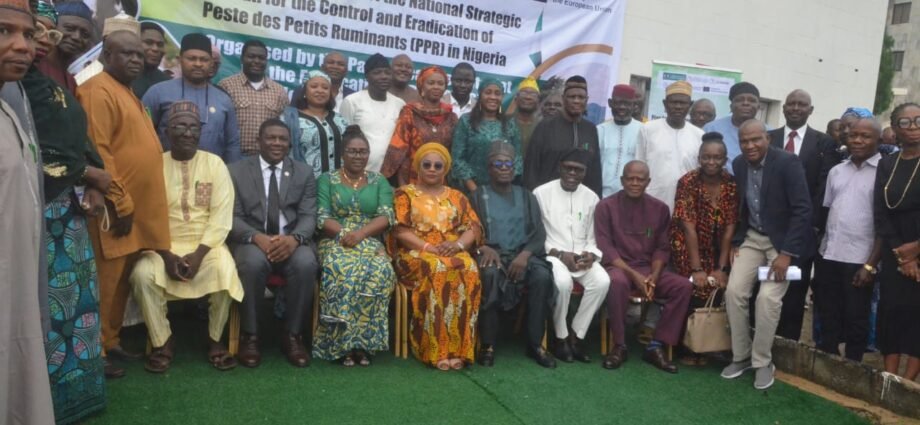
The Director of AU-IBAR, Dr Huyam Salih, said this at a two-day National Workshop for the Review of Nigeria’s National Strategic Plan for the Control and Eradication of PPR on Friday in Abuja.

The News Agency of Nigeria (NAN) reports that PPR, also known as sheep and goat plague, is a highly contagious and severe viral disease that primarily affects domestic and wild small ruminants such as goats and sheep.
The AU-IBAR director noted that PPR would continue to impose significant economic losses on livestock producers across the continent, threatening food security, nutrition, household incomes, trade and the livelihoods of pastoralists and agro-pastoralists and smallholder farmers who depend on sheep and goats.
Represented by Dr Perdita Lopes, the Regional Coordinator, PPR Eradication West Africa, Salih emphasised that eradication of PPR extend beyond disease control.
She said it represented a strategic investment in resilient livestock systems, poverty reduction, women’s economic empowerment, youth employment, sustainable rural development and improved food systems across Africa.
She noted that “Nigeria occupies a uniquely strategic position in Africa’s livestock sector and in the continental effort to eradicate PPR.
“Home to an estimated 200 million sheep and goats, the largest small-ruminant population in Africa, Nigeria sits at the heart of the region’s livestock economy.
“Its extensive production systems, vibrant livestock markets, transhumance corridors and cross-border trade networks make the country pivotal to regional animal health security.
“Consequently, success in Nigeria will be instrumental to achieving a PPR-free West Africa and, ultimately, a PPR-free Africa.
“Achieving a PPR-free Africa by 2040 will make an important contribution to the aspirations of Agenda 2063, the Comprehensive Africa Agriculture Development Programme (CAADP), and the Sustainable Development Goals.”
The director said that sharing extensive borders with Benin, Niger, Chad and Cameroon, Nigeria forms an integral part of interconnected livestock production systems, including the Lake Chad Basin episystem.
According to her, seasonal transhumance, commercial livestock trade, pastoral mobility and extensive livestock markets create continuous epidemiological links between Nigeria and neighbouring countries, facilitating both economic integration and the potential spread of transboundary animal diseases such as PPR.
She added that “for this reason, Nigeria’s success in eradicating PPR is not only critical for its own livestock sector, but also for the success of the regional and continental eradication agenda.
“It is difficult to envisage a PPR-free West Africa, or indeed a PPR-free Africa, without a successful and sustained eradication programme in Nigeria.
“Every milestone achieved here will strengthen regional animal health security, facilitate safer livestock trade, protect livelihoods and accelerate progress towards the continental goal of PPR eradication.”
Salih, therefore, urged African countries to strengthen national capacities in PPR eradication and accelerate implementation of risk-based eradication strategies capable of delivering sustainable results.
She stressed that “Nigeria possesses enormous potential for livestock development”, noting that small ruminants remain essential source of income, nutrition, employment and socio-cultural value for millions of households throughout the country.
She said that strengthening PPR control, therefore, represents far more than an animal health intervention; it offers a unique opportunity to stimulate broader transformation of Nigeria’s livestock sector.(NAN)(www.nannews.ng)
Edited by Hadiza Mohammed-Aliyu