










By Vivian Emoni
An entrepreneur, Ms Omowumi Adesuyi, has called for sustained investment, stronger policies and market access to revitalise Nigeria’s indigenous textile industry.
Adesuyi, who is the Founder and Chief Executive Officer, Naija Fabric Hub (NFH), said this in an interview with the News Agency of Nigeria (NAN) on Tuesday in Abuja.
She said the intervention could help preserve Nigeria’s indigenous textile heritage and promote local production.
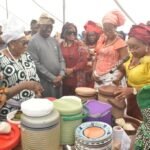
She commended the First Lady, Sen. Oluremi Tinubu, for donating two billion naira to support the development and preservation of Akwete weaving industry in Abia during her visit to the state.
He said that such intervention would help to revive and modernise the historic Akwete weaving industry.
According to her, the donation is a step toward preserving indigenous fabrics and strengthening local production.
“The support recognised Akwete weaving as an important cultural and economic asset with opportunities for employment and enterprise development,’ she said.
Adesuyi, also a member of Nigeria Textile Manufacturers Association, said that Nigeria’s textile industry was once ranked among Africa’s largest employers before experiencing a prolonged decline over the years.
She said there had been significant reduction in the number of textile mills, employment, cotton production and exports.
She said Akwete weaving remained resilient because it preserved traditional skills in spite challenges facing the wider textile industry.
The NFH founder described Akwete as a women-led industry where weaving skills have been transferred across generations.
She said the First Lady’s visit to the Abia weaving community demonstrated support for preserving indigenous craftsmanship.
According to her, the intervention could encourage more young people to sustain the traditional weaving heritage.
“Indigenous textiles also present opportunities within Africa’s growing fashion industry and international markets,” she said.
Adesuyi said that demand for authentic Nigerian fabrics remained strong among Nigerians in the diaspora, adding that buyers abroad continued to value genuine hand-woven fabrics for cultural ceremonies and special occasions.
She said that authentic indigenous fabrics commanded higher value because of their quality and cultural significance and expressed concern over imitation of the product, noting that it affect the competitiveness of local producers.
Adesuyi, therefore, called for legal protection of indigenous textile designs to safeguard their originality.
She also advocated improved access to quality raw materials and production facilities for weavers, adding that reliable infrastructure would strengthen productivity and improve product quality.
She urged greater patronage of locally produced fabrics through public procurement initiatives, while calling for improved export support to expand access to regional and international markets.
Adesuyi recommended extending similar support to other indigenous weaving centres across the country and emphasised the importance of transparent implementation of the Akwete intervention to achieve expected outcomes.
According to her, effective monitoring of the industry will strengthen government’s support for the textile sector.
She expressed optimism that sustained collaboration would help preserve Nigeria’s textile heritage while creating jobs and expanding economic opportunities.(NAN)(www.nannews.ng)
VOE/KUA
========
Edited by Uche Anunne