










Essential Skills Every Battlefield 6 Player Needs to Master Right Now
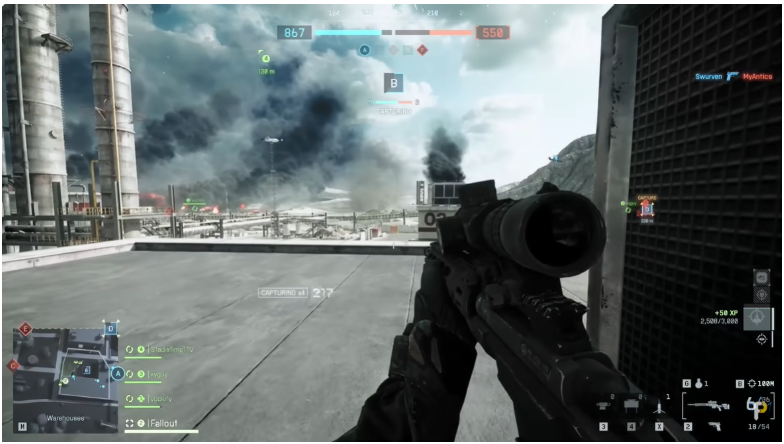
Battlefield 6 doesn’t care about your K/D from older titles. The Season 3 gunplay overhaul changed everything—recoil curves, bullet velocities, damage zones. If you haven’t adapted, you’re already behind.
The game launched in October 2025 on PS5, Xbox Series X|S, and PC. No last-gen support. And with Season 3 “Blastpoint” now live, the meta rewards precision and discipline over spray-and-pray aggression.
So here’s a breakdown of the skills that actually separate dominant players from the rest of the lobby.
Mastering Aim in Battlefield 6’s New Gunplay
Forget what worked in previous Battlefields. The June 2026 gunplay rework made automatic fire at range significantly less viable. Bullet velocities dropped. Recoil patterns became more predictable but punishing if you ignore them.
What does that mean practically?
Recoil Control and Burst Discipline
High-ROF weapons like the VCR and TR7 got recoil nerfs. Players who relied on laser-beam builds are struggling. The meta now favors controlled bursts at mid-range and tap-firing beyond that.
Treat each weapon like a small project. Load into a smaller mode, pick one gun, and learn its pull pattern. That muscle memory compounds fast.
Body-Zone Targeting
BF6 uses regional damage multipliers across head, chest, lower torso, and limbs. Hitting limbs deals noticeably less damage than chest shots. So aiming “center mass” isn’t enough anymore—you need to aim upper center mass.
Practice chest-to-head transitions in mid-range duels. It’s uncomfortable at first but dramatically reduces your time-to-kill once it clicks.
Leading Your Targets
Reduced bullet velocities mean you need to aim ahead of moving targets, especially on BF6’s massive maps like Railway to Golmud and Tsuru Reef. This isn’t optional at range. Miss your lead, miss your shot.
Advanced Movement and Destruction
BF6 keeps classic Battlefield movement—sprint, slide, prone, vault, swim—but refined for current-gen hardware. Everything feels more responsive. And that responsiveness rewards players who chain movement states intentionally.
Slide-to-ADS around corners. Sprint-to-prone to break enemy tracking. Vault-peek to gather info without full commitment. High-level players use these transitions to desync enemy aim and shrink their exposure window.
Here’s the thing most players overlook though: cover is temporary. Destruction in BF6 is more aggressive than ever. That wall you’re hiding behind? A tank round removes it. Understanding which structures can be destroyed—and repositioning before they are—is a genuine survival skill.
Naval maps add another layer entirely. On Wake Island’s carrier, mastering transitions between ship interiors, open decks, and nearby shoreline creates flanking angles that most opponents simply don’t expect.
Weapon Mastery Beyond Copying Loadouts
Season 3 sharpened weapon archetypes. SMGs dominate close quarters. ARs are flexible mid-range workhorses. LMGs control lanes with suppression. Marksman rifles and snipers reward precision at distance.
The mistake? Copying a YouTuber’s attachment setup without understanding why each piece is there.
Attachments alter recoil feel, ADS speed, visual recoil, and mobility. A grip that tames horizontal recoil might slow your ADS enough to lose close-range fights. Top players build loadouts around their engagement style, not someone else’s highlight reel.
Understand your effective range. Know when to disengage. That’s weapon mastery—not just pulling numbers from a tier list.
Positioning Principles on BF6’s Biggest Maps
Maps like Railway to Golmud, Cairo Bazaar, and Tsuru Reef are huge. Tsuru Reef is reportedly even larger than Golmud. Scale like that punishes players who wander without purpose.
Skilled players internalize map rhythms. Common rotation paths between flags. Typical vehicle spawn timings. High-traffic sightlines where gunfights predictably erupt.
On Cairo Bazaar, controlling mid-market rooftops lets you lock down two objectives simultaneously. On Railway to Golmud, understanding vehicle lanes prevents getting blindsided by armor you should have heard coming three seconds ago.
High ground matters—but static sniping doesn’t. BF6’s destruction means your perch can literally collapse. Dynamic repositioning around objectives beats camping every time.
Why Objective Play Beats Kill-Chasing
This never stops being true in Battlefield, and BF6 doubles down on it. Official EA guides for modes like Obliteration explicitly emphasize bomb movement, coordinated pushes, and defending choke points over padding the killfeed.
Experienced players treat objectives as anchors. Rotations, vehicle usage, gadget placement—everything orbits around capture points or bomb routes. Kills are a tool for winning objectives, not the goal themselves.
Vehicles are most impactful when they secure lanes feeding into objectives. A tank sitting directly on a flag is an easy target. A tank covering the two main approach routes to that flag? That’s area denial that wins rounds.
Developing Elite Situational Awareness
Aim gets all the attention. Awareness wins more games.
Top BF6 players glance at the minimap after every engagement. They track last-known enemy positions. They use directional audio—specific weapon signatures, vehicle engines, footstep surfaces—to infer threats before they’re visible.
Hearing a tank engine behind buildings on Wake Island and pre-rotating to an AT position before it rounds the corner? That’s awareness in action. It looks like prediction from the outside. It’s actually just disciplined information processing.
Build a habit: every time you get a kill, check minimap. Every time you spawn, scan audio. These micro-routines compound into a persistent information advantage that legitimate players use to dominate lobbies—an advantage that’s fundamentally different from artificial tools like cheats for Battlefield 6, but one that produces surprisingly similar battlefield awareness through pure skill development.
Mastering Battlefield 6 Vehicles
Naval warfare is BF6’s biggest addition. Carriers with operational flight decks, dynamic wave systems on Tsuru Reef, and new naval craft create a third combat domain alongside land and air.
For ground vehicles, learn hull-down positioning. Expose your turret, not your hull. Use terrain to absorb shots while maintaining fire angles.
For air vehicles, flare discipline separates good pilots from dead ones. Popping countermeasures too early leaves you exposed on the second lock-on. Altitude management and threading AA bubbles matter more than raw dogfighting ability.
For naval craft, wave timing affects your gunnery and your enemy’s aim. Position ships to use wave crests as intermittent cover. It sounds weird. It works.
Dedicate sessions specifically to vehicle practice. Don’t casually hop into a helicopter during a ranked match and feed the enemy team free points.
How to Actually Improve
Reading guides helps. But improvement comes from structured practice.
Warm up in an aim trainer or TDM mode before jumping into Conquest or ranked. Focus on one skill per session—recoil control today, positioning tomorrow, vehicle play next week.
Record your gameplay and watch it back. Not for highlights. For mistakes. Bad peeks, poor rotations, wasted utility. That’s where the real gains hide.
And track the right stats. K/D alone tells you almost nothing in Battlefield. SPM (score per minute) reflects overall impact. Win rate reflects decision-making. Objective captures and defends show whether you’re actually playing the game or just playing deathmatch on a Conquest server.
BF6 is more demanding than its predecessors. But the skills that matter—precision, positioning, awareness, teamwork—are the same skills that have always defined great Battlefield players. The game just punishes you faster now when you ignore them.