






By Edith Tsokar
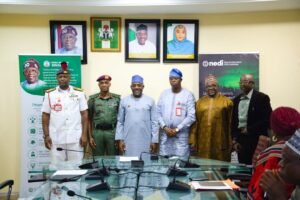
The Minister of Education, Dr Tunji Alausa, has inaugurated a Technical Working Group to fast-track the establishment of the Armed Forces College of Medicine and Health Sciences.
Alausa, while inaugurating the committee in Abuja on Friday, described the proposed institution as a strategic intervention aimed at addressing the acute shortage of medical personnel in the Nigerian Armed Forces.
He said that the initiative was with a target to admit its first set of military medical cadets in the 2026 academic session.
He described the proposed college as a strategic national investment designed to strengthen military healthcare delivery by producing doctors, nurses, pharmacists and allied professionals specifically trained for Armed Forces operations.
He explained that Nigeria had relied on civilian universities to supply military healthcare personnel for decades, stressing that the new institution would provide a sustainable and specialised workforce for defence operations.
According to him, military personnel deserve healthcare professionals equipped with practical knowledge of battlefield realities, emergency response, rehabilitation and operational medicine to effectively support national security responsibilities.
He said government approved the institution to build long-term healthcare capacity capable of meeting operational, emergency, rehabilitation and peacekeeping medical requirements of military personnel serving within and outside the country.
”We cannot continue to leave the brave men and women defending our nation without a sustainable system for training the healthcare professionals they require,” he said.
Alausa explained that the initiative aligned with ongoing reforms expanding medical education nationwide to address healthcare workforce shortages while improving access to quality healthcare services across the country.
He disclosed that annual admissions into Medicine and Dentistry increased from about 5,000 before the current administration to 10,405, with government targeting at least 20,000 admissions within two years.
The minister also said that annual enrolment into nursing programmes rose from approximately 28,000 to nearly 120,000 nationwide, surpassing government projections through sustained investments, policy reforms and institutional expansion.
He commended the Nursing and Midwifery Council of Nigeria for maintaining professional standards in spite of increased enrolment, noting that Nigerian nurses continued receiving global recognition for competence, professionalism and quality service.
Alausa, however, emphasised that military healthcare required specialised education beyond conventional medical training.
He directed the committee to prioritise courses including Occupational Therapy, Speech Therapy and rehabilitation sciences to improve treatment, recovery and long-term support for personnel injured during military operations.
He stressed that every academic programme offered by the institution must directly address the healthcare requirements of the Armed Forces instead of duplicating courses available in conventional universities.
He said the committee comprised representatives from the Federal Ministry of Education, Ministry of Defence, National Universities Commission (NUC) and other professional regulatory agencies overseeing healthcare education.
According to him, the committee will develop curricula, coordinate accreditation processes, integrate military and medical training, facilitate staff recruitment and ensure academic activities commence during the 2026 session.
Alausa disclosed that he had engaged the Registrar of the Joint Admissions and Matriculation Board (JAMB) to include the proposed institution on the admissions portal before its planned take-off.
He added that the NUC had been directed to fast-track resource verification and accreditation processes, enabling the institution to admit pioneer military medical cadets without unnecessary administrative delays.
Alausa appreciated the Minister of Defence and the Minister of State for Defence for supporting the initiative, expressing confidence that the Technical Working Group would complete its assignment on schedule.
He reaffirmed the commitment of President Bola Tinubu to strengthening the Armed Forces through sustained investments in education, healthcare and human capital development.
Chairman of the Technical Working Group, Idris Solebo, said the proposed institution was modelled after the Uniformed Services University in the United States.
Solebo explained that students would undergo integrated military and medical training from admission until graduation, acquiring competencies in battlefield medicine, Tactical Combat Casualty Care and specialised operational healthcare disciplines.
He disclosed that the college would be located at the Nigerian Army Reference Hospital Kaduna, leveraging existing infrastructure for immediate commencement of academic and clinical activities.
The chairman revealed that the Armed Forces currently faced an estimated 93 per cent deficit in medical personnel, making establishment of the college critical for strengthening national defence healthcare capacity.
He expressed confidence that the institution would create a sustainable pipeline of military doctors and allied health professionals while enhancing operational readiness, emergency response capability and quality healthcare delivery.(NAN) (www.nannews.ng)
Edited by Gregg Mmaduakolam/Funmilayo Adeyemi