










By Usman Aliyu, News Agency of Nigeria (NAN)
Artificial intelligence is changing the way news is gathered, produced and distributed.
Audiences are consuming information differently, while traditional business models that sustained many media organisations continue to face pressure.
For journalists and communication professionals, these changes have increased the need for continuous learning beyond the traditional skills of reporting, editing and production.
Across the industry, practitioners are exploring new competencies that include digital innovation, audience engagement, entrepreneurship, data, leadership and emerging technologies.
Against this backdrop, professional education programmes have become an important avenue for mid-career journalists seeking to understand and adapt to the evolving media landscape.
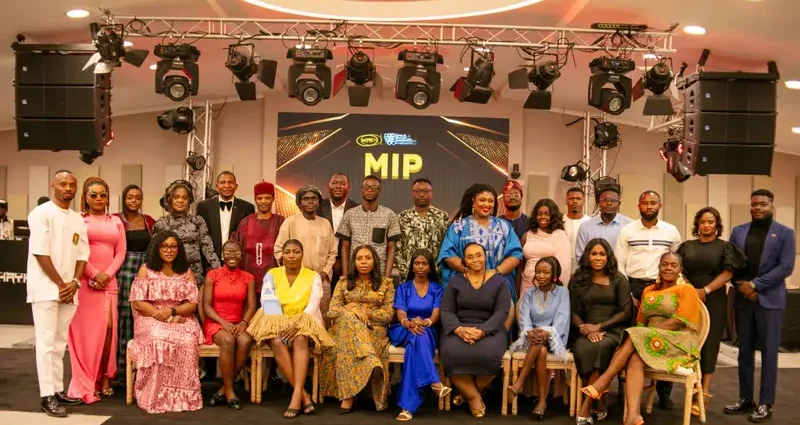
The fifth edition of the MTN Media Innovation Programme (MIP), organised by the School of Media and Communication (SMC), Pan-Atlantic University (PAU), is one example of such initiatives.
The six-month programme brings together journalists and media professionals from different backgrounds to examine current trends, develop new skills and reflect on the future of the industry.
“There are two ways in which you can take this adventure. You can look at it as a paid-up jamboree to enjoy yourselves. But you can also look at it as a life-changing episode; something that will lead to self-development”.
Those words by Dr Ikechukwu Obiaya, Dean of the School of Media and Communication, were among the first messages delivered to participants at the beginning of the programme.
At the time, the statement appeared to be a familiar message often associated with the start of professional training.
However, three months into the fellowship, many participants say they have come to view it as a challenge to approach the experience with a deeper sense of purpose.
The programme is designed around the idea that journalists must continue to adapt as the industry changes.
Rather than focusing only on traditional newsroom practices, the sessions explore areas that increasingly influence modern media operations, including artificial intelligence, entrepreneurship, intellectual property, media law, project management, business strategy and digital innovation.
For participants, the experience goes beyond attending lectures.
The structure of the programme involves discussions, presentations, group assignments and practical exercises that require fellows to engage with ideas and apply them to professional situations.
Admission into the fellowship also reflects the emphasis placed on professional commitment.
The selection process involves multiple stages aimed at identifying candidates with relevant experience and a willingness to participate actively in the learning process.
Inside the classroom, sessions are largely interactive.
Fellows are encouraged to question assumptions, share experiences from their respective workplaces and examine how global trends are affecting local media practice.
Editors, reporters, broadcasters, content creators and communication professionals bring different perspectives into discussions, creating opportunities for participants to compare approaches and consider possible solutions to challenges facing the industry.
One of the notable features of the programme is the daily recap presentations, where participants review previous sessions and present key lessons to their colleagues.
The exercise requires research, teamwork, storytelling, presentation skills and the ability to simplify complex ideas.
For many fellows, the activity has become more than a classroom requirement.
It has become a practical demonstration of the changing expectations of media professionals, who must continuously communicate across different platforms and formats.
Mr Isaac-Ogugua Ezechukwu, Director of Professional Education at the SMC, said the professional programmes were developed after research identified competency gaps within Nigeria’s media and communication sector.
“The research showed that usable skills are needed by journalists and communicators for corporate bodies.
“The school decided to develop curricula that bridge the gap and improve competencies. These programmes are research-backed and designed for practical application,” he said.
According to him, the focus is on creating training opportunities that respond to the changing needs of professionals and organisations.
For participants, the relevance of such programmes lies in their ability to connect learning with everyday professional realities.
Several fellows say the experience has encouraged them to rethink familiar newsroom routines and explore new ways of approaching journalism in an increasingly digital environment.
While their expectations differed at the beginning of the fellowship, many have found common ground in the need to understand how technology, innovation and changing audience behaviour are reshaping the profession.
For them, the question is no longer only how journalists tell stories, but also how they create value, engage audiences and remain sustainable in a rapidly changing industry.
For Jayne Augoye, Editor at Premium Times and a fellow participant in MIP-5, the programme has influenced how she views journalism beyond the daily demands of news production.
She said the experience had encouraged her to consider broader questions around sustainability, audience needs and the use of digital tools in improving newsroom operations.
“As an editor, I have found myself looking beyond daily news reporting to identifying sustainable opportunities, developing audience-centred content and embracing digital tools that can improve storytelling and newsroom efficiency,” she said.
Augoye also highlighted the role of the faculty and facilitators in shaping discussions around innovation, critical thinking and practical application.
Rather than treating journalism as a fixed profession, she said the sessions had encouraged participants to examine how changing technologies and audience expectations require new approaches.
Technology content creator Fisayo Fosudo said the interactive structure of the programme was one of the elements that shaped his experience.
According to him, the fellowship was different from a conventional classroom setting where participants simply listen to lectures and take notes.
“We actually do not just attend lectures and take notes,” he said.
He explained that preparing daily recaps required research, collaboration, storytelling, presentation design and public speaking, skills that are increasingly important in modern communication.
For television presenter Totulope Ajibola of Silverbird Television, the programme has expanded her understanding of the relationship between media and emerging technologies.
She said discussions around artificial intelligence and digital innovation had challenged her to reconsider how broadcasting may evolve in the coming years.
Describing the experience as an opportunity to “learn, unlearn and relearn,” Ajibola said the exposure had influenced how she thinks about the future of television and content production.
Former participants of the programme also point to similar experiences.
Samson Akano, News Editor at Nairametrics and a member of the pioneer MIP cohort, said the involvement of industry professionals contributed to the practical nature of the sessions.
He said learning from practitioners who understand newsroom realities helped participants connect concepts discussed in class with challenges they encounter in their workplaces.
Johnstone Kpilaakaa, Head of Standards and Sub-Editor at HumAngle and an alumnus of MIP Cohort 3, said the programme had influenced his approach to journalism.
“The modules opened me up to become a product-thinking journalist,” he said.
For Kpilaakaa, the experience went beyond acquiring new skills, as it encouraged participants to think about journalism from the perspective of value creation, innovation and leadership.
The experiences of current and former fellows highlight a wider conversation about the role of professional education in Nigeria’s media industry.
As newsrooms face financial pressures, technological disruption and changing audience behaviour, many practitioners now recognise that journalism requires continuous adaptation.
The traditional image of a journalist focused primarily on gathering and writing news has expanded.
Modern practitioners increasingly need knowledge of technology, audience analytics, business strategy, project management and communication tools.
This shift has encouraged universities and training institutions to develop programmes aimed at professionals already working within different sectors.
Professional education has also become a way for institutions to engage with industries beyond conventional degree programmes, allowing working professionals to update their knowledge while responding to workplace demands.
For media organisations, such initiatives provide opportunities for staff development and exposure to new ideas that can influence newsroom practices.
However, the broader challenge remains how such learning opportunities can become more accessible to a larger number of journalists, especially those working in smaller newsrooms and outside major cities.
The pace of technological change means that adaptation is no longer optional for media professionals.
Artificial intelligence, digital platforms and evolving audience habits will continue to influence how journalism is practised.
For the participants of MIP-5, the value of the programme lies in the opportunity to reflect, experiment and engage with colleagues from different areas of the industry.
Three months into the fellowship, many say the experience has provided new perspectives on their work and the direction of journalism.
Beyond the classroom sessions and assignments, the programme has created a space for conversations about the future of the profession and the skills required to navigate it.
As the media landscape continues to change, the experiences of programmes such as MIP-5 demonstrate the growing importance of lifelong learning for journalists and communication professionals.
For practitioners, the challenge is not only to report the changes shaping society but also to understand and adapt to the changes reshaping their own profession. (NANFeatures)
***Usman Aliyu, an Editor/Assistant Chief Correspondent with the News Agency of Nigeria (NAN), is an MTN MIP-5 fellow