


By Sarafina Christopher
Nigeria has sought deeper cooperation with China in water-saving agriculture, soil management and scientific research to address agricultural challenges in the northern part of the country and the Lake Chad basin.
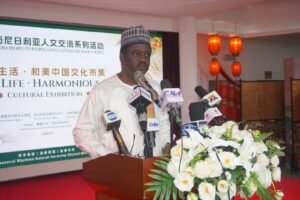
Dr Mukhtar Muhammed, Permanent Secretary, Federal Ministry of Innovation, Science and Technology, made this known on Saturday at the “Seasonal Life and Harmonious China” Cultural Exhibition at the China Cultural Centre in Abuja.
Muhammed said Nigeria could draw lessons from China’s experience in using science and technology to improve agricultural productivity in areas affected by water scarcity and land degradation.
He said his recent technical visit to China, particularly the Yangling High-Tech Agricultural Demonstration Zone in Shaanxi Province, had demonstrated the potential of applying scientific innovation to Nigeria’s agricultural challenges.
“In Yangling, often referred to as China’s ‘Agricultural Silicon Valley’, we witnessed the seamless integration of modern technology with traditional farming.
“For example, we observed advanced water-saving irrigation systems and soil monitoring technologies that allow farmers to cultivate crops in arid conditions with minimal water wastage,” he said.
According to him, the experience was particularly relevant to Nigeria’s efforts to address land degradation and improve agricultural productivity in the northern part of the country.
“Seeing how China has successfully combated land degradation and improved agricultural productivity in the Loess Plateau is a powerful inspiration for our efforts in Northern Nigeria and the Lake Chad region,” Muhammed said.
He said the ministry would seek stronger collaboration between Nigerian and Chinese ministries of science and technology, research institutions, universities and industries.
Muhammed said the proposed cooperation would focus on practical areas including sustainable agriculture, water management, agro-processing and scientific research.
He also said Nigeria planned to expand scholarships and science, technology, engineering and mathematics (STEM) training for Nigerian scientists in Chinese universities, particularly in sustainable agriculture and water management.
The Permanent Secretary linked the proposed scientific cooperation to the growing economic relationship between both countries, particularly China’s expanded market access for African agricultural products.
He said Nigeria needed to strengthen its scientific and technological capacity to ensure that increased access to the Chinese market translated into tangible benefits for farmers and the wider economy.
“We must see this as a starting point. The policy does not just facilitate exports; it forces us to level up,” Muhammed said.
He said Nigeria would also seek Chinese technology transfer to strengthen agro-processing and move the country from exporting raw commodities to value-added products.
Muhammed also identified cassava, shea butter and cashew nuts as among the commodities that could benefit from improved processing technology for the Chinese and global markets.
Mr Yang Jianxing, Director of the China Cultural Centre in Nigeria, said China remained committed to strengthening people-to-people exchanges with Nigeria as part of efforts to deepen the bilateral partnership.
Yang said cultural cooperation provided an important platform for mutual learning between both countries, noting that the facility would continue to promote exchanges in culture, education, youth affairs, tourism and other areas.
“Cultural exchange is a vital component of China-Africa friendly cooperation.
“It serves as an important bridge for fostering mutual understanding and affinity between our peoples, as well as for promoting dialogue and mutual learning among civilisations,” he said.
He said the centre would continue to implement the outcomes of the 2024 Forum on China-Africa Cooperation (FOCAC) Beijing Summit and agreements reached by the leaders of Nigeria and China.
The director added that it would expand programmes that bring the peoples of both countries closer.
The News Agency of Nigeria (NAN) reports that the exhibition marked the China-Africa Year of People-to-People Exchanges and the 55th anniversary of China-Nigeria diplomatic relations.
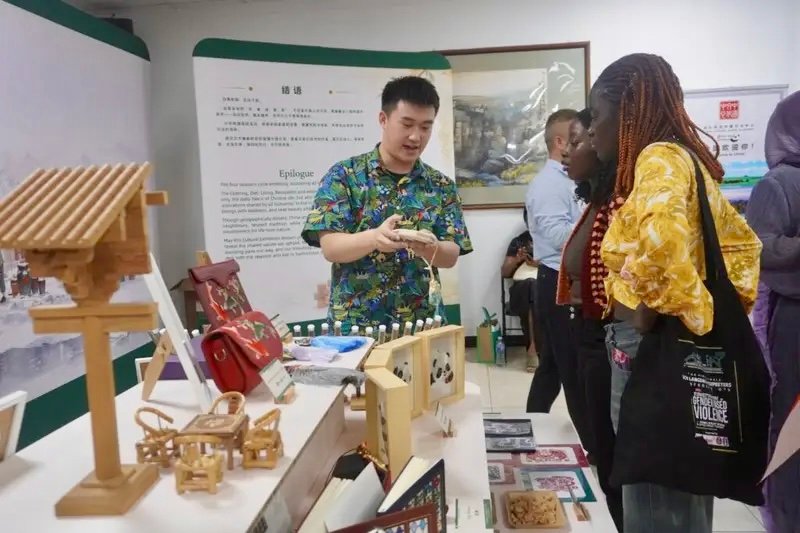
The event featured displays on the Twenty-Four Solar Terms, traditional Chinese cuisine, intangible cultural heritage crafts and interactive cultural activities.(NAN)
Edited by Mark Longyen



Comments