


By Rotimi Ijikanmi, News Agency of Nigeria (NAN)
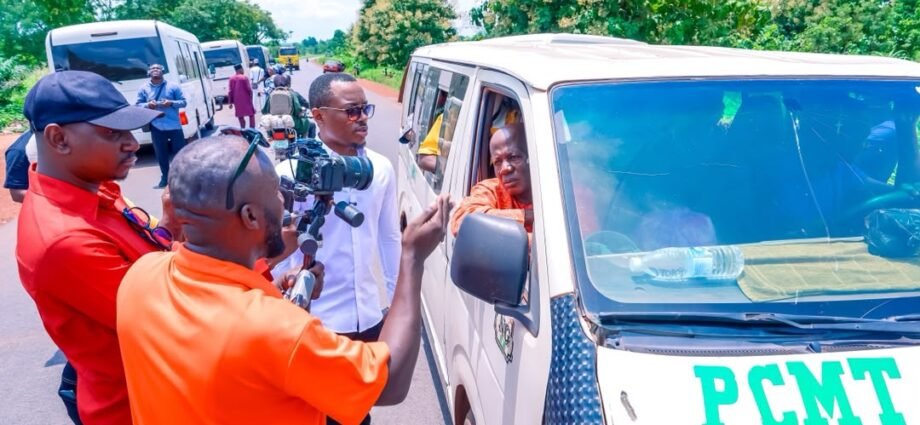
For four days, the road into Benue became a moving test of perception, with a presidential media team traversing routes once feared for attacks, without incident.
The Renewed Hope Ambassadors Presidential Media Team, led by Mr Bayo Onanuga, the Special Adviser to the President on Information and Strategy, embarked on the journey on Aug. 5.
The mission was to inspect Federal Government and state infrastructure projects across Nasarawa and Benue states, but the journey also offered an opportunity to test prevailing narratives about insecurity.
The journey also unfolded against sustained Federal Government efforts under President Bola Tinubu to strengthen security nationwide through expanded deployments, intelligence, recruitment and inter-agency coordination.
The team travelled from Abuja to Makurdi, then ventured into interior communities and remote locations where reports of attacks by bandits, kidnappers and other criminal elements had previously generated concerns.
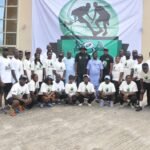
No fewer than 40 senior editors,, social media handlers, cameramen, photographers and other support staff members from the Presidential Villa joined the journey, making the convoy a sizeable travelling media contingent.
Among the officials were Mr Tunde Rahman, Senior Special Assistant to the President on Media and Special Duties; Mr Tope Ajayi, Senior Special Assistant on Media and Publicity, Director in the Villa Media Unit, Mr Abiodun Oladunjoye.
Others included Mr Abdulaziz Abdulaziz, Senior Special Assistant on Print Media; Mr Otega Ogra, Senior Special Assistant on Digital Media; and Ms Linda Akhigbe, Senior Special Assistant on Strategic Communication.
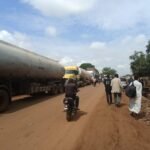
The first leg of the journey provided an immediate indication of changing conditions along the Abuja-Makurdi corridor, where improved road infrastructure has transformed travel on sections once associated with delays and hazards.
The reconstructed highway now offers wider lanes, improved shoulders, safer overtaking opportunities and better traffic flow, reducing motorists’ exposure to isolated bottlenecks and prolonged stops.
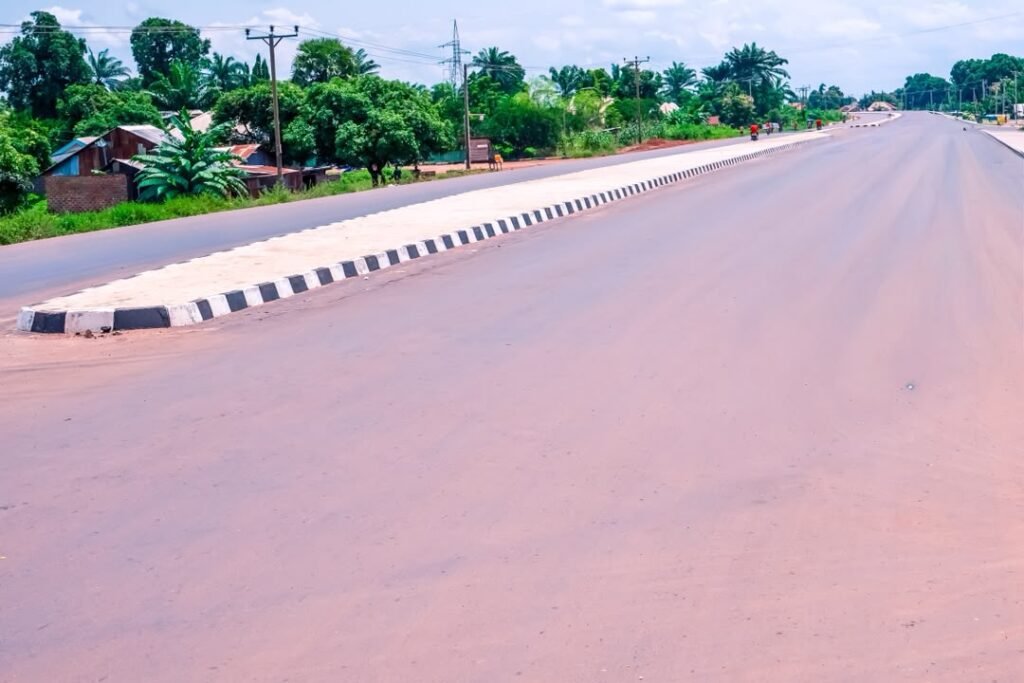
The road, a major gateway linking the Federal Capital Territory with Benue and the South-East, carries passengers, agricultural produce, fuel, livestock and other goods across the region.
The journey continued beyond Makurdi to Taraku Mill in Gwer East Local Government Area, Otobi Water Works and Treatment Plant, Benue Brewery and other infrastructure sites.
These locations, some situated away from major urban centres, offered another opportunity to assess the security situation beyond the main highways.
The team also inspected the ongoing 258-kilometre Makurdi-Otukpo-Enugu highway and travelled through the Aliade-Oju axis, areas where insecurity had previously affected movement and economic activities.
At Buruku, the team visited the ongoing bridge project across the Katsina-Ala River, a location historically associated with dangerous river crossings and significant loss of lives.
Mr Raymond Aondoakura, Chairman of Buruku Local Government, said almost 200 people had reportedly died in boat mishaps on the river within three years.
The ongoing bridge, therefore, represents more than infrastructure.
It is expected to eliminate a dangerous crossing, improve movement and connect communities previously constrained by geography and inadequate transportation links.
For the presidential media team, however, the significance of the journey extended beyond the projects inspected.
It provided an opportunity to experience directly a security environment often portrayed as uniformly dangerous across Benue and other parts of the North Central.
For four days, the team travelled through several locations without an attack or security incident, an experience that appeared to contrast with perceptions of pervasive insecurity.
The experience does not mean security challenges have disappeared from Benue, but it suggests that the situation may be more nuanced than broad descriptions of the state as entirely unsafe.
Across the North-West, the Tinubu’s administration has sustained Operation Fansan Yamma and intensified joint operations against bandit camps and kidnapping networks in Zamfara, Sokoto, Katsina, Kebbi and neighbouring states.
Gov. Hyacinth Alia has also pointed to improving security as evidence of changing conditions, particularly the gradual return of displaced residents to their ancestral communities.
During a media chat with the team, Alia disclosed plans to close some Internally Displaced Persons’ camps because occupants had voluntarily returned to their homes in order to farm.
The governor said 15 IDP camps had been established following attacks and displacement, but improved security was enabling many residents to return and rebuild their livelihoods.
He said security agencies, traditional institutions and residents were monitoring developments across the state, while the government continued working with international organisations to achieve durable returns.
The changing security picture is also reflected in renewed economic activity, as government revives abandoned industries and improves roads connecting farms, markets and production centres.
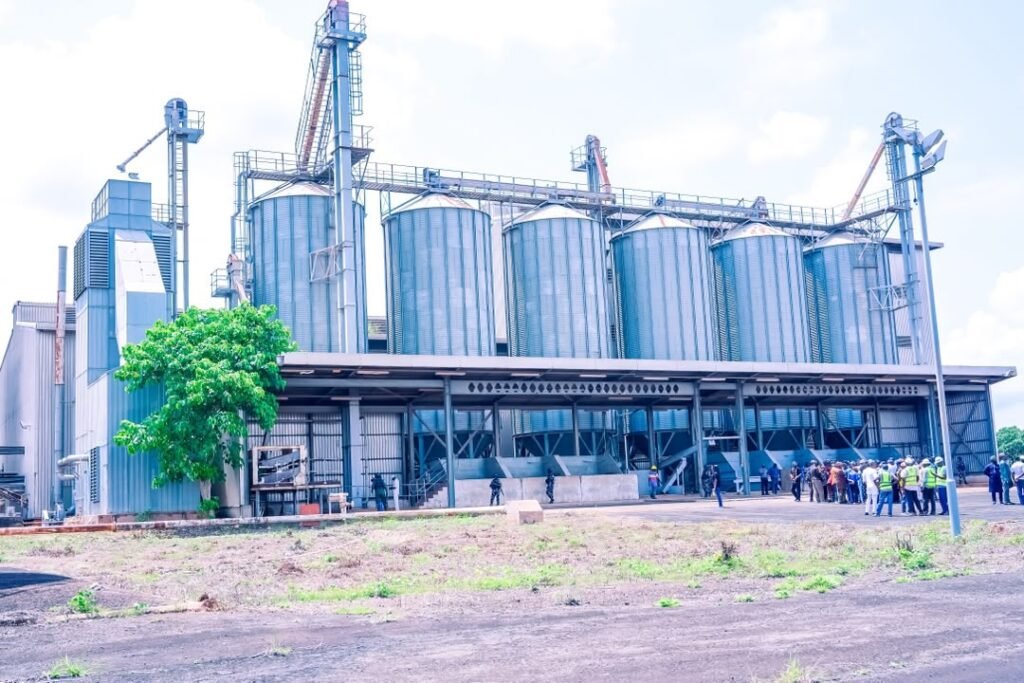
At Taraku, the government is reviving a N70 billion mill that had remained moribund for about 40 years, with the facility expected to process soybean, maize and animal feed.
The mill’s General Manager, Mr Terngwu Kyuve, said the facility could create no fewer than 2,000 direct and indirect jobs when fully operational.
Such investments require security because factories cannot thrive where workers, investors, farmers and transporters fear travelling to production locations.
Similarly, improved roads are helping farmers move produce faster, reducing journey times and limiting the prolonged exposure to isolated stretches that can heighten vulnerability.
The evidence from the road journey, therefore, points to a gradual change rather than a complete victory over insecurity.
Benue still faces security challenges, but improved roads, increased movement, government intervention and returning residents suggest that the state’s security narrative is evolving.
For the presidential media team, the four-day journey became an unconventional field test and evidence that the state is moving beyond its troubled past.
The experience also underscored the connection between security and development.
Roads, bridges, industries and economic opportunities can strengthen communities while reducing isolation that often creates vulnerabilities.
As the convoy returned after traversing highways, bridges, industrial sites and interior communities without incident, one conclusion stood out: Benue’s security story may no longer be as bleak as commonly portrayed.(NANFeatures)
Edited by Ismail Abdulaziz
*** if use, credit the writer and the News Agency of Nigeria