


In the quiet, early morning hours of Katsina’s Kofar Kaura area, Aisha Umar would sit and count her daily earnings in loose change.
Running a small neighbourhood grinding mill on borrowed equipment, she often spent more money repairing the ageing diesel engine than she brought home to feed her five children.
By sunset, after paying the machine owner his cut, she would walk home with barely enough to buy a mudu of maize.
“When you depend on someone else’s tools, you are working for them, not yourself.
“If the machine breaks down, your family doesn’t eat that night,” Umar said.
Today, the rhythmic metallic hum of a brand-new, dual-powered grinding machine echoes from Aisha’s shed.
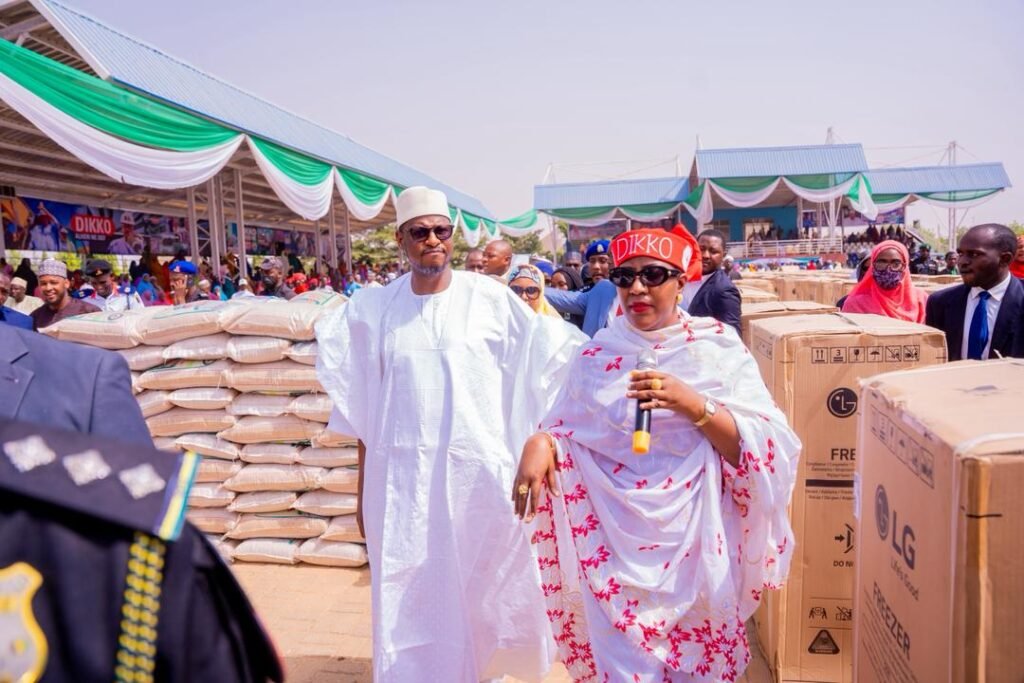
She is one of 14,450 women across Katsina’s 34 Local Government Areas whose economic trajectory shifted following the unveiling of the state’s Mega Women Empowerment Programme by Gov. Dikko Radda.
Beyond the official rhetoric and macro-level figures, the true impact of the scheme lies in the transformed daily lives of women across diverse trades.
They cut across tailoring, livestock rearing, food processing and petty trading.
For many rural and semi-urban women, government intervention programmes have historically felt like distant promises, often intercepted by local elite.
However, the selection process for this empowerment initiative incorporated local Community Development Officers and structured Women Affinity Groups (WAGs) to reach women at the grassroots.
Stakeholders say the incorporation of these groups enabled transparency and ease of accessibility.
Amina Bello, a 34-year-old widow from Malumfashi LGA who ran a modest petty-trading table outside her family compound, described the application process as surprisingly accessible.
“We were told about the exercise at our monthly community savings meeting. Community officers came directly to our ward.
“They registered our names, took our photographs, and verified that we were already running micro-businesses, no matter how small.
“There were no forms to buy or political favours to ask,” she said.
Many of the beneficiaries corroborated official position that the selection criteria prioritised vulnerable groups, including widows, female heads of households, smallholder farmers and micro-entrepreneurs.
Applicants also underwent a mandatory three-day financial literacy module covering cash-flow management, record-keeping and the mechanics of collective savings.
An official from the Katsina State Ministry of Women Affairs, speaking about the implementation structure, said the process was designed to minimise the influence of intermediaries.
“Our mandate was clear: bypass middle-men. We mapped real working women across all 34 LGAs.
“By pairing direct cash grants with functional equipment and integrating beneficiaries into local savings cooperatives, we created a verification loop that ensured assets went directly into productive hands,” he said.
Across the state, the experiences of beneficiaries show how targeted support can translate into tangible business expansion and improved household incomes.
For Umar, the difference has been particularly significant.
Before receiving support, she relied on borrowed equipment, faced high rental costs and earned an unpredictable daily income averaging between N800 and N1,200.
She received a N150,000 capital support grant alongside a brand-new motorised grinding machine.
Today, Aisha owns her equipment outright, eliminating the daily rental fees that once consumed a significant portion of her earnings.
Her net daily profit has more than tripled to N4,500, and she has expanded her services to include cassava processing alongside millet and maize.
For Zainab Garba from Daura, her experience tells a similar story.
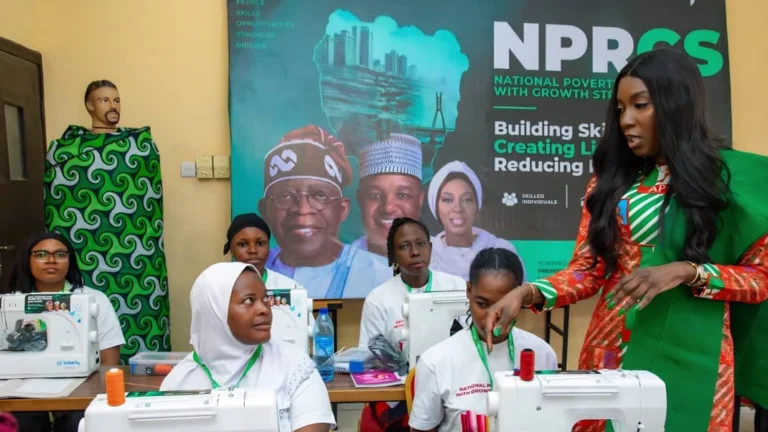
Before the intervention, she operated a single manual sewing machine that she shared with her younger sister, limiting her production capacity to simple traditional wear.
With an industrial weaving machine, specialised tailoring accessory kits and a start-up grant of N100,000, Zainab has expanded her enterprise significantly.
She now takes on complex embroidery and school uniform contracts in bulk and has employed two young apprentices from her neighbourhood.
In Funtua LGA, Halima Sani has also experienced a major transformation in her food-processing business.
Before the intervention, she processed groundnut oil using labour-intensive manual extraction methods, which resulted in low output and significant waste.
The provision of modern hydraulic groundnut extraction machinery, sealing equipment and safety packaging training has changed the scale and efficiency of her operation.
Her processing time has dropped by 60 per cent, while her oil yield has nearly doubled per bag of groundnuts.
She now supplies branded and hygienically packaged groundnut oil to local supermarkets in Funtua and surrounding markets.
As acknowledged by the state government, the ultimate test of any economic empowerment scheme is what happens inside the home.
Beyond business expansion, the Mega Women Empowerment Programme has enabled more reliable income to reshape household stability, educational access and financial responsibilities within families.
For grinding-machine owner Umar, her children’s education suffered immediate consequences.
“Last term was the first time my two oldest daughters didn’t get sent home from school over unpaid exam fees. I paid the fees directly from my business account,” she said.
The benefits have also extended beyond individual businesses.
The integration of beneficiaries into Women Affinity Groups has fostered a more formal savings culture among participating women.
Women who previously kept cash under mattresses now operate group bank accounts, pooling funds to provide micro-loans to one another for personal or family emergencies.
In spite of these achievements, the scale of economic needs in Katsina means that demand continues to far exceed the current supply of grants.
For every woman who has received support, many others remain on the waiting list.
In the market town of Charanchi, you will find Fatima Yusuf who applied for the programme, underwent the preliminary screening, but was ultimately not selected for the first cohort.
Her experience highlights some of the challenges that future phases of the scheme will need to address.
Micro-traders like Fatima can find themselves in the same broad empowerment pool as businesses requiring more expensive machinery, leaving some of the smallest vendors without support.
There are also wider economic pressures.
Rising fuel and raw material costs have eroded some of the profit margins gained by equipment owners, particularly those operating petrol-powered mills or purchasing imported fabrics.
For women in remote communities, access remains another challenge.
Although all 34 LGAs were included in the programme, some women in remote border settlements reported difficulties attending training sessions held at urban LGA headquarters because of transportation costs.
State officials acknowledge these challenges but point to the domestication of the National Policy on Women’s Economic Empowerment (WEE) as evidence that the January launch was not intended to be a one-off intervention.
The state said it plans to roll out subsequent phases linked with the Nigeria for Women Programme Scale-Up, targeting applicants who were bypassed during the initial rollout.
For beneficiaries, the intervention has provided tools with which to build more resilient businesses, contribute more consistently to household expenses and create opportunities for others.
Analysts say the programme demonstrates that targeted capital, when delivered directly to female micro-entrepreneurs, can become an immediate stabilising force for local economies and households.
Yet its long-term success will depend on how effectively subsequent phases address the women still waiting on the margins, including small traders like Yusuf.
The next chapter, therefore, will not simply be about how much money is distributed or how many machines are provided.
It will be about whether the programme can expand its reach, adapt to the realities of inflation and remote communities, and ensure that women at every level of enterprise can find a place within its support structure.
Observers say the grant is just a starting point for Katsina’s women; true empowerment will be what they are able to build with it.
Edited by Chijioke Okoronkwo

Comments