


By Aderonke Ojo
Former Nigerian squash professionals in the diaspora have pledged stronger support for grassroots development of the sport, calling for sustained investment, wider competitions and greater international opportunities for young players.
The commitment was made at the closing ceremony of the seventh edition of the Squash in Diaspora Under-11, Under-13 and Under-17 Boys and Girls Junior Championship in Abuja.
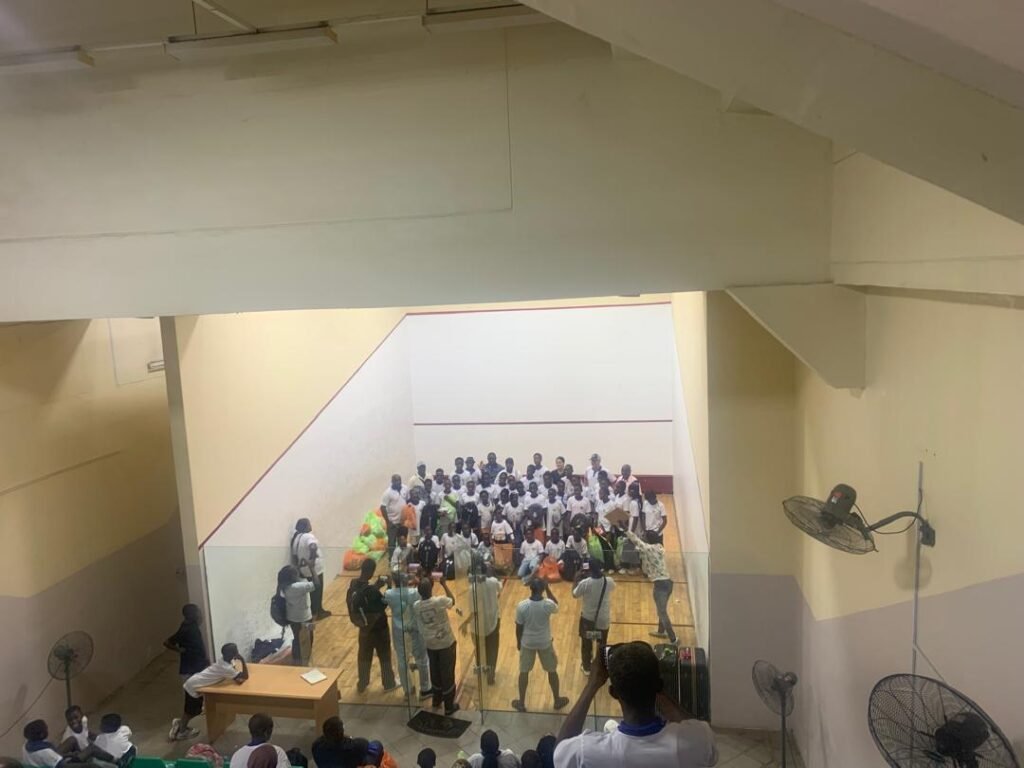
The News Agency of Nigeria (NAN) reports that the tournament held in Abuja for the first time after six editions in Lagos, attracted more than 100 young players from the FCT, Plateau and Kaduna States, among other parts of Northern Nigeria.
Haniel Hadison, Vice-President of the Nigeria Squash Federation (NSF) and tournament sponsor, described the initiative by former professionals in the diaspora as an important contribution to the development of squash in Nigeria.
“You can see that our stakeholders, the ex-professionals based abroad, are also making an effort to give back to the system.
“That is one very important aspect of continuing the developmental growth of squash in Nigeria,” he said.
He said almost 100 young players had been brought together through the tournament, adding that such initiatives would help keep children engaged in sports and provide a pathway for future national and international athletes.
“We have taken them off the streets, and that is the future of the nation through sports. The Federal Government cannot do this alone,” he said.
Hadison also commended the decision to move the tournament from Lagos to Abuja, saying it would help address the concentration of squash competitions in the southern part of the country.
Jonah Attah, Technical Director of the NSF and Vice-Chairman of the African Squash Federation, said the Abuja edition had exceeded expectations, particularly with the strong participation from Northern Nigeria.
He said the FCT produced 33 junior players, while Plateau and Kaduna produced 13 and 11 players respectively.
“The Under-11 had a chart of 32 that is massive. In the past for this same tournament, they used to have just 12 or 14. That shows you that what the federation is doing is working,” he said.
Attah said the growth demonstrated the impact of the NSF’s development roadmap, adding that the quality of play showed that the tournament had achieved more than simply exposing young players to competition.
Sonia DeRosesa, a visiting junior squash player, commended the commitment of the Nigerian players and expressed optimism about the future of the sport in the country.
“I would say that Nigerian squash is on the rise and that everyone should look out in the future. They’re working hard. They’re competing,” she said.
Segun Maku, a former North American and Nigerian champion, also backed increased investment in grassroots development, saying former professionals had a duty to give back to the sport that helped shape their careers.
“This tournament means a lot to me because it reminds me of my days coming up in the sport. I am glad that we, the former professionals, are giving back,” he said.
He expressed optimism that sustained development could enable Nigerian players to make a stronger impact at international competitions within the next five to 10 years.
“Hopefully, in the next five to 10 years, we will start getting into the main draws and probably start winning most international tournaments,” he said.
Iniobong Jacob called for more equipment, coaching and strategic partnerships, saying young players who had previously struggled in competitions were now showing significant improvement.
“Some of the young boys and girls you see here started playing in tournaments like this years ago. They would lose by 3-0 margins and things like that. But over time, they have progressed steadily,” he said.
Adekunle Adebiyi, Secretary of Nigerian Squash Players in the Diaspora and one of the organisers and sponsors, said the tournament cost more than N10 million and described its successful completion as fulfilling.
“Everything we did was for the children. So, we are happy and fulfilled,” Adebiyi said.
He said the organisers would continue to improve the championship and explore taking future editions to other parts of the country, including the South-East and Kano.
“Our aim is to develop the sport and go to places where we can bring new players into the game. That was why we knew we had to leave Lagos. Lagos is already well catered to,” he said.
NAN reports that the event, which commenced on Tuesday, ended on Saturday at the Squash Courts of the Moshood Abiola National Stadium, Package B, in Abuja.(NAN)(www.nannews.ng)
Edited by Joseph Edeh



Comments