


By Folasade Akpan
The National Assembly has underscored the importance of informed choice and quality counselling in family planning services, saying access alone cannot guarantee effective reproductive healthcare delivery in Nigeria.
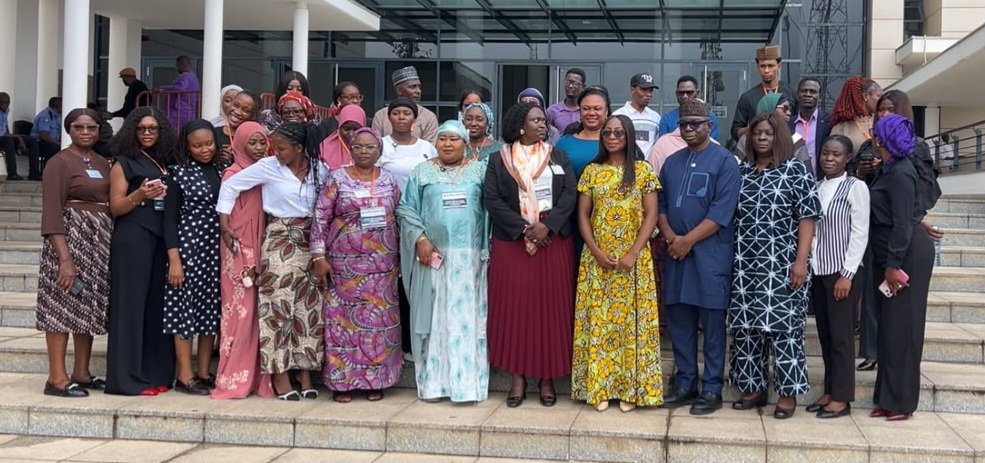
The Clerk to the National Assembly, Mr Kamoru Ogunlana, said this at a two-day training on Counselling Models for Family Planning, organised in collaboration with Society for Family Health (SFH).
Ogunlana, represented by the Deputy Clerk, Mr Bashir Yero, said individuals and couples required accurate information to enable them make voluntary, informed decisions concerning their reproductive health and wellbeing.
He said effective family planning services depended not only on access to appropriate interventions, but also on the quality of information, communication and counselling available to individuals and families.
“Family planning is fundamentally about informed choices. Individuals and couples should have access to accurate information that enables them to make voluntary and informed decisions about their reproductive health.”
He said that the way information was communicated could determine whether clients understood available options, felt respected and remained confident in the decisions they eventually made.
Ogunlana said health professionals required more than technical knowledge, emphasising that providers must listen, communicate without judgment, address concerns and respond appropriately to individual needs during counselling.
“The true measure of this programme will not be the knowledge acquired during these two days alone, but how effectively that knowledge is translated into better counselling, communication.
“I am particularly pleased that this programme brings together the National Assembly’s health structures and the SFH, demonstrating the value of partnerships in strengthening health promotion, capacity building and service delivery.”
Mrs Roselyne Odeh of SFH’s RMNCAEH Programme Delivery Unit, said the training was part of wider engagements aimed at establishing a sustained partnership with the National Assembly.
Odeh said SFH sought to position itself as a technical organisation supporting the National Assembly, adding that discussions had already taken place with relevant leadership to advance collaboration.
She said the training followed a request by the department’s leadership to expose personnel to innovative approaches, considering their role as an interface between clients and National Assembly leadership.
According to her, the expected outcome included developing a cohort of trainers who would continue capacity building and cascade acquired knowledge within the National Assembly and wider communities.
“We are doing a training of trainers, transferring skills such that they are able to continue to foster this capacity building and cascade it even amongst their wider community.”
She said participants drawn from different parts of Abuja and other locations could further extend the training, supporting communities where SFH might be unable to directly provide similar capacity-building interventions.
Odeh said the broader objective was to impact Nigeria’s health system through partnerships, noting that interventions across reproductive, maternal, child, adolescent and elderly health ultimately affected Nigerians of all ages.
“Interventions happen across the RMNCAEH spectrum, it touches everybody in Nigeria, young child, woman, pregnant, non-pregnant, elderly; and so it’s actually for the people of Nigeria.”
She said 40 participants were being trained, with the expectation that they would subsequently transfer the knowledge to others, thereby multiplying the reach and potential impact of the intervention.
A participant, Mr Muntaka Tutare, Chief Public Health Officer with the National Assembly Department of Public Health, Planning and Research, said he expected the training to improve his understanding.
Tutare said he hoped the knowledge gained would strengthen participants’ ability to provide information that could assist individuals and families in making decisions about family size.
“My hope is, at the end of the training, I will give us more knowledge to limit our family so that they will not be a burden to us.”
The News Agency of Nigeria (NAN) reports that the training is expected to strengthen participants’ technical knowledge and capacity for engagement on broader reproductive, maternal, neonatal, child, adolescent and elderly health priorities.(NAN)(www.nannews.ng)
Edited by Abiemwense Moru
Comments