

By Jacinta Nwachukwu
The International Budget Partnership (IBP) has stressed the need for citizen-led budgeting, saying Nigeria’s improving macroeconomic figures mean little if public funds do not translate into quality services for citizens.
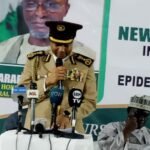
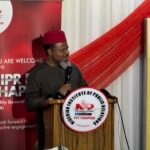
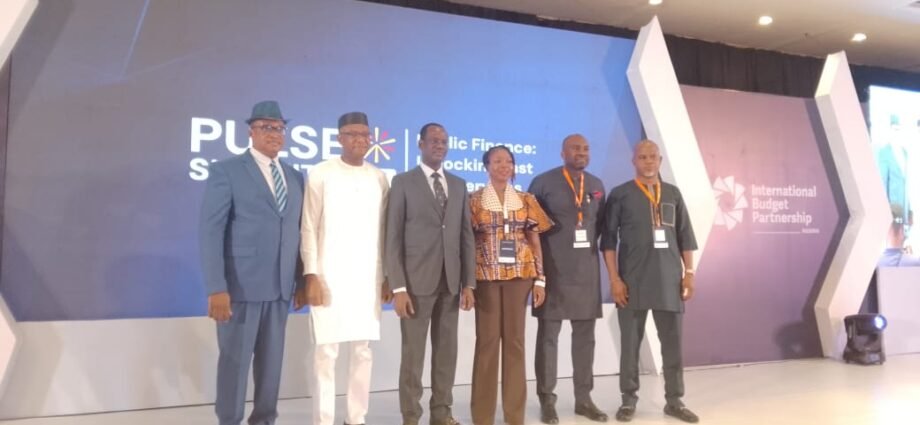
Speaking at the launch of PULSE Summit 2026 on Thursday in Abuja, the Country Director, IBP, Olayinka Babalola, said the summit was designed to tackle the disconnect between government revenue and what ordinary Nigerians experience.
According to Babalola, PULSE-Public Finance: Unlocking Last Mile Services, is an initiative focused on connecting budget data with citizen experience to improve service delivery in the country.
The News Agency of Nigeria (NAN) reports that the theme for PULSE Summit 2026 is: “From Approved Budgets to the Last Mile: Examining Budget Implementation in Nigeria”.
Babalola said that the core question should be: “How do we ensure that all the revenues generated, the loans that are borrowed and the budgets that are approved and implemented deliver quality services at the last mile to the Nigerian citizen?
While noting that Nigeria’s economy was showing positive signs, she explained that the Real Gross Domestic Products growth hit 4.434 per cent in Q2 2026, while headline inflation eased to 15.4 per cent in July, and external reserves reached 53.8 billion dollars by end of August.
“These are impressive numbers, considering where we were in 2023. But there’s a disconnect between these macro indicators and the micro level outcomes for regular Nigerians, and that disconnect is still wide and very persistent,” she said.
The country director cited government interventions like NELFUND student loans, MREF mortgage financing and tax exemptions for low-income earners as indicators of the positive steps.
She, however, stated that the positive steps don’t substitute for the delivery of quality, affordable and timely public services at the last mile through the annual budgets.
“The last mile is where policy meets reality, where budgets become services and where citizens experience government directly,” she added.
Babalola, however, suggested five things which government must do differently to close the gap — citizens’ consultation, fixing budget credibility, simplifying public finance communication, strengthening oversight with consequences and using both data types.
She emphasised that decisions should be anchored on official government data and citizen-generated data.
“We should give equal weight to both quantitative data and qualitative data, which speaks more to people’s experience, because a budget is not simply a spreadsheet,” she stated.
According to her, governments are appointed to manage public resources on behalf of citizens, and thus, are answerable to the citizens.
She said that community priorities must reflect in how expenditures are determined and how borrowing is incurred, especially at state and local government levels.
Babalola explained that the summit was not meant to be just another conference, with panels that would lead to nothing happening afterwards.
“Instead, it is focused on ensuring that public finance works for everyone, especially the most marginalised, the mission IBP has pursued for nine years working with community-based organisations in Nigeria,” she said.
The News Agency of Nigeria (NAN) reports that the summit 2026 was organised by International Budget Partnership Nigeria, a non-governmental organisation involved in making government budgets more transparent and efficient.(NAN)(www.nannews.ng)
Edited by ‘Wale Sadeeq