






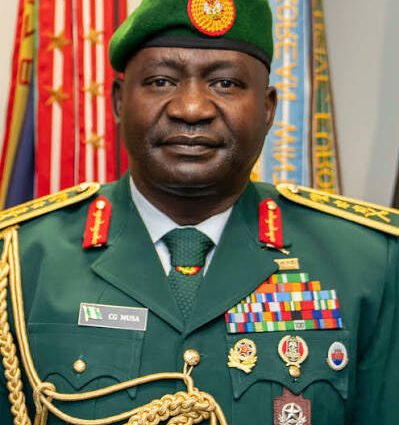
As defence minister Christopher Musa’s views in a recent interview continue to generate public interest, Mr Victor Bobai, media aide to Gov. Uba Sani of Kaduna State, has cautioned against criticisms that could distract him.
Bobai told the News Agency of Nigeria (NAN) on Sunday in Abuja that the minister should be allowed to focus on the “all-important task of tackling insurgency, banditry, kidnapping and other crimes plaguing the nation”.
Musa, in the recent television interview, spoke on various issues including politics, security and the 2027 elections.
He commended efforts by Gov.Sani to restore peace, mutual respect, friendship and love across all lines in Kaduna State.
He said that Sani’s efforts were a sharp contrast to his predecessor’s actions that polarised the state along various divides.
The minister’s views have generated various reactions with some describing them as “frank, truthful and forthright”, while others felt otherwise.
But Bobai, while acknowledging Nigerians’ right to hold their individual opinions on every issue, said that the minister’s frank response to newsmen’s questions only reflected his readiness to speak openly about sensitive issues, particularly those relating to security and governance.
Bobai, Senior Special Assistant on Public Affairs to the Governor, urged Nigerians to encourage Musa to remain focused on his professional responsibilities.
“We are happy standing with someone who has considered truth as his shield and honour.
“We must encourage him to stay focused on his professional career as he is winning the war against insecurity in the country.”
According to him, the minister’s views were purely personal.
“The thoughts he expressed were just his opinion. Nigerians should distinguish between the authority attached to a military office and the personal or political views expressed by a retired military officer serving in a civilian administration.
“We must distinguish between an official directive and a political opinion. Musa did not issue a military order, announce a defence policy or instruct the Armed Forces to support any political party,” Bobai explained.
Bobai also cautioned against reducing Musa’s decades of military service to a single television interview.
He described Musa’s career, including his service in the North-East, his tenure as Chief of Defence Staff and his subsequent appointment as Minister of Defence, as a continuation of national service.
“This is a man whose professional life was built around the Nigerian flag before any political party became relevant to his present position,” he said.
According to Bobai, Nigeria should be able to accommodate experienced voices without compromising democratic accountability.
“Nigeria cannot simultaneously demand experienced leadership and then punish experienced people whenever they speak honestly about difficult realities,” he said.
Bobai also reacted to questions about neutrality and the responsibility of a defence minister when commenting on politically sensitive matters.
“Disagreements in individual opinions should be settled through evidence rather than personal attacks.
“Nigerians should feel free to challenge Musa’s facts if you disagree with them. Let such challengers produce evidence. Correct him where necessary. But don’t replace argument with insults.”
He said that Musa’s position should be tested on their merits “instead of dismissing them because of his background or political perceptions surrounding him”.
Bobai lamented that the social media had continued to generate competing interpretations of Musa’s remarks, urging Nigerians to return to the original interview and public records rather than rely solely on edited social-media clips.
Bobai argued that the debate surrounding former Governor Nasir el-Rufai should be examined against the broader public record.
He noted that some of the issues raised by Musa had previously been discussed publicly, including in interviews involving El-Rufai himself.
“Let Nigerians watch the original interviews on YouTube and other publicly available platforms.
“Let them hear what was actually said, when it was said and in what context. That is a healthier democratic process than circulating edited clips and political interpretations,” Bobai said.
He also suggested that Nigerians should challenge the facts, and not the right to speak.
The debate has also raised questions about neutrality and the responsibility of a defence minister when commenting on politically sensitive matters.
Bobai, while reacting to that, suggested that Musa’s claims should be tested on their merits.
“The focus should be on the message instead of the messenger and the political perceptions surrounding him,” he said.
Bobai said that the appropriate response was neither to silence Musa nor attack his critics, but to subject the arguments to evidence.
“Defending Musa does not require attacking his critics. Our strongest defence is evidence, his record of service and the truth.
“Gen. Musa should be allowed to speak, and Nigerians should be allowed to challenge what he says. That is democracy.
“Let us challenge his arguments with evidence, not his patriotism with political labels,” Bobai stated. (NAN)
Edited by Ephraim Sheyin