










By Oluwatope Lawanson
Stakeholders have called for urgent, science-driven and collaborative action to tackle unsafe food and ensure access to safe meals for Nigerians.
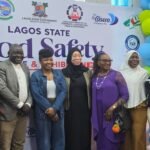
They made the call on Tuesday at the Fourth Lagos State Food Safety Conference and Exhibition, organised by the Lagos State Consumer Protection Agency (LASCOPA) in Ikeja.
The conference, with the theme ‘From Burden to Solutions – Safe Food Everywhere”, focused on addressing food safety challenges and strengthening consumer protection.
They said unsafe food posed serious threats to public health, economic stability, consumer confidence and legitimate businesses.
Speaking, LASCOPA General Manager and Chief Executive Officer, Mr Afolabi Solebo, described food safety as critical to public health and economic stability.
“Every plate of rice, every loaf of bread, every bottle of water and every prepared meal carries the potential to nourish or harm.
“The difference lies in one word: safety,” Solebo said.
He said unsafe food undermined public health, eroded consumer confidence, damaged legitimate businesses and placed additional pressure on the healthcare system.
Solebo said the conference was convened to unite regulators, producers, processors, distributors, retailers, academia, civil society and consumers.
“We are here not just to identify problems but to agree on practical, measurable and sustainable solutions,” he said.
He reaffirmed LASCOPA’s commitment to consumer protection, noting that the agency had strengthened enforcement and expanded consumer education.
He said the agency had also deepened collaboration with the National Agency for Food and Drug Administration and Control (NAFDAC) and Standards Organisation of Nigeria (SON).
Solebo, however, stressed that regulation alone could not guarantee food safety across the entire food chain.
“Rules on paper can only achieve their purpose when every player in the food chain takes responsibility,” he said.
The Executive Vice Chairman of the Federal Competition and Consumer Protection Commission (FCCPC), Mr Tunji Bello, described food safety as a consumer protection, public health and economic issue.
Bello, represented by FCCPC Southwest Zonal Coordinator, Dr Olubunmi Otti, said unsafe food undermined household welfare, distorted competition and eroded public confidence.
He called for a coordinated ecosystem where regulators enforce standards, businesses comply, consumers remain vigilant, and the media promotes accountability.
“Safe food must be available everywhere and accessible to everyone,” he said.
According to him, no single institution could guarantee food safety, stressing the need for sustained collaboration among relevant stakeholders.
“We need a system where regulators enforce, businesses comply, consumers remain vigilant, the media informs and civil society advocates,” Bello said.
He urged FCCPC, LASCOPA, NAFDAC and SON to strengthen enforcement, monitoring and consumer education.
Bello said regulation must be fair, transparent and consistent to protect consumers while supporting businesses that comply with established standards.
He also tasked businesses with upholding consumer rights, particularly the rights to safety, information and redress.
“Compliance with food safety requirements is not optional. It is fundamental to building sustainable businesses and maintaining consumer trust,” he said.
Bello warned that businesses engaging in unsafe practices or misleading consumers should expect strict regulatory action.
He reaffirmed FCCPC’s commitment to working with stakeholders to strengthen consumer protection and promote safe markets.
In a keynote address, quality and food safety expert, Dr Adedayo Odugbemi, called for science-based policies and stronger enforcement.
“Food is a right, not a privilege, but it must be safe. Our regulations, policies and programmes must be science-driven,” he said.
Odugbemi identified food security, food sustainability and food safety as major global challenges requiring urgent and coordinated responses.
He said post-harvest losses and weak systems continued to undermine Nigeria’s food production and distribution processes.
“We produce a lot, but we waste a lot. We must modernise and mechanise our food systems,” he said.
The food safety expert cited global data indicating that about 600 million people suffer foodborne illnesses annually, with children under five significantly affected.
“Listeria and salmonella do not listen to prayer meetings; they respond to intervention, mitigation and remediation,” Odugbemi said.
He urged academia to prioritise problem-solving research, while industry players should make product safety a competitive advantage.
Odugbemi also urged consumers to take responsibility for ensuring the safety of food they purchase and consume. “If it is not safe, do not eat it,” he added.
Also speaking, NAFDAC Director-General, Prof. Mojisola Adeyeye, reiterated that food safety remained a shared responsibility.
“No single institution can achieve it alone. We must embrace prevention, innovation, accountability and collaboration,” she said.
Adeyeye said NAFDAC would continue strengthening regulatory oversight, promoting good manufacturing practices and partnering stakeholders to reduce food safety risks.
She called for a food safety culture anchored on prevention, innovation, accountability, collaboration and continuous improvement.
“Let us move from merely identifying food safety problems to developing and deploying solutions that will protect consumers,” she said.
The News Agency of Nigeria (NAN) reports that participants called for stronger enforcement, increased public awareness and technology-driven solutions.
They said such measures would help tackle food adulteration, poor hygiene and foodborne diseases affecting consumers.
Participants expressed optimism that the conference’s deliberations would translate into practical measures to improve food safety across Lagos State and Nigeria. (NAN)
Edited by Kamal Tayo Oropo