





By Kennedy Sheyin
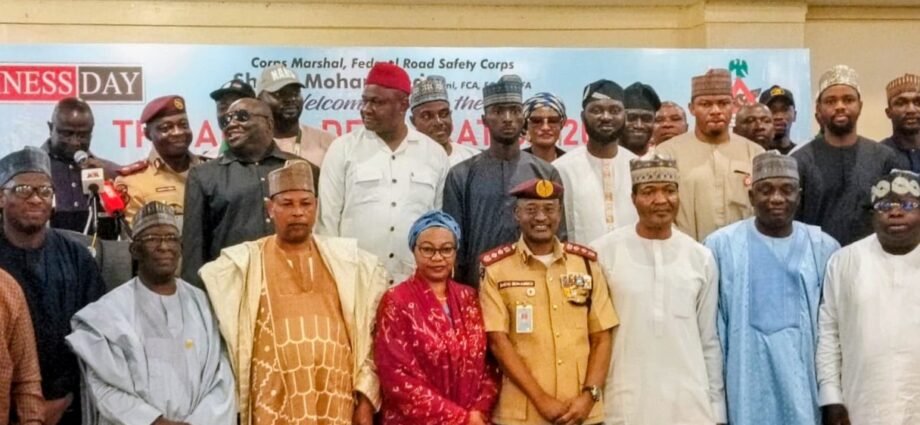
The Federal Government, the Federal Road Safety Corps (FRSC), transport workers unions and other stakeholders on Thursday convened in Abuja to strategise on how to put an end to overloading on Nigerian roads.
The stakeholders came together at the Abuja Declaration 2026 event jointly hosted by the FRSC and Business Day Media. It had “Ending Overloading, Saving Lives: A National Commitment to Safer Roads and Responsible Transformation in Nigeria” as its theme.
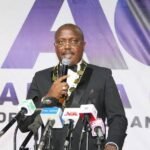
Speaking at the event, the Senior Special Adviser(SSA) to the President on Transportation and Mobility, Prince Ade-John, said that the only way to end overloading is through synergy among all stakeholders and road users.
According to Ade-John, the movement to curb overloading is every citizen’s task, including even those not directly involved at the time of offence, adding that one could be un-involved today and a victim tomorrow.
He said that the Federal Government, under President Bola Tinubu, remains committed to collaborating and strengthening the FRSC and other stakeholders to see to it that overloading comes to an end.
“The government will work hand in hand with the FRSC, pass bills and enforce laws that strengthen national road safety and security.
“We will also promote workshops and seminars such as this one to further look into the already existing systems in order to review them and see how we can further improve them,” he said.
The SSA advised road users to cooperate with road transport officials in order to maximise the efficiency of the policies.
He also urged the drivers to avoid evading officials when waved down for checks in order to avoid further dangers such as crashes which could endanger the lives of the drivers or the officials.
The FRSC Corps Marshall, Mr Shehu Mohammed, in his address, said that the corps is repositioning itself to have a proactive approach rather than reactive enforcement in the movement towards tackling overloading.
According to Mohammed, the mandate of the FRSC places prevention at the heart of its responsibility, adding that overloading and other unsafe loading practices are preventable risks that must be addressed before vehicles enter the roads.
“Vehicle overloading is not simply a traffic violation, it is a road safety, infrastructure, logistical and economic development issue. Excessive loads compromise braking, steering and vehicle stability.
“It accelerates vehicle deterioration, increases crash rates and contributes to the premature deterioration of our road infrastructure. The danger is not only the weight of the load, but what is carried, how it is combined, positioned and scaled.
“The improper combination of passengers and cargo, incompatible or dangerous materials, as well as poorly scaled or unevenly distributed loads, create serious risks to drivers, passengers and other road users,” he said.
Mohammed said that the practice was more common in the haulage and logistics sector, where the prejudice to maximise every journey encourages unsafe practices.
He then warned that no money saved is worth the loss of human lives.
“A vehicle must carry only what it is designed, licensed, and safely configured to carry. Those who order, determine, load, authorise, and transport cargo must accept responsibility for its safety consequences.
“Cargo owners and shippers must accurately declare weight and insist on safe loading. Operators must maintain their vehicles and comply with approved weight limits,” he added.
According to him, Nigeria’s economy depended heavily on the safe movement of agricultural produce, raw materials, manufactured goods, fuel, and other essential commodities.
He emphasised that a safe transportation system is, therefore, not an impediment to economic development but the foundation for Nigeria’s prosperity.
“When overloading damages our roads, the government bears the cost. When it damages vehicles, operators bear the cost. When it delays the movement of goods, businesses and consumers bear the cost.
“But when it causes a fatal crash, a Nigerian family bears the cost that money can never replace. We must, therefore, reject the false choice between commercial efficiency and road safety.
The corps marshal reaffirmed that the FRSC would continue to enforce the law firmly, fairly, and professionally.
The News Agency of Nigeria(NAN) reports that the dialogue brought together stakeholders from the motorcycle and tricycle unions, Nigerian Police, Army, Air force, Civil Defence Corps, the media and other relevant stakeholders.(NAN)
Edited by Yakubu Uba