
By Emmanuel Oloniruha
The Abuja School of Political and Social Thought (TAS) has urged African leaders to leverage ongoing shifts in global geopolitics to strengthen democratic institutions and drive sustainable economic development across the continent.
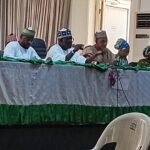
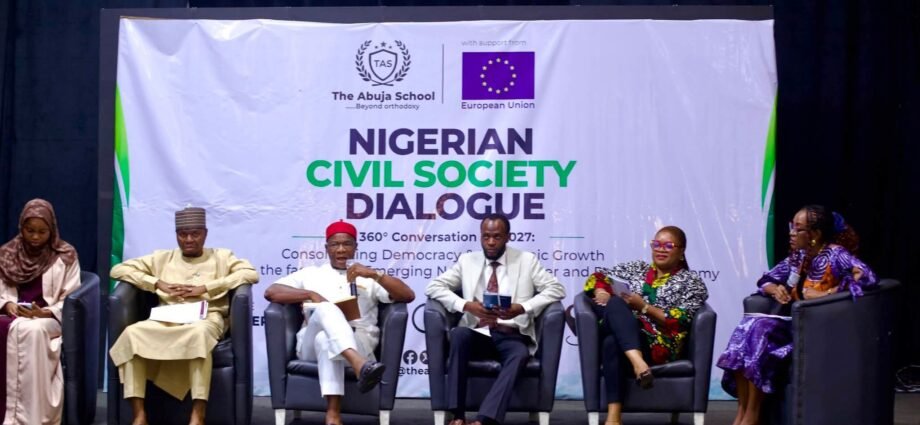
Executive Director of TAS, Dr Sam Amadi, made the call on Thursday in Abuja during a high-level summit organised by the think tank in collaboration with the European Union (EU) Delegation to Nigeria and ECOWAS.
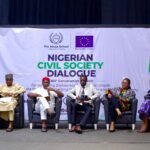
The summit was themed: “A 360 Conversation on 2027 and the Challenges of Consolidating Democracy and Economic Growth in Nigeria in the Face of the Emerging New World Order and Political Economy.”
Amadi in his presentation entitled “Shifting Global Geopolitics and the Challenges of Democracy and Development in Nigeria in 2027 and Beyond,” said that international “development assistance operates under the shadow of changing global dynamics.’’
He noted that power realignments, the decline of traditional multilateral frameworks, and evolving trade patterns present both severe risks and strategic opportunities for developing nations.
“The changes in the global political economy and the travails of democracy in the African continent present urgency for a review of the fundamental priorities of European Union engagement with democracy and development assistance.
“Although commitments to human rights and democracy remain, the priorities and conditions for achieving them need to be reconsidered in the context of the changing landscapes of national and international political economy,’’ he said.
Amadi called on regional bodies such as ECOWAS and the Nigerian government to move away from rigid economic dogmas and actively build state capacity to navigate current geopolitical realities.
“The problem in Nigeria today is that our leaders are not having conversations about the changing global political economy.
“They are building policies oblivious to how the world has shifted. Those who win are those who harness the changing world to drive domestic policy.
“Experience of economic development through the ages show that successful countries are those who have properly understood the dynamics of the global economy and steered domestic policies to optimise the fundamentals of that economy.
“This is true of Japan from 1920-1970. It is true of South Korea under General Park.
“It is also true of China in the era post-Chairman Mao. Steering toward the direction of global geopolitics requires strategic thinking and statecraft built on a combination of wisdom and knowledge,’’ he said.
Amadi observed that while Western influence faces internal challenges, non-Western nations continue to expand their strategic footprint across the continent.
He also warned that internal vulnerabilities within West Africa, marked by recent military coups in Mali, Niger, Burkina Faso and Guinea, pose an existential threat to human security and economic growth.
Amadi speaking on 2027 general elections, said that credible electoral outcomes were essential to restoring dwindling public trust in democratic institutions.
Reflecting on the 2023 general elections, he criticised institutional lapses that eroded public confidence, specifically pointing to the Independent National Electoral Commission (INEC) and the judiciary.
Highlighting the strategic partnership between Nigeria and the European Union, Amadi described the EU as Nigeria’s largest trading partner and a vital promoter of democratic governance.
“The EU remains Nigeria’s greatest trading partner, accounting for around 34.9 billion euros or roughly 27.8 percent of Nigeria’s total trade in 2023,’’ he said.
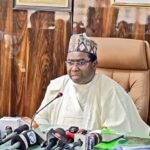
In his remarks, the Ambassador of European Union Delegation to Nigeria and ECOWAS, Gautier Mignot, said that the challenges of governance, global economic shifts and climate issues demanded collective intellect and collaborative action.
“The global economy is currently being shaped by geo-economic fragmentation, record public debt levels and the structural economic pressures of technological shifts and climate change.
“On the other hand, global governance issues center on institutional gridlock, fragmentation, and power shifts straining multilateral organisations such as the United Nations,’’ he said.
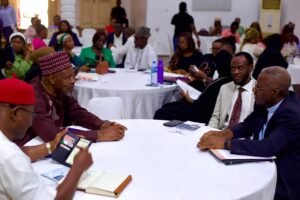
Mignot said that the summit presented Nigeria’s leading think tanks, civil society leaders and policy professionals a vital platform for the rigorous, evidence-based dialogue required to navigate those complexities.
He added that the event also offered an opportunity for Nigerian to interrogate ideas of how Nigeria could consolidate and reorder of its steps for economic development and democratic consolidation, as well the best respond to the changing world order to reset its political economy.
He expressed the EU’s support to Nigeria and Nigerians toward consolidating the country’s democracy and economic development.(NAN)
Edited by Francis Onyeukwu