





By Cecilia Ologunagba
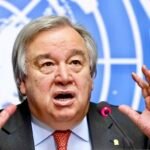
UN Secretary-General Antonio Guterres and the Chairperson of the African Union Commission, Mr Mahmoud Youssouf, have discussed the impact of ongoing exogenous shocks on African countries, particularly on food security.
They also discussed the need for adequate responses to mitigate their effects and strengthen resilience.
Exogenous shocks refer to unexpected events that originate outside a country’s economy and can significantly impact its economic performance.
In the context of African countries, these shocks can include natural disasters, global economic downturns, fluctuations in commodity prices, and geopolitical events
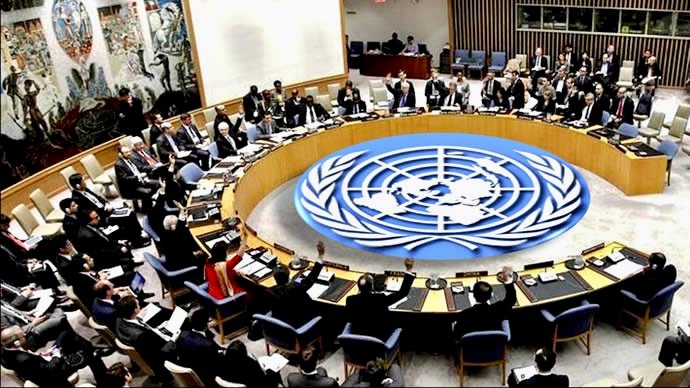
The duo met on the sidelines of the ongoing 81st session of the UN General Assembly at UN headquarters in New York, according to a statement by Guterres.
Youssouf is in New York, leading a delegation of continental officials to the High-Level Week of the 81st UN General Assembly starting on Tuesday.
His mission is to ensure Africa speaks with one voice on peace, security, and economic transformation.
The secretary-general and the chairperson reiterated the importance of the strategic partnership between the UN and the AU, as well as the importance of effective multilateralism in addressing global challenges.
They discussed peace efforts in the Democratic Republic of the Congo, Libya, the Sahel, Somalia, South Sudan and the Sudan, and underscored the need for sustained close coordination in support of African-led solutions.
They reaffirmed the importance of implementing Security Council resolution 2719 (2023) on financing of African Union-led peace support operations, as outlined in the Review on the future of all forms of United Nations peace operations.
In addition, the duo underscored the importance of enhancing efforts on financing sustainable development, climate action and renewable energy towards accelerated progress on the 2030 Agenda and Agenda 2063.
UNGA 81 is convened under the theme “Restoring Trust, Managing Transformation: A United Nations That Delivers for All.”
For Africa, trust and transformation are not abstractions. They are the unfinished business of a global order that has, for decades, treated the continent as a subject of decisions rather than a shaper of them. (NAN)
Edited by Mark Longyen