








By Mark Longyen
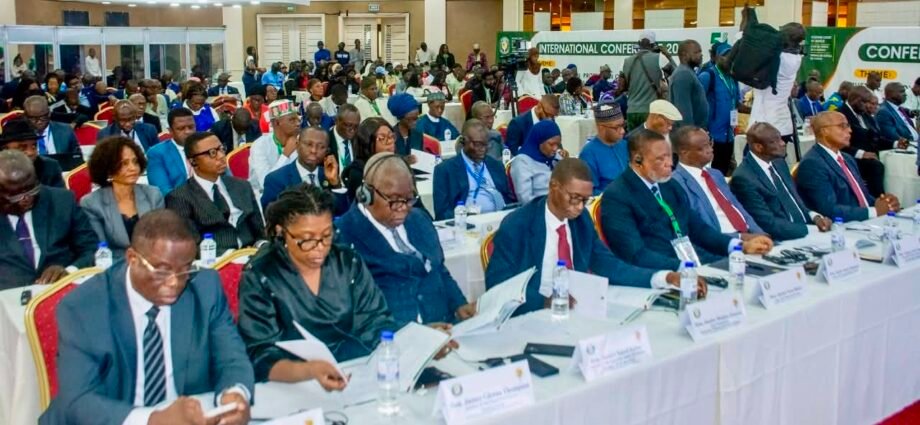
Dakar, Senegal (NAN) ECOWAS Court President, Justice Ricardo Gonçalves, says the court presently stands at an important crossroads amid the challenges of enforcing its judgments, human rights protection, innovation, governance and regional integration.
He made this known in an address of welcome at the 2026 Annual International Conference of the Community Court of Justice, ECOWAS, on Monday, in Dakar, Senegal.
The News Agency of Nigeria (NAN) reports that the Community Court, established 25 years ago, is ECOWAS’ principal judicial organ for the interpretation and application of law in the subregion.
The weeklong conference is themed: “The Community Court of Justice — ECOWAS at the Crossroads: Justice, Innovation, Protection of Human Rights and the Future of Regional Integration in West Africa.”
Gonçalves noted that the court remained a critical partner in the realisation of the broader strategic objectives and aspirations of the peoples of West Africa as enshrined in the ECOWAS Vision 2050.
He urged participants to “deliberate with candor, listen with humility, and make decisions with courage,” as the court ought to contribute more effectively to human rights protection, innovation, good governance and regional integration, going forward.
“Indeed, our Court stands at an important crossroads.
“We look forward to receiving clear, innovative and feasible proposals capable of strengthening the Court’s institutional framework, enhancing access to justice, improving judicial effectiveness and deepening the Court’s contribution to the regional integration agenda.
“The changing realities of governance, technological advancement, evolving human rights challenges, increased regional mobility, economic transformation and the growing expectations of citizens all require us to continually adapt and innovate,” he said.
He said the conference aimed to reflect on the court’s achievements over the last 25 years, examine its challenges, especially judgment enforcement, identify solutions and pathways to fulfilling its mandate.
“The objective of this conference is therefore clear.
We have gathered here to reflect, with openness and intellectual rigour, on the achievements of the Court over the last twenty-five years.
”Also to examine the challenges confronting regional justice today, including the critical need to ensure a full and timely enforcement of Courts’ judgments.
“We are to also Identify practical pathways that will enable the court to contribute more effectively to human rights protection, innovation, good governance and regional integration in the decades ahead,” he said.
Gonçalves recalled that the court had embarked on a process of institutional transformation aimed at enhancing its effectiveness, accessibility and responsiveness, prominent among which is the planned establishment of the court’s Appeal Division.
He said a significant milestone in this effort was the approval of the Court’s Complementary Act, which harmonises the 1991 and 2005 protocols to strengthen and modernise its legal framework.
Another transformational milestone, he said, was the adoption of the Court’s Arbitration Rules, which opened new opportunities for the peaceful and efficient settlement of disputes and comprehensive regional dispute resolution mechanism.
“Through successive reforms, particularly the expansion of its mandate and jurisdiction to include human rights protection, the Court has emerged as a vital institution for justice, accountability and the rule of law within the ECOWAS region,” the Court President said.
According to him, in an increasingly interconnected world, regional and international courts occupy a strategic position in the maintenance of legal order and the promotion of peaceful cooperation among States.
“Alongside other distinguished international and regional judicial bodies, the Community Court of Justice, ECOWAS, serves as a fundamental pillar of the West African integration project,” he added.
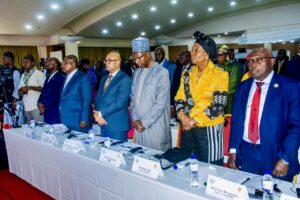
ECOWAS Commission President, Gen. Birame Diop, noted that the gap between the authority of the court’s decisions and their execution remained one of the most serious tests of the court’s credibility.
Diop, represented by Gaye Sowe, ECOWAS Director of Legal Affairs, said ECOWAS would continue to engage Member States toward ensuring the enforcement of the court’s judgments by competent national authorities.
“The Court speaks the law. It falls to all of us, Member States, Community Institutions, bar associations, national human rights institutions, civil society and the media, to make that law real in people’s lives,” he said.
Senegal’s Supreme Court President, Justice Mouhamadou Mbaye, said that when institutions like the ECOWAS Court are weak, rights must become a safe refuge for the protection of shared values and the community.
“The law must not become an obstacle to integration; it must become a tool on the contrary, and it is precisely at this level that the importance of a community court emerges.
“It, therefore, becomes necessary to turn our minds to matters relating to the pathways to ensuring the strengthening of its organisation and its functioning,” he said
Senegalese Minister of Justice, Moussa Sarr, while declaring the conference opened, reaffirmed his country’s commitment to a strong, accessible and effective regional justice system, regional judicial cooperation, and human rights protection.
“Our country remains fully committed to supporting ECOWAS, alongside all the States and institutions of the Community, in building a Community justice system that lives up to the aspirations of our peoples and the demands of our time,” he said.
The minister noted that the Court was at the heart of ECOWAS institutional architecture, and plays an essential role in consolidating democracy and the rule of law, and in building the Community.
“Deepening integration means consolidating an area governed by the rule of law in which citizens can have confidence; an area where justice brings peoples closer together and where Community institutions remain at the service of their aspirations for peace, stability, development and prosperity,” he said.
Prof. Kofi Abotsi, in a keynote address, noted that the court’s future was inseparable from West Africa’s future, stressing that the court must become proactive in shaping the subregion’s normative future.
He called for the support and involvement of stakeholders including member states’ governments, lawyers, students, the civil society, and the youth, among others in the regional judicial system.
Abotsi said the court’s future cannot be secured by judges alone, governments must defend judicial integrity and promote the independence of the court, while civil society must sustain advocacy and public awareness.
“Accordingly, a people that desire peace must invest in justice. An integration project that desires prosperity must protect rights, and a region that desires integration must strengthen institutions.
“This conference should therefore provide the court with an opportunity for ideational retooling tailored to creating the community of justice needed for ECOWAS,” he added.(NAN)