






By Isaac Aregbesola
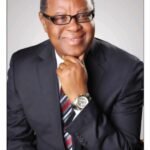
The Chairman of the Economic and Financial Crimes Commission (EFCC), Mr Ola Olukoyede, says corruption remains a profound moral challenge to Nigeria’s quest for shared prosperity.
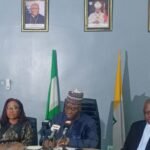
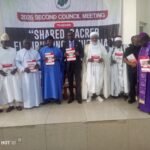
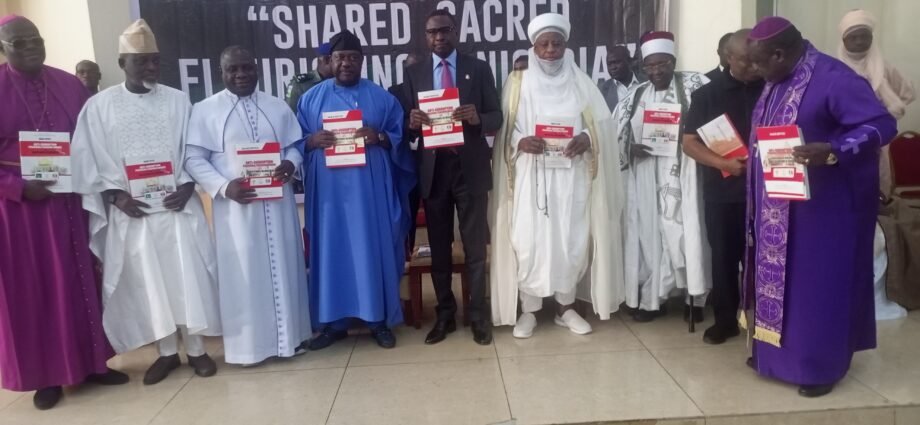
Olukoyede stated this on Wednesday in Abuja at the Nigeria Inter-Religious Council (NIREC) and unveiling of Inter Faith manual to enlist religious leaders in the fight against corruption.
The News Agency of Nigeria (NAN) reports that the Secretary to the Government of Federation, Sen. George Akume unveiled the manual.
At the meeting themed “Shared Sacred Flourishing in Nigeria,” Olukoyede emphasised that financial crime had no religious or ethnic colouration.
According to him, NIREC exists because Nigeria recognised that its religious diversity needed not become a source of perpetual division.
”Christianity and Islam can retain their distinctive beliefs and traditions while their adherents work together for peace, justice, human dignity and the wellbeing of our nation.
“We are a deeply religious people. Our churches and mosques are full… Yet, we must have the courage to ask ourselves: has the depth of our religious profession been sufficiently reflected in the integrity of our public and economic life?” he asked.
According to him, at first, the EFCC may appear an unusual institution to discuss something described as ‘sacred flourishing’.
”We are a law-enforcement agency… But when we examine the consequences of corruption, fraud and economic crime, we quickly discover that our work touches the very conditions that make human flourishing possible,” Olukoyede said.
He illustrated the human cost of graft, stating.
“When money meant for a hospital is stolen, the offence may be recorded as corruption, but its consequence may be a patient who cannot receive treatment.
“When education funds are diverted, the financial crime becomes a child without opportunity.
”When pension funds are stolen, corruption becomes an elderly Nigerian deprived of dignity after a lifetime of service,” he added.
According to him, corruption privatises what should be shared and allows one person to flourish by making many others poorer, hence the EFCC’s role is to defend the integrity of the commonwealth.
He said to play that role effectively, the EFCC had been engaging religious leaders through its Inter-Faith framework, because “no religion condones corruption and no faith entertains fraudulent engagements.”
Olukoyede announced that the Commission had now designed an Inter-Faith Manual to address topical anti-corruption issues for preaching.
“We are using this opportunity to launch the Manual which we hope our religious leaders will surely find useful in teaching anti-corruption messages to their members.
“The EFCC believes that financial crime has no religion. Corruption has no tribe. Fraud does not become Christian or Muslim because of the identity of the person accused of committing it,” he said.
Driving home the point of shared vulnerability, he declared: “When public money is stolen, both Christians and Muslims suffer. A badly equipped hospital does not first ask a dying patient where he worships.
”’A collapsed road does not distinguish between a Christian traveler and a Muslim traveler.”
Olukoyede said ”religious institutions had extraordinary responsibility because while the EFCC could investigate conduct, faith communities could shape character.
“The EFCC can investigate a person’s conduct. Faith communities can influence that person’s character.
”We can prosecute fraud. Religious teaching can cultivate honesty… We can punish corruption after the event. Faith can help prevent it before it begins.”
He challenged religious leaders to restore the moral dignity of honest living, asking: “What message do we send when unexplained wealth commands more respect than integrity?
”What do young Nigerians learn when society celebrates the wealthy person but rarely asks how the wealth was acquired?”
He warned that no faith community should provide moral shelter for corruption, no ethnic group should interpret investigation of its prominent member as an attack on the group.
He added that young Nigerians must hear that “integrity is not foolishness; honest labour is not failure; and wealth without accountability is not a definition of success.”
He said prevention is now central to EFCC’s future, noting: “The most successful anti-corruption system is not the one that makes the greatest number of arrests.
”It is one that progressively reduces the opportunity and incentive for corruption to occur.”
Olukoyede said the Inter-Faith Manual was written by seasoned and anointed religious leaders covering anti-corruption topics in Christianity and Islam.
He urged leaders to draw messages from it to guide their adherents.
The meeting had in attendance the President of Christian Association of Nigeria Most Oko; the Sultan of Sokoto Sa’ad Abubakar; NIREC Executive Secretary Prof. Cornelius Omonokhua among other religious leaders.
The SGF, while unveiling the manual, urged the religious and traditional leaders to promote tolerance and peace in the country.
”We must refuse to allow these agents of darkness to use their cruelty to stoke religious or ethnic divisions by reminding our congregations that violence is a crime against faith itself.
”We must guide them to respect one another’s places of worship and encourage honest discourse on economic and social issues so that frustration does not turn into hatred.
”For community leaders, I urge you to use your influence to defuse disputes before they erupt into violent conflicts.
”When politicians seek to fan the flames of disunity, intervene with firmness and clarity,” he said.
NIREC Executive Secretary in his remarks called on the EFCC to beam its searchlight on religious leaders to prevent merchandise of religion.
”EFCC should go beyond the anti-corruption manual to arresting Pastors and Imams who publicly preach hate or carry out political campaigns in the Churches and Mosques to export money from partisan politicians,” he said. (NAN)
Edited by Ekemini Ladejobi