









By Aderogba George
Diabetes affects six to seven per cent of Nigerians, representing about 15 million people, says the Endocrine and Metabolism Society of Nigeria (EMSON).
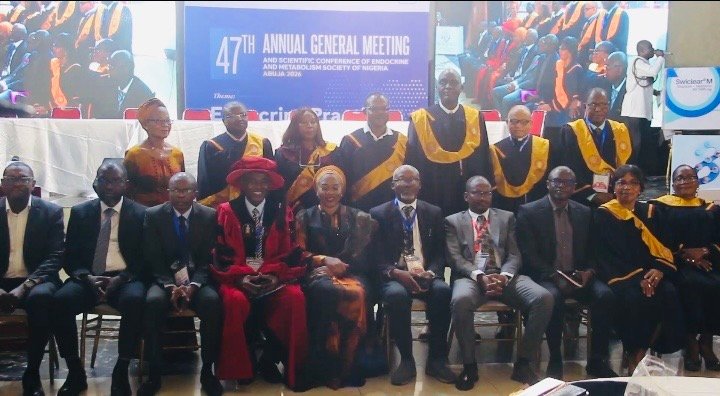
EMSON President, Prof. Andrew Uloko, disclosed this on Wednesday at the society’s 47th Annual General Meeting and Scientific Conference in Abuja.
The conference was under the theme, ‘Endocrine Practice in Nigeria: Improving Patient Care and Outcomes Through Advocacy.’
Uloko said many Nigerians remained undiagnosed, while diagnosed patients faced barriers to medicines, glucose monitoring, laboratory investigations and specialist care.
He said population growth, ageing, urbanisation, changing diets and physical inactivity were reshaping Nigeria’s endocrine disease landscape.
According to him, these challenges are compounded by poverty, food insecurity and infectious diseases, placing additional pressure on healthcare resources.
Uloko said diabetes affected education, employment, family finances and quality of life, adding that “behind every statistic is a human being”.
“It is the young adult whose diabetes interferes with education and employment; it is the mother struggling to afford insulin.
“It is the older person living with diabetes and kidney disease, and the patient who presents with a preventable complication,” Uloko said.
He said EMSON would advocate affordable endocrine care, stronger collaboration and evidence-based policies while creating opportunities for young endocrinologists.
Prof. Anas Sabir, the keynote speaker, said between 10 million and 15 million Nigerians were living with diabetes.
Sabir put diabetes prevalence at between 5.7 per cent and seven per cent, while identifying late presentation and high treatment costs as major challenges.
“Most patients pay out of pocket. Even the NHIA does not give coverage of everything and, even when it does, it is not very effective,” he said.
Sabir said patients could present with diabetes alongside hypertension, dyslipidaemia and obesity, complicating Nigeria’s already significant disease burden.
He said Nigeria had fewer than 200 practising endocrinologists, with specialist training concentrated mainly in tertiary hospitals in Lagos, Abuja, Port Harcourt and Kano.
Prof. Saad Ahmed, Chief Medical Director, Federal Medical Centre (FMC), Jabi, Abuja, said the shortage of endocrinologists remained a major challenge.
Ahmed, represented by Dr Ben Achusin, said FMC Jabi had only two endocrinologists attending to between 40 and 60 patients per clinic.
“I keep wondering, for how long are they going to continue this way?” Ahmed said.
He said the hospital previously had four endocrinologists, but two migrated to the United States, worsening patient waiting times.
Ahmed called for advocacy to encourage medical students and younger doctors to pursue endocrinology and improve access to specialised investigations.
He said some hormonal, biochemical and molecular tests were sent abroad, delaying diagnosis and treatment.
“We need to think out of the box and find novel ways to get diagnosis quickly,” Ahmed said.
Dr Adedolapo Fasawe, Mandate Secretary, Health Services and Environment Secretariat, FCT Administration, called for stronger advocacy and healthcare access.
Fasawe said the FCT exceeded its Project 10 Million screening target in 2024 and continued blood glucose and blood pressure screening through medical outreaches.
She said the FCTA secured accreditation for Internal Medicine Residency Training in 2023, while the FCT Primary Health Care Board’s 2026 restructuring strengthened disease prevention and surveillance.
Fasawe commended EMSON’s advocacy and research efforts, while decrying inadequate endocrinology personnel across the FCT.
She also announced annual N250,000 awards for two outstanding postgraduate medical graduates. (NAN)
Edited by Kamal Tayo Oropo