

By Stellamaris Ashinze
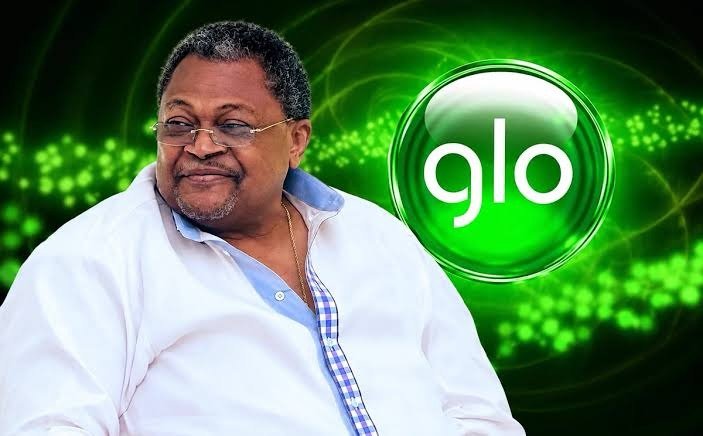
Mr Dave Agboola, has described Dr Mike Adenuga Jr., the Chairman of Globacom as “one of the most consequential yet least understood figures in Nigeria’s economic history” whose decades of strategic investments continue to redefine indigenous enterprise.’’
Agboola, the Chief Press Secretary to the Speaker, Lagos State House of Assembly, lauded Adenuga in an article made available to the News Agency of Nigeria (NAN) on Thursday.
In the article, evaluating the impact of the top Nigerian entrepreneurs, Agboola noted that while nations were often remembered through elected leaders, they were equally shaped by the business builders they produced.
He categorised Adenuga alongside industrial giants such as Aliko Dangote, Tony Elumelu, and Femi Otedola, highlighting his unique economic footprint.
Agboola observed that known as both the “Gentle Giant” and “The Bull,” Adenuga had spent more than four decades reshaping Nigeria’s economy.
This was while consistently avoiding public attention, choosing instead to let his business ventures speak for themselves.
“They have been remarkably chatty,” Agboola noted, adding that “from telecommunications and oil to banking, real estate, aviation, sports, and entertainment, Adenuga built enterprises that touched virtually every strategic sector of the Nigerian economy.
“ His companies have done more than create wealth. They have challenged monopolies, expanded access, created jobs, and strengthened indigenous participation in industries long dominated by foreign interests.”
Highlighting the telecommunications sector, Agboola recalled that when Globacom entered the market in 2003, mobile communication remained too expensive for ordinary citizens until Adenuga’s intervention disrupted established norms.
“His introduction of per-second billing changed the game.
“Competitors were forced to rethink their pricing models, and millions of Nigerians suddenly gained more affordable access to communication.
“ It was not merely a clever marketing strategy. It reshaped an industry,” Agboola wrote.
He emphasised that Globacom’s deployment of the Glo-1 submarine cable and extensive fiber-optic infrastructure laid the groundwork for Nigeria’s digital future.
“More than two decades later, Globacom remains Nigeria’s only wholly indigenous telecommunications giant.
“In a capital-intensive industry dominated by global players, that achievement is both commercial and symbolic.
“It demonstrates that Nigerian-owned companies can compete at the highest level and win.”
Examining Adenuga’s footprint in energy and finance through Conoil Producing and Equitorial Trust Bank, Agboola stated that Adenuga challenged the assumption that only multinational corporations could operate energy assets at scale.
“Long before ‘local content’ became a policy buzzword, Adenuga was already practicing it.
“His success challenged the notion that world-class energy companies had to come from somewhere else.
“His banking investments advanced financial inclusion based on the simple philosophy that `people cannot build wealth, grow businesses, or participate fully in the economy if they remain outside the financial system;.”
Addressing his investments in real estate, corporate aviation, sports, and culture, Agboola explained that Adenuga recognised soft power long before it became fashionable policy language.
He noted that Adenuga’s support for football and entertainment projected Nigerian talent globally while building national confidence.
“Before becoming one of Africa’s richest businessmen, Adenuga worked as a taxi driver in New York while pursuing his education.
“ His rise from modest beginnings to the summit of African business has become part of Nigerian entrepreneurial folklore.
“Yet the significance of his story is not simply the wealth he accumulated,” Agboola observed.
Concluding his tribute, Agboola wrote: “Most business leaders are remembered for the companies they build.
“ A much smaller group are remembered for changing entire industries. Mike Adenuga belongs firmly in the latter category.”
“Mike Adenuga is more than a billionaire. He is a nation-builder, a disruptor, a patron of culture, and a powerful symbol of indigenous enterprise.
“His legacy extends far beyond market valuations and rich lists.
“The ultimate measure of his contribution may be the idea he has spent decades proving: that Nigerian-owned companies can innovate, compete, and succeed on the global stage,” Agboola said. (NAN)www.nannews.ng
Edited by Vivian Ihechu
Comments